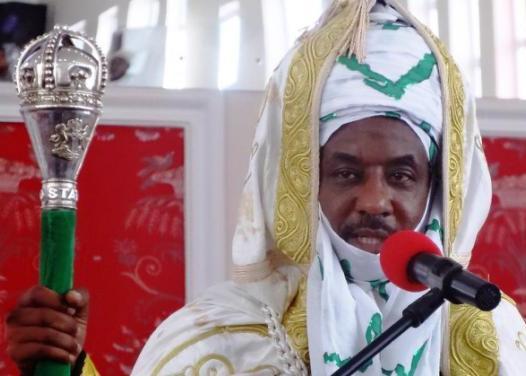
In a paper presented at the 15th meeting of the Joint Planning Board and National Council on Development Planning on August 24, 2016, Muhammadu Sanusi II, Emir of Kano and former CBN governor, touched on key issues bogging Nigeriaís economy, such as excessive borrowing, consumption-driven rather than investment-driven growth model, fixation on oil, wasteful subsidies, continued export of raw materials and import of finished goods, among others. He also pointed the way out. Below are excerpts:
Africa’s Golden Decade was basically the decade of the 2000s. Africa moved from the previous decade, where it was a hopeless continent, to a new decade that we have one-type-lifting-all story of Africa rising.
The first pillar of this growth was clearly shifting terms of trade, which in developing economics can be a mirage. You can’t have improving terms of trade when you are exporting commodities over short periods of a cycle. We know as far back as the 1950s, from the Latin American structure economics, that over the long term any economy that specialises in exporting primary products and importing manufactures would end up having terms of trade shifting against it. You can have a temporary boost, but if you don’t use that boost to have a structural adjustment that would make for prudent management of the economy, you would be courting trouble.
The second pillar of growth in Africa in that decade was debt. Between 2002 and 2008, Nigeria was at 50 percent debt-to-GDP and came down to literally 5 percent or so. This happened across all Africa in the form of debt forgiveness, debt relief, debt restructuring and so on. What this did was that it freed up government balance sheets and in that decade of Africa rising, the countries went back on a borrowing binge.

Nigeria kept borrowing, not externally but internally. I think our external debt was just about $8 billion on the balance sheet. But the naira indebtedness of the Nigerian government rose, and we were spending over 30 percent (maybe 40 percent now) of every naira earned just servicing debts.
We had written off the debts, and then we kept building it up bit by bit. And when you look at what that debt was going into, you will see part of the answer to the problem we are having. We were able to borrow because the balance sheets could accommodate more debts.
But where did all these debts go? Did they go to roads, power, refineries, or infrastructure? No. The new borrowings were simply recycled into much higher recurrent expenditures. What that did was that it helped sustain a consumption boom. And GDP was growing, largely driven by consumption spending.
If you look at public sector wage bills in real terms in Nigeria, Ghana, Ethiopia and Kenya, you will see they rose significantly from 2005 to 2014. In Nigeria, for example, our public sector wage bill went up from N443 billion in 2005 to N1.7 trillion in 2012. In 2010, the government increased minimum wage to N18,000. I was at the Central Bank, and I protested. We had an election coming, and we increased the minimum wage to N18,000 and basically borrowed money to pay.
In 2012, as governor of Central Bank, I said this was an unsustainable wage bill. We needed to reduce the size of the public service. My own government minister came out to say that was the (CBN) governor’s personal opinion. In fact, she said the government wanted to employ more people. And this is the result.

There is nothing that we are facing today that we did not know would happen. We made mistakes, many of them deliberate. We ignored every single word that pointed otherwise. Economics is a science. It is not a perfect science, but over the decades and centuries people have seen that there are certain things that when you do, they will lead to certain consequences. If you take a brand new car and give to a driver who doesn’t have a licence to drive it and you have an accident, you really can’t say you were surprised, unless you are some kind of idiot.
We knew that this was going to happen. You can’t just keep borrowing money and paying salaries, not building roads, not improving power, and think this will not happen.
Look at real sector wages. It was not just Nigeria, it was all over Africa. Look at sovereign debt fuelling growth.
Take the example of an individual. You happen to know bank MDs and you can make a few phone calls and get loans. You borrow N1 billion here today and build a very nice mansion in Abuja. You borrow another N1 billion and let your family go out on first-class ticket as you are travelling all over the world. You borrow another N5 to N6 billion and buy a private jet.
We have very many people in Nigeria who you think are very rich, but who are really bankrupt because everything about them is being financed by bank debts. When one debt matures, they have enough connections to call another bank, borrow and refinance that debt. They are not earning anything. They have private jets. They have yachts. Their families travel first class. They go abroad and stay in the most expensive hotels. It happens. And it is happening today.
What do you think of those people? When you think about such people, do you think they are foolish people or do you think they are wise people? So, what would you say of a country that does this?
Today, we are in a new reality. This is what they call the new normal in Africa. And we have a two-speed Africa. If we look at the new IMF World outlook, you will see that non-commodity Africa will be the fastest growing part of the world, even higher than emerging Asia, whereas commodities Africa (countries like Nigeria and Angola) are among the lowest growing parts of the world, at the rate of Europe and Latin America.
The example of Ethiopia
But think of a country like Ethiopia and then Meles Zenawi, the late Prime Minister. Ethiopia keeps growing year after year at 11-12 percent. And what did Meles do? The simple things we have been saying for decades. This is a country that came out of a war, remember. It’s facing insecurities; it has got Eritrea and other countries that do not like it around it. I’ll give two examples. Coffee. It originated from Ethiopia, but Ethiopian farmers, before Meles, would get 10 percent of the value of coffee from their crops.
They would just produce the coffee and sell to companies, and the companies would take their coffee into Latin America and have it improved and dried and packaged. And Zenawi just asked: “Why can’t we produce coffee in Ethiopia that would go straight from Ethiopia to the coffee shops in Europe?” And all sorts of responses came: “Well, you know your weather is good for growing coffee. Your coffee is very good, but your farmers have bad farming practices.” So he said: “Why don’t you teach them?” So, he got in touch with the IFC (International Finance Corporation), got a loan, organised Ethiopian coffee farmers into cooperatives, taught them how to grow the coffee, how to dry, prepare and package it.
Today, if you go to coffee shops in Europe, you take a cup of coffee that came straight from Ethiopian farm. And Ethiopian farmers are now getting 70 percent of the value of the coffee, from the former 10 percent.
So, he tells Aliko Dangote, come and build a cement manufacturing plant here, I am going to give you electricity at 3 cent per kilowatt hour. For a cement manufacturer, that is all the incentive that you need. So, Dangote goes, builds the most sophisticated cement plant in Ethiopia, gets electricity almost for nothing and cost of cement drops by 60 percent. The construction industry gets boosted. Roads are being built with cement. Jobs are created. And a new industry has taken off.
He said to the Chinese, “I don’t like this your idea of coming to buy hides and skin and leather from Ethiopia and selling us shoes. Set up the factory here.”
Nigeria imports 3 million pairs of shoes per annum from China. Nobody knows how much duty they pay. I am not talking about expensive shoes. I am not talking about what you buy from Pierre Cardin or Gucci. I am talking about shoes people wear on the streets, shoes that can be bought here in Kano.
We can produce all the shoes and school bags we want for primary and secondary schools children, millions and millions of pairs. But we don’t. You know what we do? We export the wet blue and import shoes from China, and we have Chinese people coming here to take wet blue to China and bring back shoes.
Tomato paste that our wives use in kitchens is imported from China. At best, it is packaged in Nigeria. Now, we have a paste factory 40 kilometres from Kano. That’s about the first. We cannot process tomato. We have to import tomato from China. It’s a very sad case.
Do we really love our country? Do we feel any shame when we say that Malaysia that came and took palm seeds from us is now exporting palm oil? Palm oil is what Eastern Nigeria people eat. Now we can’t produce it. Vegetable oil, groundnut oil.
Now Nigeria is right there in the low band and non-commodities Africa is in the upper band. At the very top, you have Ethiopia, Uganda, Rwanda, Ghana, Kenya and Egypt. Those at the bottom are Angola and Nigeria.
And if you talk today in Africa, they will think Nigeria and Angola are the richest countries because they are oil producing. But, the truth is that we are the worst performers, in terms of investments to GDP.
What is it that works? What is it that these non-commodities African countries have done that we have not done? First, take a model that is investment-driven, rather than consumer- or consumption-driven.
If you have a high investment to GDP, you will deliver high growth that is also inclusive. If you continue working on consumption and rent-seeking model, your growth is not inclusive, which is why in Nigeria, you have, over the past two decades, increasing income distribution inequalities. It is very easy to be very rich based on rent.
Forex subsidies
Again, we can always talk about the policies of previous administrations. We talk about oil subsidies that brought oil billionaires. But we have also created our own billionaires since 2015 from foreign exchange subsidies. Let me give an example.
I did not just become an Emir. Before then I was governor of Central Bank. Before then I was a bank MD. So, I have friends in the banking industry.
When the CBN was selling dollars at N197 and people were buying at N300, if I sat in my garden and made calls on the phone, I would have enough people to call in the industry to get me $10 million at official rate.
Think about it. I sit in my garden, make a few phone calls and get $10 million at N197 per dollar and sell at N300 to the dollar, that’s a profit of N1.03 billion. If I do that four times in a year, for doing nothing, I would have had N4 billion.
And people were telling us that this policy was to help the poor, that the poor people would suffer if we devalued the naira. The people that were profiting from this were people that were telling the government that if it devalued the naira people would suffer. Meanwhile, they all got the dollar at N197 and priced their goods at N300 to the dollar. The poor paid the price of a devalued currency and the rich schemed off the profits. It went on for one year. We talked and talked and talked.
If this government continues to behave the way the last government behaved, we will end up where Jonathan ended. You have to listen. You don’t need to be an economist to know that any system that allows you to sit in your garden and with a telephone call make N1 billion without investing a kobo, that system is wrong. It is unsustainable, no matter how positive you think about it.
We did not have money. Oil prices had collapsed. Niger Delta Avengers were blowing up oil wells. The scarce dollars we had, we were selling cheaply, subsidizing people. What was the argument? We need to promote manufacturing, right? Thank you. But, what percentage of your GDP is manufacturing? Eight percent.
Let’s say as a manufacturer, you are able to secure $10 million from the Central Bank to import raw materials and produce goods; you spend N2 billion to get $10 million, and somebody says to you, “Listen, I will pay you N3 billion for this $10 million so that you make a profit of 50 percent for just doing nothing. Just buy the dollars and sell.”
Your option is to buy raw materials, establish a letter of credit, import raw materials, maintain generators, buy diesel, pay labour, produce your goods, take the risk you may not sell at a profit, transport it, or to make a profit margin of 10 percent over a 120-term period. What would be your choice? Would you import and manufacture? You have an automatic guaranteed 50 percent return immediately for no labour.
With this, every manufacturer abandoned production and started looking for forex. Every manufacturer decided that he would get the dollar and sell, instead of buying raw materials and producing. So, what happens to production and employment? What do you end up with? A recession. And why are we surprised we are having a recession? We created it.
Let’s look at the GDP against government spending. For Nigeria, from a base in 2005 to 2015, GDP has been rising nominally, driven largely by recurrent expenditure. If you look closely, recurrent expenditure seems to spike on the eve of elections.
The economy has quadrupled in nominal terms since 2005. Our population has grown by 40 million since 2005, but capital expenditure has not changed. 40 million more people, but we don’t have more power, roads, schools, hospitals houses, etc. Where are these 40 million people going to be? The Niger Delta creeks and Sambisa Forests?
Our economy, at least in part, created terrorism by simply not creating the opportunities for these young people. If you think the Niger Delta or Boko Haram or other insurgents or something are the issue, let me give you another number.
We have over 160 million Nigerians today. The median age is 19. In the next 20 years, we are going to have at least 80 million Nigerian men and women between the ages of 20 and 40. Maybe in the next generation you can start doing something about it. You can start family planning or something. But these ones have been born, and we have to prepare for them. Those of us who are alive now, we have to prepare for what we are going to do with these 80 million young people. We can’t kill them. And if we do not expand the earnings and production base of the economy through wise investment and very difficult but appropriate decisions, we will end up in a classical Malthusian situation, where the resources cannot support the population and we start having wars and pestilence.
Look at the road ahead. You know this is all a combination of old sets of policies. There were times in the history of this country when we had it right. But we didn’t continue.
A lot of the reforms done in the second term of Obasanjo laid the foundation for sustainable growth. But then, we kept going back and forth.
We do feel a level of shame at what we see. Per capita income in Kenya is $1,388. In Nigeria, it is $2,943. So, on paper, Kenya is half as rich as Nigeria. So, how much is Kenya able to raise as tax revenue per capita? $232. How much was Nigeria raising in 2014-2015? $117. Now, how much was Kenya spending as development spend per citizen? $129. How much was Nigeria spending? $17.
The textile industries in Kano are gone. The tanneries and leather industries are gone; a combination of a lack of electricity and infrastructure, lack of investments and very bad trade policies.
We have to go back to the drawing board. But let’s try to get into a mindset where at the federal, states and local levels we can actually look and see what we can do to change these things.
So, are we going to adopt an investment-driven model? With the combination of taxes and debts and investment and whatever, that road needs to be built. It doesn’t have to come from the government’s balance sheet. Nobody says the government must fund every single thing that is development. This is where investment becomes important.
We are not getting money from oil. Our non-oil revenue is not rising fast enough. We talk about taxation, but there is a limit to how much you can tax a man who is not able to eat. And also, there is a limit to how much you can continue borrowing in naira. You know, we play with these numbers. When I was in the Central Bank, we say: “Oh! You know, our debt-to-GDP ratio was 25 percent, therefore it is nothing to worry about. It is not up to 70 percent.” Your debt to GDP ratio is 20 percent and you spend 30 percent of your revenue servicing debt. What does that tell you?
70 percent of your GDP does not generate government revenue. Agriculture is about 35 percent. How much tax does it pay? Wholesale and retail trade, how much tax does it pay? You have a GDP where the tax is coming from the oil sector and telecoms. That’s your government revenue base. And those sectors constitute maybe 30 percent of GDP. So, for all intents and purposes, if your debt-to-GDP ratio is 30 percent, and only 30 percent of your GDP is generating revenue, you are at 100 percent, until you broaden your tax base.
If you just look at debt-to-GDP ratio, there is no reason why the Nigerian government cannot borrow more than N2-3 trillion. But let them borrow now. When are they going to pay? You don’t pay debt from GDP; you service debt from revenue. Nobody talks about debt to revenue.
Nigeria beyond oil
What’s the good news? It’s that Nigeria is not all about oil. Oil does not form even a critical part of our GDP, or our growth. So, those making noise about oil should stop making noise about it. People should stop being afraid because oil is not critical. It is just a working capital. We sell it, we get the dollars that we use to import. If you can find another source of working capital, we can do without it. It is 15 percent of GDP.
When I was governor of Central Bank, the oil sector was not adding anything to GDP growth. The growth was coming from agriculture, services and trade, which is also very revealing. If we are now saying we are in a recession because of the collapse in oil price, we are not being sincere.
You can’t be in recession because a sector that is 15 percent of your GDP has declined. What happened to agriculture, trade, services and health?
We earn the money, but we don’t attract any kind of investments apart from portfolio flows. How much investment do we have in the oil sector, roads, economy, agriculture, refineries, etc? When you talk to people, they will tell you these sectors are not profitable. But why are people investing in Kenya’s agriculture? Why are they investing in roads in South Africa? Why are they building bridges? Why are they investing in power plants in Ethiopia?
The Lagos story
Lagos has done very well. If I have money to invest, I will invest it in Lagos because it is attracting investment. Lagos has realized a long time ago that the government cannot fund all its needs. And I just love what Lagos has done. The Lagos story is a story of what Nigeria can do with itself – transparency, consistency, regulations – and people can be rich. There is no problem if people can be rich while growing an economy. Nobody minds. But in Nigeria, people become rich when people are dying.
Let’s take the Lagos story, and that’s why today Lagos State is 30 percent of Nigeria’s non-oil GDP, and Lagos can do without oil. Lagos can do without the rest of this country. So, we must not let Lagos go.
This country is better off with Lagos than with the Niger Delta. Let’s not make that mistake. We should be together as a country. Every part of the country is important. But let us not be so obsessed by a resource, because we have had the commodity-driven model and we are blind to the potentials of an alternative model.
Lagos doesn’t need oil. What is oil anyway? It is a raw material. You don’t drink it. You need it to move your vehicles. Now you have electricity. You need it to fill your generator. Now you have solar power and biomass. The future of oil is not there. So, those few people who are trying to break up this country over oil, after sometime that oil will be worthless. You are better off being in a country that is based on this model. This is a country of the future; that is the past.
Exchange rate
My sense is that where we are today, the naira is already undervalued. If you look at the real effective exchange rate, we are below the zero line. Basically, what this means is, if the naira were to strengthen to about 9 percent, you would get exchange rate palliatives. So, you are not really under any more pressures for a devaluation. This is the nominal exchange rate adjusted for relative prices, and also adjusted for rates of our trading partners. So, on a trade basis, the naira has gone from one of the most overvalued currencies when we were at N197 to the dollar, to the one that is undervalued. So, that adjustment has been made by the Central Bank. And what the Central Bank needs to do is just to allow this system to operate properly and stop panicking. Even if the markets start at N320, N340 or N350 to the dollar, if you allow it to operate, it will revalue itself and adjust.
What is causing the problem is all the sense that we are not entirely flexible, and sometimes wrong signals. After you have allowed the flexible markets, you act as if you really don’t believe in it.
These things don’t just work on fundamentals. I was in the Central Bank, the market works on the basis of confidence and perception. There was a time speculators started hitting the market when I was with the Central Bank. The Kenyan shilling got hit and got devalued by 25 percent. Ghana got hit by 30 percent. South Africa got hit and they started heading towards Nigeria. And I called an emergency Monetary Policy Committee meeting and jacked up the monetary policy rate (MPR) by 200 basis points, jacked up CRR (cash reserve ratio) by 400 basis points and declared that I would defend the currency. I didn’t have the money to defend the currency, but everybody believed me and they left me alone. The market works based on confidence. By the time you have taken over one bank, fired one bank MD, they will believe you when you make a threat. I made many threats as governor of the Central Bank that I never carried out.
Again, Central Bank has raised real interest rates and people have been attacking the Central Bank for raising the rates. Why? It’s not just about inflation. It is about stabilizing the currency, because the truth is that where we are today, the only way we are going to reverse this recession is to increase liquidity in the foreign exchange markets and reduce the gap between the official rate and the parallel market rate. And this is what I think the Central Bank needs to keep doing.
A flexible exchange rate regime and a positive real interest rate will combine to bridge that gap. Bring in the dollars that we need to finance imports, and those imports of raw materials are the things that will increase production, and that production is what will lead to growth.
On the Treasury Single Account (TSA), the Central Bank should just realize the difference between the dollar balance sheets and the naira balance sheets, because I have seen this whole thing about banks being banned from foreign exchange markets for dollar TSA. The naira balance sheets of banks are highly diversified. The government deposits maybe 20 percent of deposits. Banks are financial intermediaries. They engage in what is called maturity transformation. They borrow money short term and loan for long term on their naira balance sheets. They have this money coming every day – current accounts, savings and deposits. If you tell them to pay off government deposits, they pay off and send marketers out and raise money.
On the dollar balance sheets, Nigeria only raises dollar on oil sales. The IOCs (international oil companies) have their money in international banks. NNPC is the only provider of dollar money, and they have lent out that money. If you apply the same rules on the naira balance sheet and dollar balance sheets without looking at concentration risk, you bring the banks down. They have lent out these dollars. Look at the maturity of their assets, give them time to pay back these dollars. For them to pay back these dollars, they have to find dollars elsewhere. Where are they going to find it? Who is the other exporter apart from oil? What do we export in Nigeria?
And that is the point. So, the Central Bank needs to be very careful. So long as you know where the money is, give them the time to sort out their assets and pay back. Don’t precipitate a banking crisis.
And this idea of banning banks from foreign exchange market. In the history of this country, very few banks have ever survived after being banned from foreign exchange markets, because banks lend money to customers who depend on imports to produce. If banks can’t buy dollars for those customers, they can’t produce, they can’t pay back their debts, you build up non-performing loans. So, let us think through the consequences of some of these decisions that we take.
The government has said we are going to eliminate wasteful subsidies. I don’t want to go deep into this. I have been saying a lot about fuel subsidy since 2011-12. I am glad again that we are moving towards removing these subsidies. They are painful. Let me make that clear. If you have to pay more for fuel, it hurts, it bites. The truth is that no system is perfect. And the subsidy system benefitted a very small group of criminals much more than it benefitted the poor people.
And if you are going to subsidise, please provide this subsidy in production. Provide cheap gas to power plants and set power prices to a level where they can make a profit without passing on high gas prices to customers. Reduce the cost of setting up a business. Reduce the tax burden on pioneer industries. Subsidize production, do not subsidize consumption. Rather than give poor people subsidy on fuel that never gets to them, take that money and put it in their hands. We were spending $6 billion, $7 billion per annum on fake subsidies. And where is that money today? It is all in private jets, private yachts, expensive jewelries, property abroad, that’s where it is. It is not in this economy. It’s gone out.
Nigeria earned $16 billion from the oil sector in 2011. I was the governor of Central Bank. We established LCs worth $8 billion for importing petroleum products and spent another $8 billion in petroleum subsidy. Every dollar we earned from the oil sector went back to petroleum sector in 2011. Not one dollar went into education, roads, power. It went into importing fuel and paying subsidy on imported fuel. The numbers are there.
Look at power generation. That is where we need to focus on. Let’s get the power reports back on track. Fantastic policy. Power was privatized. What happened? People bought DISCOs (distribution companies) because they had connections. Privatization is not just about selling assets to people, it is about making sure that they make the investment they were committed to making when they bought it. So, we have people who bought DISCOs who said they will invest, but they have not invested.
Power and land reforms are very important and having that database is critical, especially for agriculture. Mark your land, give a C of O, let the farmer be able to use that land as collateral to borrow or as security. Land is capital.
This issue of land is crucial to addressing poverty, especially poverty among rural women. Many of them own lands being hijacked by their husbands and they remain poor. And it is all cultural. And, therefore, as leaders, we have to address these social issues as part of economic rejuvenation.
Trade policy
We are all importing from China. Those that export to China are exporting oil or solid minerals. China’s interest in Africa is not our development. America’s interest in Africa is not our development. Europe’s interest in Africa is not our development. China’s interest is China’s development, likewise America and Europe. Our interest should be Nigeria’s development.
If the Chinese are going to come back and set up textile factories in Nigeria and buy cotton from our farmers and employ Nigerian workers and produce these textiles and sell to us, they are welcome. If they are going to produce textiles in Shanghai, subsidize them, bring them here, bribe our Customs officers, come to our markets and destroy our industries, we have to say no sir!
If China is lending us money and we are going to pay back that money to import equipment from China, we should please check that those equipment are properly and transparently priced, that we cannot get them cheaper from another part of the world, and that they are of high quality. This idea that I am lending you $1 billion to buy rice mills from me, which you can get at half the price elsewhere, you have already paid interest of 100 percent. If you don’t know it, the price is not a cheap loan.
We must trade with China, India, Europe and America. I have nothing against any of them. What I want us to do is to sit on the table with them and negotiate trade agreements that protect our interest, because that is what they are doing and that is what every reasonable country in the world does.
Muhammadu Sanusi II