The reality of an economy in recession is beginning to sink deep as the federal government pledges to support indigenous companies operating in the science and technology sector with policies which will ensure their operations become more viable, as a possible alternative in diversification efforts.
In the global competitiveness report 2015/2016, Nigeria recorded a score of 3 out of 7 and ranked 106 out of 140 countries on technological readiness and a score of 2.8 out of 7 with a rank of 117 out of 140 countries on innovation.
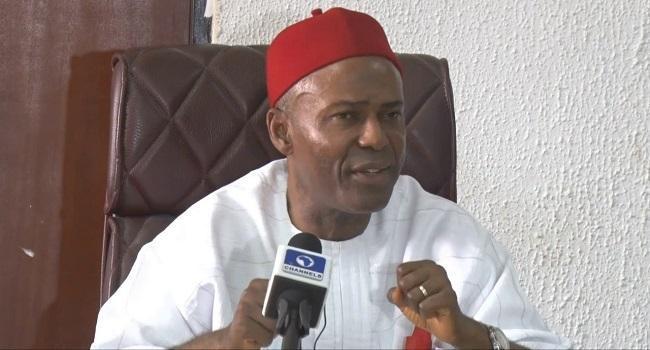
Also, out of the top 10 most competitive countries in sub-Saharan Africa, an index which excluded Nigeria, nine of them measure above Nigeria in the ranking of technological and innovative readiness. They are Mauritius, South Africa, Rwanda, Botswana, Namibia, Cote d’Ivoire, Zambia, Seychelles, and Kenya. The tenth is Gabon, noted Ogbonnaya Onu, Minister for Science and Technology at a policy dialogue with the private sector, organised yesterday by the Nigerian Economic Summit Group (NESG).
Onu said “Arising from the performance of our economy in the second quarter of this year, we are in a recession. We saw this coming two years ago with the sharp drop in the price of crude oil and the shrinkage in the volume of crude oil produced due to militancy in the Niger delta region resulting in the reduction in revenue available to the government.”
He also noted that “the handshake between technology and business will help us overcome these challenges and build a future that is better and brighter.”
This point was also emphasised by Kyari Bukar, Chairman, NESG, who noted that technology could become more sustainable than crude oil if given the appropriate attention and incentives to attract participation. He noted that Finland once had 25 percent of its revenue from one company, Nokia, a feat he says can be replicated in Nigeria if the country massively grows the numerous science and tech businesses seeking to survive.
A revelation by the minister was also that all vehicles to be purchased by the ministry of science and technology and the agencies under it will be acquired only from companies manufacturing in Nigeria. He pledged that once allocations are made available, the ministry will take the lead in promoting patronage of made in Nigeria products. He also went further to disclose that all computers to be purchased will be those made in Nigeria.
Incentives like this will no doubt spur indigenous companies into increasing their productivity especially if other Ministries, Departments, and Agencies (MDAs) take the initiative to patronize locally produced products.
Ernest Shonekan, former interim head of government also remarked that “Favourable incentives will enable companies to do more and the country can move to greater heights.” He added that “ we need a total commitment and a close partnership between the public and private sectors for us to significantly diversify our economy and achieve our envisaged larger growth in agriculture and in industrial production.”
Onu on his part said “if the organised private sector works closely with the government, it is clear in my mind that never, never, and never again shall this country fall so easily into economic turmoil simply because of falling prices of commodities in the international market. We therefore urgently need, not only a policy reset, but also a mindset to reset our economic development strategy. We must break out of the fear of the unknown and begin to experiment with other viable strategic options that could change our economy more positively. No other viable option, to my mind, holds the greatest promise today than mainstreaming science, technology, and innovation in our development.”
Shonekan recommended the enhancement of low and medium level technologies that will enhance industrial capacity utilisation in targeted industries where Nigeria has comparative advantage. Initiating and sustaining capacity building in those advanced technologies vital for 21st century industries such as electronics, computers, information technology and bio-technology.
“Without mincing words, it is only when we use advancements in technology to improve our agricultural production and industrial processes that we can achieve higher levels of production in both sectors,” Shonekan said.
Other plans as highlighted by the minister of science and technology in driving growth included; raising the contribution of science, technology, and innovation to three percent of economic growth (GDP) in four years.
Increase the integration of output of research and development (R&D) to influence manufacturing output by at least 10 percent in four years.
Caleb Ojewale