 Image copyrightAP
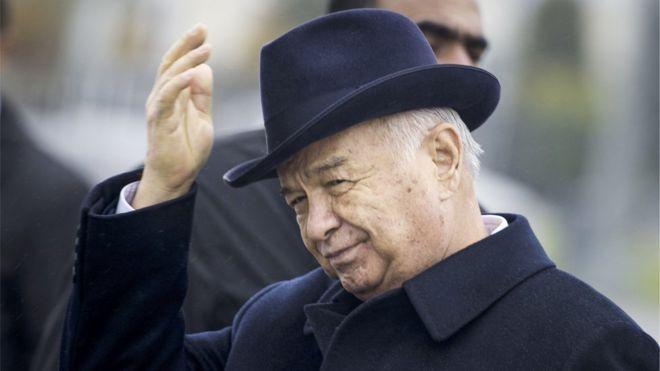
The Uzbek government has confirmed the death of President Islam Karimov, six days after he was taken to hospital with a suspected brain haemorrhage.
One of Asia’s most authoritarian leaders, Mr Karimov, 78, died after 27 years in power.
Mr Karimov has no clear successor. There is no legal political opposition and the media are tightly controlled.
He will be buried on Saturday in his home city of Samarkand and three days of mourning will be observed.

A UN report has described the use of torture under Mr Karimov as “systematic”.
The late leader often justified his strong-arm tactics by highlighting the danger from Islamist militancy in the mainly Muslim country, which borders Afghanistan.
Expressing his condolences in a statement (in Russian), Russian President Vladimir Putin described him as one of the most authoritative statesmen “who had contributed to the “security and stability of Central Asia”.
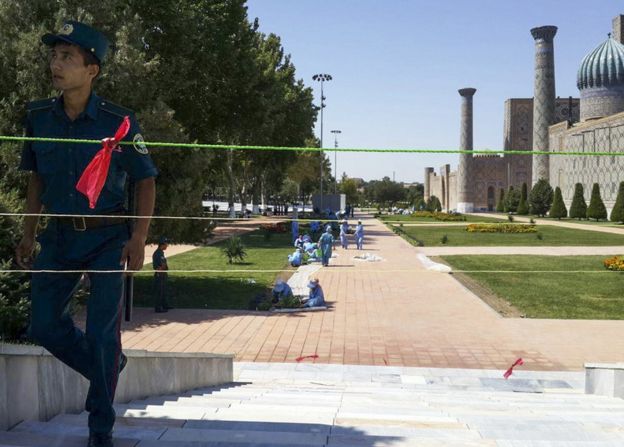
News of Mr Karimov’s death was finally confirmed after several foreign leaders and diplomatic sources reported it on Friday.
“Dear compatriots, it is with an immense pain in our hearts that we inform you of the death of our dear president,” a state TV presenter was quoted as saying by AFP news agency.

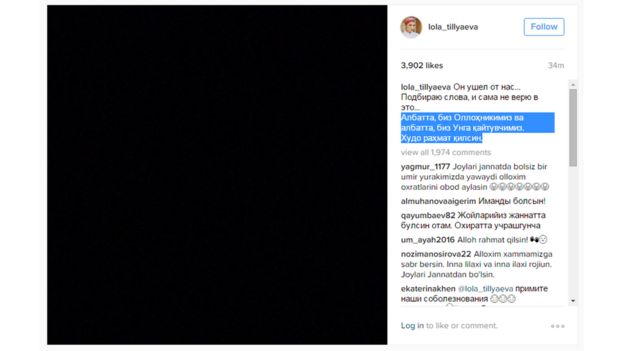
One of Mr Karimov’s daughters, Lola Karimova-Tillyaeva, posted a black square on Instagram with the words: “He left us… I choose my words and cannot believe it myself…”
Uzbek Prime Minister Shavkat Mirziyoyev will oversee the funeral, it was announced.
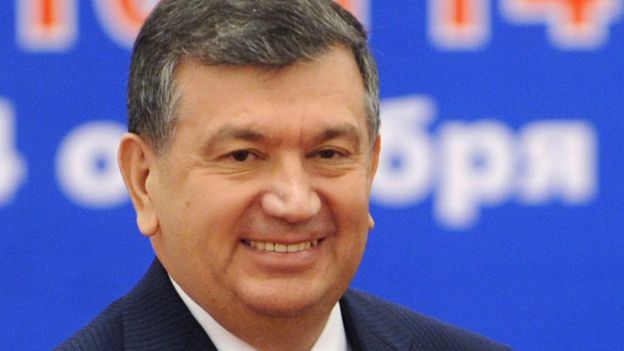
Mr Mirziyoyev, in office since 2003, has been tipped by observers as a likely successor.
Earlier, Turkish Prime Minister Binali Yildirim broke news of the death at a televised meeting of his cabinet.
Reports from diplomatic sources suggested several regional leaders were making plans to visit Samarkand for the funeral.
Some human rights groups say the Uzbek government is one of the most repressive in the world, notably after a crackdown in the eastern city of Andijanin 2005, when hundreds were killed.
Mr Karimov’s followers argue that curbs on freedom are a small price to pay for law and order.
“Yes of course, it’s a price for stability, because we see what is happening now in Syria, in Iraq, in Yemen, in Afghanistan and even in Europe – you cannot defend yourself from the terrorist attacks,” Sherzod Igamberdiev, a lawyer in Tashkent, told BBC News.
Uzbekistan was long one of Russia’s strongest allies among other former Soviet states but strains appeared in recent years, notably when Tashkent suspended its membership of a Russian-led military alliance, the Collective Security Treaty Organisation.
Analysts say Mr Karimov has played Russia, China and the West against each other to keep Uzbekistan from total isolation and to receive limited US aid. In 2014, Russia wrote off most of Uzbekistan’s foreign debt to Moscow, forgiving $865m.