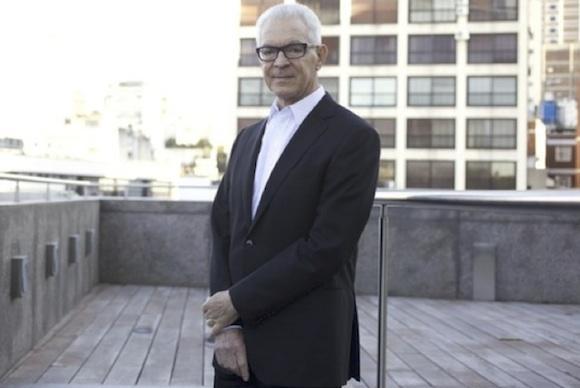
It was 40 years ago, as Argentina was plunging into one of Latin America’s bloodiest dictatorships, that Eduardo Costantini first proved he had an eye for a knockout deal. Having returned penniless to Buenos Aires, his savings spent on studying abroad, the property baron borrowed some money from a friend and speculated on the local stock market.
He did well and with his profits he bought land that looked far too cheap. Lacking the money to develop it, he sold the plot for $1m in cash five months later, more than quadrupling his investment.

“Just like that, I became a millionaire. That was a big achievement in 1976,” remembers Mr Costantini.
Argentina’s patchy history of coups d’état and recurrent economic crises did not hamper the ascent of the financier-turned-philanthropist from unpromising beginnings.
One of seven brothers and six sisters, Mr Costantini could not rely on his middle-class parents for much more than a good education. He started out at 21 working long days at an abattoir run by his older brother, and selling clothes knitted by his wife over the weekend. It was a cycle of drudgery that he escaped by going abroad to study economics in the mid-1970s.
“I always dreamt of going to England to study,” says the Anglophile tycoon, who was spurred on by admiration for John Maynard Keynes. “I loved studying economics,” he says wistfully of his time taking a masters at the University of East Anglia.
The jackpot property deal that he clinched on his return gave him the financial independence to set up his own brokerage firm, Consultatio, in 1980 and embark on a giddy rise up the world of finance.

Extraordinary opportunities arose for savvy investors during the heightened volatility of Argentina’s economy in the 1980s, a time of weak governments and hyperinflation.
Mr Costantini made a series of spectacularly profitable trades in shares in Banco Francés, Argentina’s oldest private bank, now owned by Spain’s BBVA.
“In two hours I bought 15 per cent of the bank over the phone; it was a huge transaction,” says Mr Costantini, describing this as his most daring investment.
After coming to an agreement with the bank’s management and shareholders, he was made vice-chairman. When he sold his stake in Banco Francés, Mr Costantini made “a fortune”, multiplying his original investments, he says, about 15 times.
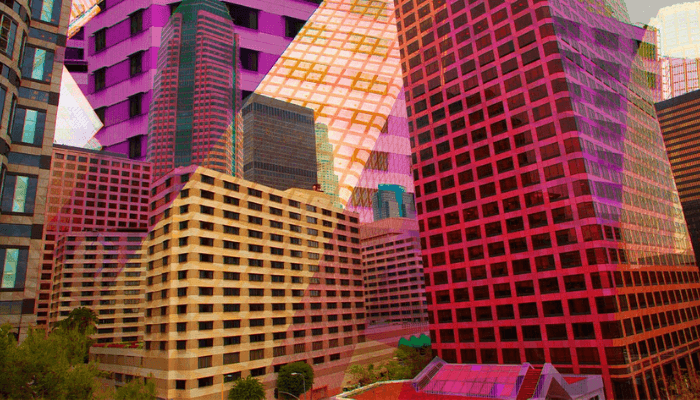
In 1991, he moved into property. First he built the Catalina towers, Buenos Aires’ answer to New York’s Twin Towers. Then, in 1999, he founded one of the first and most exclusive of the city’s gated communities, changing how a whole class of Argentines aspires to live. Today, about 30,000 people live in Nordelta, a city within a city that you scarcely need to leave, with health clinics, schools and shops, swimming pools and football fields. Safe for residents, detractors say these gated developments are socially divisive.
Now 69, Mr Costantini is vague about how much he is worth: “About a billion dollars,” he hazards, as if the matter is almost irrelevant. The figure is difficult to verify. He seems more interested in what he spends his money on.
Mr Costantini has amassed enough wealth to become the first Argentine to sign up to Giving Pledge, the Bill and Melinda Gates initiative launched in 2010 with Warren Buffett, asking the world’s richest people to donate half of their fortune to charity.
“We all have a social responsibility. You have to have a social project in life,” he says.
Sitting in an upright chair in a modest office hidden at the back of the Latin American Art Museum of Buenos Aires (Malba), the evidence of his wealth surrounds him.
Founded by Mr Costantini in 2001, while Argentina was in the thick of its most recent economic collapse, the Malba houses one of the best collections of 20th-century Latin American art in the world, with works by Frida Kahlo, Fernando Botero and Armando Reverón.
He recently commissioned a gaudy 10-foot-tall ballerina by Jeff Koons, the world’s most expensive living artist, and the sculpture graces the entrance of the museum. It will be moved later this year: Mr Costantini has been concentrating on a pair of luxury residential towers in Miami, where the ballerina will live.
But with the election last year of Mauricio Macri, the centre-right president who is keen to improve Argentina’s economy after years of populist rule, he is turning his attention back to his home country.
“Yes, of course” he would invest in the new Argentina, he says. He notes that the government is interested in selling some of its land near the River Plate, a muddy estuary that separates Argentina from Uruguay. “Buenos Aires can’t grow that much, but maybe in 10 to 20 years there could be a new skyline by the river,” he ventures.
Mr Costantini laments Argentina’s chronic instability: “Presidents here try to cheat democracy to stay in power,” he says, a phenomenon that consistently makes the handovers a “traumatic” process. “If the conception of power of this government is different, it will make a historic change.”
Mr Macri’s attempts to revive Argentina’s economy, after the previous government’s carefree spending blew a gigantic hole in the national accounts, will not be painless.
“But we are a society that doesn’t want to pay the price. We live beyond our means,” argues Mr Costantini.
The economist in him becomes visibly agitated by the thought that too many Argentines just “don’t understand” the importance of fixing inflation. “There are economic rules. It’s a science and people don’t respect that. Argentines think that they can cheat everything. That’s why we are a different country.”
Culled from the Financial Times