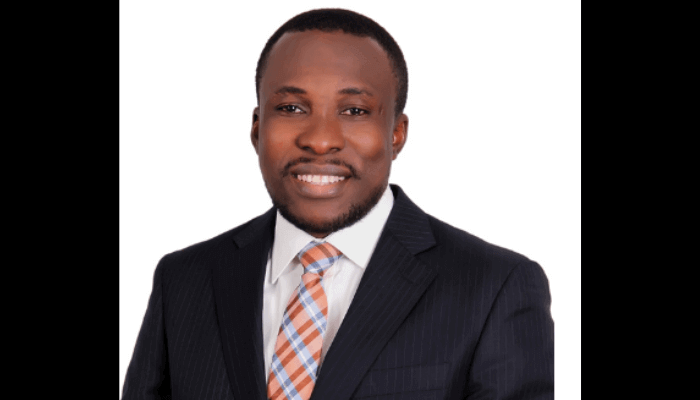
Nigerian start-ups and innovations are beginning to attract increasing global attention as many entrepreneurs develop capacity for more ingenious ideas. One of the newest scouts in town is Chris Schultz, CEO of Launchpad, a network of co-working spaces and innovation hubs looking to expand internationally. In this interview with BusinessDay, Schultz explains Nigeria is ripe for multi-million dollar investments for start-ups and innovations to compete internationally.
Can you tell us a bit about yourself and your career as a technology entrepreneur?
I was born in Zaria and I grew up in Nairobi, Kenya. Launchpad is a network of co-working spaces and innovation hubs. Right now, it’s in the US, potentially expanding internationally and Lagos will be a good start.
I have spent my career as an entrepreneur, and more recently as an investor. So, I invest in start-up companies as well, initially just in the US and we hope to change that too.
I have been in technology and software throughout my career; the Internet was just reaching into universities when I was in the university. I am an engineer by training and I became a tech geek who really enjoyed learning about the Internet. I’ve started several companies; sold a couple of companies and I’ve had a fun ride as an entrepreneur.
My perspective now is that Silicon Valley is now very crowded and it’s kind of less interesting as it was at one time from the innovation standpoint. Innovation exists to solve problems, and some of the problems we see now are how fast can we deliver a “Borito” to somebody’s house? Now, that’s not that interesting of a problem. From my perspective, I think Lagos, Nigeria, Africa have incredible opportunities for entrepreneurship to have a big impact and it is very right at this moment for a number of different reasons. Among those, the infrastructure is very much in place, though, there are challenges in connectivity but you can see the light at the end of the tunnel.
Now that Android phones can go for about $20, everybody can afford it; they can access content, services, education, and that can be transformative for Nigeria, and for Africa.
What can a silicon valley or something similar to it do for Africa, in terms of catching up and raising the standard of living, and what do we need to do?
I think there certainly are very good signs right now. There are innovation hubs like ideahub and cchub that are incubating entrepreneurs and training them and the interesting thing for me is that information and educational content is not siloed anymore. Anyone can learn from Silicon Valley and from leading technologies in the world instantly. What I’ve seen so far (in Nigeria) is the curriculum and mentorship that they are doing which is the same thing in Silicon Valley and in the US.
If we are to describe the situation in Nigeria as a train going down the track, it is very much going in the right direction.
I think that from what I’ve seen, Lagos is certainly poised to be the technology hub of Africa. In terms of how far away, Silicon Valley is a very unique place, and in almost every place I’ve been to, they all want to be Silicon Valley.
I actually think that reframing it and making Lagos a technology hub is really the right way to think about it. And of the course the analogy of becoming a tech-driven economy, is very much within reach.
I think the mindset over the course of generations is now entrepreneurial focused rather than development driven. The benefit of this is that entrepreneurship creates value rather than just taking and distributing it and that is what innovation allows you to do.
The technology industry can drive job creation, creation of wealth for individuals, investors, and that becomes a very virtuous cycle. Because it leaps the economy again, socially, it educates and transforms. In a world where you can’t depend just on natural resources to drive the economy, technology is invariably the greatest natural resource that we have- its human capital.
One of the things that is interesting to me and will be interesting to other investors is the size of the market. Both in Nigeria and speaking broadly across Africa, obviously there are individual countries and challenges, internationalisation that needs to happen but we need to think of it all as just one (potential) market; it is just a huge market and that creates a lot of opportunities for innovation, and the economic impact that the innovation can have, something which will be interesting to a lot investors.
What has been your experience so far on this visit and what do you aim to achieve?
Coming back to Nigeria has been a dream of mine, not just for leisure but actually coming back and doing business here. I think what I’m looking for on this trip is that I am trying to understand and just explore the ecosystem as much as possible. I’ve met with very interesting companies. I visited Andela yesterday, which has just raised money from Mark Zuckerberg, and I think their business model is incredible; it has sort of a dual purpose.
A new generation of potential entrepreneurs with computer literacy, while being driven by exporting their talent. They are selling services, and that’s a major export bringing capital through talent that will now be exported to the U.S.
At any rate, I’m meeting the incubators like idea, hoping to plug into them with Launchpad and we can help to build investor relationships, mentors, and media attention as well for what is going on here in Lagos. Ultimately, we would like to come back and formulate ways towards playing a more integral role, so this not just to explore but actually engage potentially as an investor.
How does investment by Mark Zuckerberg in Andela really help to bring global media searchlight on local organisations and initiatives?
His investment is a very big deal because Mark Zuckerberg is a global brand, and he and Elon Musk are the two greatest entrepreneurs of this generation. Elon Musk is South African, but Mark Zuckerberg just made his first investment in Africa and that is very notable. That has much broader implications than just the financial investment in Andela but it’s clearly on the tip of everybody’s tongue around here. I think people are aware of it in the US and I think more and more investors are taking note as well, so you’ll see more guys like me showing up.
What specific needs or niches have you noticed in this market?
The sectors that I found most interesting on this trip are driven by the solutions challenges that exist in the market. If you think of the dynamics that exist, you have a market of 180 million people, 50 percent of whom are 30 years old or younger, with a hunger for technology, and connecting to the internet for the first time through, probably, an android phone.
One of the needs (in Nigeria) is education. I think a sector that is very important like education and education technology, needs more attention in order to drive all of this knowledge and information that we have access to, but which the rest of the country or continent may not have access to.
E-commerce and delivery of goods and services is really interesting, particularly because in some ways there is more innovation going on in Nigeria and Africa than even the US. The E-commerce companies (in Nigeria) are building their logistics infrastructure, which is an incredible challenge that is being solved. Even in the US, Amazon, which is the biggest (e-commerce) company, depends on UPS so they don’t have to develop their own logistics.
In the travel space, I think it is also interesting with what Wakanow is doing for a couple of reasons. One because I think more Africans and even Nigerians will begin to travel more around the continent as they use the service. That sort of unlocks the power of travel around the continent that also helps businesses like hotels.ng which brings all hotels in Nigeria more online than before.
In healthcare there is a business like Life-bank, which is a virtual blood bank that connects hospitals. If there is a surgery and a patient is running out of blood, they can get it and also provide logistics and infrastructure to have it delivered in a temperature controlled environment.
My core investment policy is solving real problems for people but I think a lot of innovations just come up with solutions for which problems never really existed. You may think you’ve created a really cool app, but then nobody really needs it.
We’ve had a couple of success stories when it comes to incubating innovations in Nigeria and we’ve had a lot of failures as well. As an investor coming into the system, how do you intend identifying the causes behind the failures of many incubated projects?
The short answer is that is totally normal. The reality in business is that nine out of every ten businesses fail. That is not surprising, and is also not off-target. All this is sort of like a tunnel and you need activity going on at the top of the tunnel which people are attempting to start businesses; many of them will succeed but failure breeds success, and also breeds learning.
So, entrepreneurs who don’t succeed come back and do it again because they have learnt something and so are likely to be more successful. I think what is more important is for the business community at large to understand that there can be a tendency to view failure as failure and to be critical of entrepreneurs who fail. While it’s important to celebrate success, it’s also important to respect somebody who has tried but failed.
Let’s lift them up again, encourage them to try and create the desired innovation. So everything you have described is correct; those are the numbers.
Andela raised $28 million from Zuckerberg, so, what is your projection in terms of the potential value for new investments.
Are we now looking at ten-fold of what Andela got, even from your own end? For instance, are we to be expecting like $50 million in investments?
I would like to raise enough capital and make some very significant investments. I think the way to think about investments is that it doesn’t happen overnight. The companies that are in CChub at the moment, none of them are raising investment like Andela anytime soon.
It will start with half a million dollar investment and it also requires four Silicon Valley investors to be interested which also depends largely on local engagement. The angel (investor) community here in Nigeria will also have to get involved.
One of the challenges would be for some of the business community members who have earned money in other industries- oil and gas, manufacturing, to begin to engage in technology and become major investors. Of course we recognise the risks and there may be investments that are not in their full competencies and may be more difficult to understand. But that engagement and (subsequent) investments will breed economic development.
While wealthy individuals think of their investments in terms of profits, angel investors see it more as an act of good towards their ecosystem and their city by making investments even if they don’t fully understand them.
We keep talking of the potential of Nigeria in respect of the population and all that. Have you also factored in the challenges, especially in terms of power? Generally, before coming here what are the things you have heard?
There are different layers to the challenges. From what I’m hearing, at the very high level, there are issues around security of investments and that has to do with legal structures and corruption. If you are making an investment in a company, you want that money to be spent on the development of the company and not for some other persons to be benefiting from it.

What I’m hearing is that the security of investments is what will bring international investors to begin engaging and I think that is already beginning to happen. More people feel more comfortable than ever before and I think that is very good.
Infrastructure-wise as you mentioned power, clearly the utility grid is not where it should be. I’ve been in a couple of meetings this week, the light goes off and nobody even stops talking. It seems so normal and the meetings go on, but for me, that is very unusual.
Another thing under infrastructure that I think is important to exist is connectivity. The economics of fibre circulation across the country need to continue to come down for the affordability of data. We as consumers will consume more and more data and that is a good thing. The Telcos have to make data more affordable for people to be able to consume more data and have access to different types of content.
What do you think the government should do in terms of policy, and properly selling Nigerian potential as we want?
The role that government can play is putting innovation and technology on the economic agenda. By getting people who are doing the work a seat at the table, and conveying to the rest of the world that innovation and technology is important to Nigeria.
Government cannot legislate entrepreneurship, but government can create an enabling environment where entrepreneurship is primed. One of the things I’ve been hearing from entrepreneurs is challenge such as revenue model with the Telcos. The Telcos take 50 – 70 percent of revenue, which is crazy because those economics don’t make sense for entrepreneurship.
But no individual entrepreneur can negotiate on their own with the Telcos. Netflix can come in and negotiate with the Telcos but the Nigerian entrepreneurs can’t do that. The government can do that on behalf of the entrepreneurship community. The government could create some sort of innovation platform and negotiate for Nigerians access to the wireless infrastructure at negotiated rate that is more affordable so that people can distribute their technology and the economics make sense.
Finally, I think the investments in human capital and education, the more that can be done so that STEM education is taught in secondary schools. Education has a long-term role to play but STEM education, human capital, and knowledge-based economy are where the world is moving. For Nigeria to compete, that should be an area of focus for the government.
BusinessDay