In the last one year, Nigeria has been carrying out an “experiment” to test for how long a nation can defy the laws of economics. The results are out, and the answer evidently is “not for long” especially when oil prices are averaging $50 and not $100 per barrel!
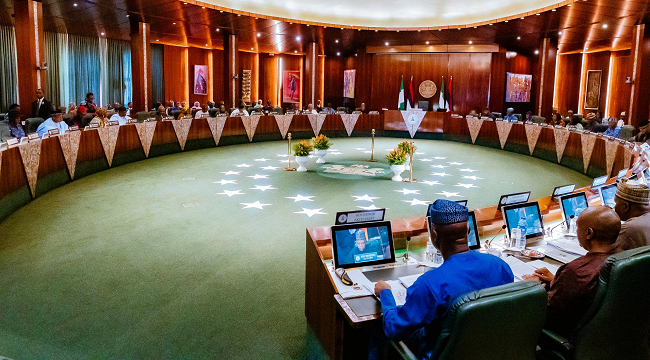
There were multiple fronts on which we fought this war against rational economics-at first we tested the hypothesis of whether a modern economy could be administered with a cabinet and economic team. The president himself, Muhammadu Buhari was the main proponent of this thinking. He argued several months into his administration, and not haven appointed ministers, that ministers were redundant, characterizing them as “noise makers” who made a lot of noise while civil servants did all the actual work. The president explicitly made it abundantly clear that it was with reluctance that he eventually named ministers seven months later, the same set of individuals he would have been expected to select if he had made the selections on the date he was sworn into office. The president himself appears to have “repented” of this curious hypothesis as he has lately been heard lamenting how civil servants “padded” his draft budget and embarrassed the government!
It is noteworthy however that the president has not yet named an economic adviser with the only official economist in government known to be working in the Vice President’s office. Buhari has not also named a council of economic advisers as is the practice in the United States as some have advocated. However he recently lamented that some “economists” have been talking over his head, evidence that there has been some (obviously unsuccessful) attempts to tutor the president on economics.
The two most important “battlefronts” on which Buhari confronted rational economics, and lost, have been the issues of downstream petroleum sector deregulation, also known by Nigerians only partially correctly as “subsidy removal” AND the management of Nigeria’s foreign exchange and currency system. When the Buhari administration came into office, the case for downstream deregulation was compelling and even unchallengeable based on economic arguments-oil prices were at historical lows; the country’s fiscal situation made the subsidy scheme unsustainable; fuel shortages were raising inflation and hurting economic activities and it was inevitable that they would soon affect employment and growth; most drivers and commuters were paying “deregulated” prices for petroleum products and yet suffering from shortages; the country’s economic imperative was for diversification, including encouraging domestic refining and petrochemicals and the entire downstream value chain; investments in downstream petrochemical would increase domestic value addition and lead to exports of refined rather than exclusively crude oil and gas products; these investments would support the creation of local jobs, rather than create jobs in offshore refining centres from which we imported refined products etc. Yet for twelve months we continued to pursue a “lose-lose” economic policy that perpetuated fuel shortages and dissipated scarce national resources. The government recently gave in and allowed some deregulation with the queues immediately disappearing! Yet it is not clear that government’s repentance in this case is complete and irreversible with senior officials straining to stress that only a “partial deregulation” had been implemented and with government still announcing an official price ceiling of N145 per litre for PMS.

Government has recently experienced a similar “Pauline” conversion in respect of the second self-imposed structural obstacle it has erected in the way of economic activity and growth by way of the fixed exchange rate system it operated for one year in which the exchange rate was arbitrarily prescribed as N197/$ in spite of Central Bank’s inability to supply dollars at that price, declining foreign reserves, the crippling effect of this system on output, prices, jobs and investment and in defiance of rational economic thinking. Thankfully government has agreed to implement a “flexible” exchange rate system that amounts in substance to a devaluation of the Naira to somewhere around N280/$. Unfortunately the manner of implementing this desirable flexibility, after a year of denial in which alternative FX supply sources have dried up and unmet demand has accumulated, means that this change bears significantly more risk than if the system had moderated incrementally over the last year. The other significant point is the manner in which CBN voluntarily surrendered its autonomy over monetary policy in favour of regime survival. Anyway, better late than never; and the markets have welcomed what everyone hopes will be a permanent return to rational economics. Yet there are worrying signals here as well that FGN/CBN’s repentance in respect of FX policy is similarly incomplete and based on inability to sustain its wrong-headed earlier approach rather than reason, and the evidence lies in the incongruous retention of the ban on importation of 41 items in a supposedly market-driven system!
It is important to establish that the 12-month defiance of rationality in economic policy management has had clear and substantial costs including in hundreds of thousands of lost jobs, macroeconomic uncertainty, investments forgone and in what appears likely by the end of this month to be an economic recession. In terms of sectors, NBS data confirms that the banking and finance, oil and gas, construction, hotels and restaurants, electricity, manufacturing and real estate sectors are already in recession. Only agriculture, trade and telecommunications, of our major economic sectors are still recording growth! Incidentally some legislators in both the Senate and House of Representatives would like telecommunications to also go into recession!
Opeyemi Agbaje