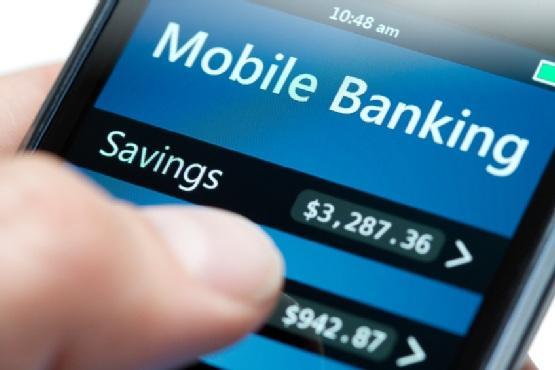
Over the past eighteen months, several of Nigeria’s largest banks have rolled out new mobile banking platforms – most recently, with the launch of Standard Chartered’s mobile app in May 2016 – reflecting the push by commercial lenders to boost cashless transfers and transactions.
Standard Chartered unveiled their Standard Chartered Mobile platform in spring of this year as part of a $1.5bn continent-wide strategy to expand their digital presence and technological infrastructure.
The move by the UK-based bank means that all of Nigeria’s 20 commercial lenders, all profiled by Asoko, now have a consumer-facing mobile money platform. The roll out of Standard Chartered Mobile comes on the back of the January 2016 re-launch of United Bank for Africa’s (UBA) U-Mobile – an overhaul of UBA’s original 2011 mobile platform, which was one of Nigeria’s first such programs – as well as the launch in 2015 of Access Bank’s Smart Savers Initiative and Guaranty Bank’s GTEasySavers, which both allow customers to open up new accounts directly from mobile devices.
The interest in the sector is easy to understand. Since 2012, the Central Bank of Nigeria (CBN) has aggressively been encouraging cashless and cashlite activity to reduce the cost of hard currency circulation and improve overall efficiency. The push has led to a rise in mobile money activity: according to data released by the CBN, the total value of mobile payments grew from $1.2 billion in 2014 to $1.6 billion in 2015, an increase of 27.7%.

Furthermore, with a base of 110 million mobile subscribers – compared to 56 million bank account holders – the potential for using mobile money programs to increase banking penetration is clear. Such programs also allow banks to reduce expenditures, which is crucial given the high costs they face when operating brick-and-mortar branches, such as the installation and maintenance of diesel generators in a country where blackouts are common.
The mobile finance space is becoming crowded, however. In addition to the platforms offered by the major commercial lenders, the CBN has also recently granted licenses to an additional 15 non-bank and 6 independent mobile money operators (MMOs) over the course of the second half of 2015.
The push to boost mobile money activity in Nigeria has also been less successful than in other African markets. In Kenya, for example, which began pioneering mobile money activity through the 2007 launch of telecom operator Safaricom’s M-Pesa platform, estimates of the total value of mobile money transactions range up to as high as one-third of annual GDP. However, while Nigeria has more than four times as many mobile subscribers as Kenya, a 2014 study from Finclusion found that that less than 1% of the population has ever used a mobile banking service and only 0.1% had ever established a mobile wallet.
This is in part a reflection of a unique set of factors in Kenya – including a dominant mobile operator and a flexible regulatory framework – but is also a result of the CBN’s licensing framework, which prevents telecoms operators from directly handling cash and forces banks, as opposed to telecoms operators, to initiate mobile money services. These hurdles have paved the way for a number of bank-telecom development partnerships such as those between MTN Nigeria and Diamond Bank, as well as Globacomwith Stanbic IBTC, First Bank and Ecobank Nigeria.
Source: Asokoinsight