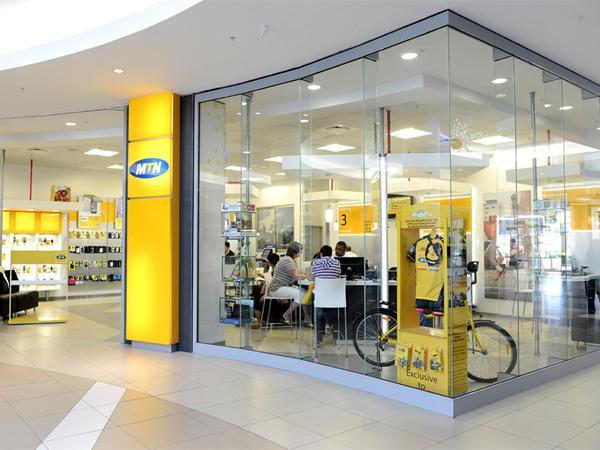
The Nigerian Stock Exchange (NSE) will be adding a third major sector after financials such as banks and industrial names like Dangote cement, once MTN Nigeria lists its shares.
Analysts say this will help balance the Nigerian bourse, give investors options for sector rotation and reduce volatility associated with a single name dragging down the entire market.
The NSE had a market capitalisation of N9.35 trillion as at Friday June 10. Dangote Cement, Nigeria’s largest listed company with a market capitalisation of N2.81 trillion, makes up 30 percent of the bourse.
The financials combined make up a further 20 percent of NSE market capitalisation.

“The NSE needs a big issue such as this to ginger the market,” said Victor Ogiemwonyi, CEO, Partnership Investment Plc, who is also the president Association of Issuing Houses of Nigeria (AIHN).
“The notice by MTN to list its Nigerian Unit is a welcome development. There is benefit for all. MTN gets to raise equity in Nigeria and create new investors for its stock, and will now also share its prosperity with its customers who will now become investors,” Ogiemwonyi told BusinessDay.
MTN Group Limited last Friday escaped its dispute with Nigerian regulators with a $1.7 billion (N330 billion) settlement, saying it will also “take immediate steps” to list shares of its Nigeria unit on the country’s stock exchange.
Investors and market operators have welcomed the decision to list the shares, saying it brings a big name to the information and communications technology (ICT) sector, which currently has very little representation.
MTN group stock rose as much as 21 percent in Johannesburg. It traded 12 percent higher at 138.53 rand as of 2:51 p.m, giving it a valuation of R258.3 billion ($17 billion).

With Nigeria making up 40 percent of group revenues, combined with the still fast growing telecommunications sector, MTN’s Nigerian unit could potentially fetch a $6.8 billion valuation, when it lists.
Telecommunications expanded 5 percent in the first quarter, compared with 3.5 percent in the three months through December, and contributed 8.8 percent to gross domestic product, the National Bureau of Statistics (NBS) said in a June 02, report.
Nigerian mobile-phone customer numbers have grown rapidly over the past ten years as handsets became more affordable and data services increased.
Africa’s most populous country had 151 million subscribers at the end of last year, up from 19.5 million in 2005.
Nigeria’s telecoms sector boasts of other big names such as Glo, Airtel, and Etisalat, which have chosen to remain private and refused to leverage public share sales in their expansion drive while also making the Nigerian bourse non-reflective of key sectors of the economy.
“When listed, the shares will provide investors the opportunity to further diversify their portfolios away from banks, consumer goods and cement companies which currently dominate the stock market,” said Pabina Yinkere, head, research division, Vetiva Capital Management Limited in an emailed response to BusinessDay.
By revenues, MTN is estimated to be the largest corporate company in Nigeria with 2014 revenue of N825 billion; thus, when listed, would be one of the largest companies by market value on the NSE squaring the likes of Dangote Cement plc.
“We note that the shares already trade actively on the over-the-counter (OTC) market and should get more patronage when officially listed on the NSE,” Yinkere added.
The agreement ends eight months of start-and-stop negotiations with Nigerian officials over how to settle the fine, which was levied for being slow to disconnect customers unregistered in the country.
Chairman of MTN Phuthuma Nhleko came out of retirement to oversee the process, hiring former U.S. Attorney General Eric Holder to lead negotiations.
“In my view, the drastic reduction in the fine looks like an incentive for MTN to consider listing. While other players would seek to be incentivised in one way or the other, they are still likely to react to MTN’s action by considering the possibility of listing. The bigger take-away is that multinationals would list their shares if the incentives are right. They have a lot to gain by doing that,” Kayode Tinuoye, head, research, financials, United Capital said.
“The relationship between MTN, the Nigerian government and the Nigerian Communications Commission has been restored and strengthened.”
MTN’s battle with Nigerian authorities over payment of the fine had cost the company its status as Africa’s highest valued telecommunications operator, lowering the stock price by one-third amid a lack of clarity about the negotiations and posturing by Nigerian politicians.
Emeka Madubuike, president, Association of Stockbroking Houses of Nigeria (ASHON) told BusinessDay in a telephone response “MTN listing on the NSE is a win-win situation.”
Madubuike, who is also managing director of Compass Investments and Securities Limited said the benefits of MTN listing are enormous, not just for the company but also for the investors.
He said the listing will “boost the NSE market cap, attract more shareholders to the market,” and as a known brand, a lot more people will be interested in buying its shares, he added.
Madubuike believes that listing on the Nigerian bourse will make MTN Nigeria more committed to operational rules and improved corporate governance.
MTN was hit with the penalty after failing to comply on time with an order to disconnect 5.1 million customers deemed by the regulator to be unregistered in Africa’s most populous country.
Nigeria has sought to cut off service to some users as they fight crime and in a country with poor identity records.
IHEANYI NWACHUKWU