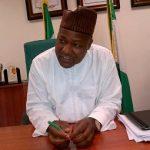
Organised labour has asked the Federal Government to draw up a road map to revive the ailing economy and urgently check rising unemployment rate put at 10.4 percent as of the last quarter of 2015.
Experts identify epileptic power supply, poor quality of education, lack of skills, neglect of agriculture and corruption as factors contributing to unemployment in Nigeria.
Labour says it is disturbing that one year into the “change” government Nigerians are still left waiting and gazing how the administration intends to fulfil critical economic programmes promised the people even, as the manufacturing base shrinks leading to loss of more jobs.
“The unemployment crisis is a reflection of the wider national economic crisis. There is hardly any household in Nigeria where there aren’t at least two or more unemployed persons who have graduated from various tiers of our educational system, looking for job placement for upward of three to five years.

“The ruling APC government in its manifesto promised to create 3 million jobs annually. We have waited one year for the government to bring out its blueprints on how it intends to go about achieving this. We will seek audience with Mr. President to get more information on this important matter,” Ayuba Wabba, president of one of the two flanks of the Nigeria Labour Congress (NLC), said in Abuja, Sunday.
Wabba, who spoke on “the working class and quest for socio-economic revival” as part of activities to mark the 2016 Workers’ Day in Abuja, said what the country needed urgently was a return to national economic planning that focuses on “the Nigerian state as a key agent of development.”
Wabba said labour would be prepared and willing to contribute to any effort to establish a ‘Job Creation Fund,’ nationally to tackle the problem of unemployment just as he decried the comatose state of textile industry, which used to be one of the largest employers of labour.
“In the period after independence, the textile sector was a very important sector in terms of production and the volume of jobs that the sector absorbed. It was employing at the height of the textile boom, over 320,000 workers. Today, the sector has struck to employing less than 50,000 workers. We call on the federal and state governors to work to review the sector,” he said.
In Lagos, Joe Ajaero, who led another flank of the NLC, also queried the Federal Government’s management of the economy, which he said had resulted in lower living standard of Nigerians.

“We are worried that the nation’s economy has become a basket-case. It is seriously sick lacking coherence among its various sectors, robbing it of the capacity to respond to the usual economic remedies. It is a shame that we have continued importing petroleum products. It is also a shame that the products have become inaccessible to majority of the citizens, causing serious distortions to our economic processes.
“Fuel scarcity has persisted far longer than ever foisting on our people the most horrendous of sufferings ever meted out to them by any ruling elite in our nation’s history.
“This has driven the prices of staples far above the reach of the ordinary people – bread has gone up by 25 percent; garri from N300 per paint bucket to N500; rice from N8,000 to N15,000; milk and chocolate beverages by about 50 percent, while toiletries and other home products have all skyrocketed beyond the reach of workers and the masses,” Ajaero said.
Ajaero argued that as a nation, “we cannot be seriously thinking of economic development when we allow our domestic manufacturing capacity to continue declining. We cannot move forward as a nation when instead of producing more products internally, we allow the existing ones to fold up and walk away.
We cannot make progress when our tastes are heavily foreign. We cannot be talking of economic development when we continue importing petroleum products allowing our local refineries to continue lying comatose.” It is high time the federal government designed an economic blueprint to address these anomalies.
Speaking on the economy also, Bobboi Kaigama, president,Trade Union Congress of Nigeria, (TUC) bemoaned the harsh economic situation compounded by absence of infrastructure.
“An average Nigerian worker faces the problems of estimated billing for electricity, incessant fuel crisis and its attendant long queues at the filling stations, poor infrastructure and death-trap roads that claim thousands of lives yearly.”
He also condemned what he called “the impunity of state governors who slash salaries at will” as well as spate of killings in the country.