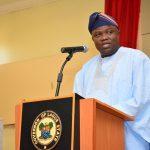
Managing Director of Nigerian Ports Authority (NPA), Habib Abdullahi, says the agency has keyed into the Federal Government’s agenda to diversify the economy and see less dependence on oil.
The agency is now more than ever before focused on ways to encourage the export potentials of agricultural products and solid minerals, Abdullahi says.
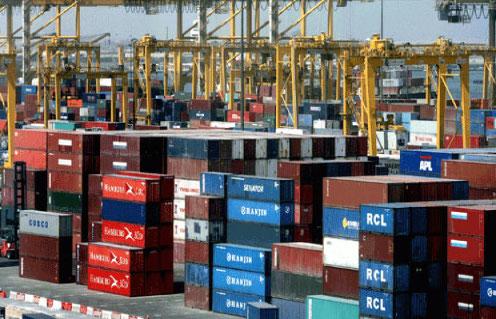
Abudullahi, who spoke to select editors in Lagos recently, said the ports were littered with empty containers, an indication of the nation’s mono-economic model that had been largely import driven in the past and with majority of those ships coming here going out empty.
“We can encourage people to export their agricultural produce and solid minerals as a way of helping to diversify the economy. The diversification will help to shift the focus from import to export, so we can take advantage of the containers lying idle. This is one of the areas we think we can diversify and increase revenue, thereby compensating for the losses from the oil sector,” the NPA boss said. Abdullahi revealed that the NPA had already written a letter to federal ministry of agriculture and the Nigerian export promotion council, to this effect.

According to Abdullahi, the agency is re-orientating the terminal operators to support this trend, while at the same time also strategising with the customs to see possible areas of engagement and collaboration to ensure some terminals can be solely dedicated to export.
In his words “we are trying to see how we can make Ikorodu an export port. We also have some interested parties coming in to help our dedicated cause, for example, we have received proposals for Ilaje port in Ondo; they want to make the port dedicated to solid minerals.”
Talking of exploring new trade routes, like directing business to other ports in the country in order to reduce the pressure at the Lagos terminal, the NPA boss said though it was not a direct function of the authority to tell people to use any particular port as this was dependent on the exporter or importer, the agency was working at improving infrastructure across all the ports, hoping that government and the terminal operators will promote and encourage businesses to come and use them.
While also debunking claims that importers tend to see the Cotonou ports as cheaper and better alternative to the Nigerian Ports to import cars and other goods because of high charges, Mr Abdullahi said people don’t import their cars through Cotonou, they smuggle it which we know is ridiculous. People complain about port congestion and what that means is there is a lot of business.
People say the port is expensive, if you compare it with others in the world, you will see that ours is one of the cheapest. If I ask you what the cost of importing in Cotonou is, people don’t even know how much it cost. But because of the general perception, people say that the Cotonou port is cheaper than Nigeria, which is not necessarily true. They import the car from there because of the fact that you don’t pay what you are supposed to pay, you smuggle it in.

Abdullahi emphasised that Nigerian ports are competitive in terms of pricing. Revealing that currently there are up to five applications for people to have seaport in Nigeria, which is a true reflection that the country and the government have positioned the nations economy for future growth. He mentioned new port development projects like the Lekki Port, Badagry Port, Ibom Port and the proposals on Ilaje as new investment opportunities that will stimulate further growth of the Nigerian economy.