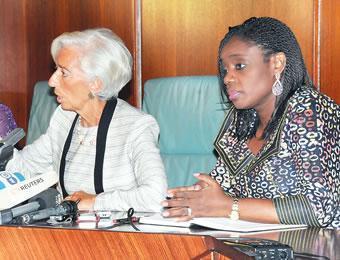
The annual Spring Meeting of the World Bank and the International Monetary Fund (IMF) which brings together Ministers of Finance and Central Bank Governors from all over the world is underway in Washington.
The meeting is taking place amidst growing global economic uncertainty, sluggish growth, and uncharted monetary policy path.
Ahead of the meeting, concerns were raised over growth in all major economies and emerging market economies. In the fourth quarter of 2015, the latest figures available, all major economies posted disappointing growth figures. In the US, the UK and the Eurozone, growth was 1.4 percent, 0.6 percent and 0.3 percent, respectively. In China and Japan, growth was 6.8 percent and 1.4 percent, respectively.
In response, Central Banks have continued their attempts to power growth through additional monetary easing measures, lower interest rates, and asset purchases. The US Federal Reserve cuts its 2016 tightening schedule to 2 from 4, following disappointing growth data. This is good news for emerging economies that have started to see the strengthening of the dollar as another major risk to their growth and capital inflows.

The Bank of England left rates unchanged at 0.5%, while the European Central Bank cuts interest rate to 0.00% and expanded its monthly asset purchase programme by €20 billion to €80 billion in March. The Bank of Japan left interest rate unchanged at 0.00% and imposes negative interest rate of -0.1% on banks excess reserves, also in March, while the Bank of China cuts reserve ratio by 0.55 to 17%.
For Nigeria, the meeting holds amidst growing economic uncertainty and worsening macroeconomic conditions. Yesterday, the National Bureau of Statistics (NBS) released its March inflation figures, showing that inflation rose to 12. 8 percent, from 11.4 percent in February, driven by cost pressures from fuel crisis and foreign exchange restrictions. It followed the latest growth figure of 2.11 percent for last quarter of 2015, and a rise in unemployment that reach 10.4 percent for the same period.
Nigeria’s Minister for Finance, Kemi Adeosun, and the Central Bank of Nigeria Governor, Godwin Emefiele are joining the meeting, fresh from a visit to China with President Muhammadu Buhari but there are outstanding issues that are yet clear.
The most critical one is the foreign currency component of the N2.2 trillion deficit in the recently passed, but yet to be accented 2016 budget. While the government has been very successful raising debt in the Nigerian market, the progress has been slow in relation to attracting international finance for the infrastructural expenditure plan of the government.
As it appears, the visit to China was successful. That success may not be repeated anytime soon, especially from the perspective of the World Bank and IMF, as it appears that the disagreement on the exchange rate policy will stand in the way.

Emefiele, smarting from the last MPC meeting, will be concerned that inflation is up by almost 150 basis points in just one month for an economy that is crimping. However, the expectation is that additional foreign exchange resources, the expected passing into law of the budget (when the President eventually signs), and perhaps the continuation of gradual rise in the price of oil, will provide some room for monetary policy maneuvers.
Ogho Okiti, Washington DC