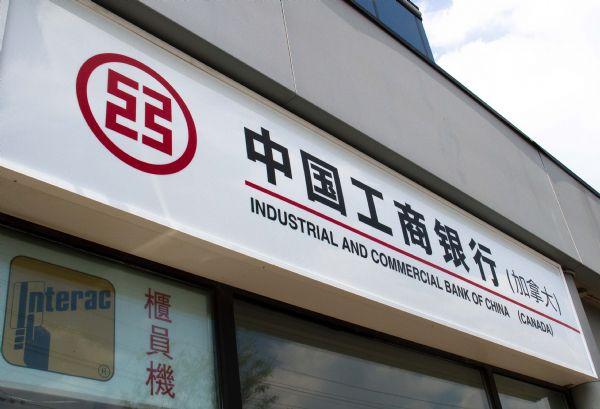
Nigeria’s Central Bank and the Industrial and Commercial Bank of China Ltd (ICBC) – the world’s biggest lender- on Tuesday, signed an agreement on yuan transactions, a Chinese Foreign Ministry official said.
“It means that the renminbi (yuan) is free to flow among different banks in Nigeria and the renminbi has been included in the foreign exchange reserves of Nigeria,” Lin Songtian, director-general of the foreign ministry’s African affairs department said.
The agreement was reached following a meeting between Nigerian President Muhammadu Buhari and Chinese President Xi Jinping.
This is coming on the heels of a $6 billion loan offered Nigeria to fund infrastructure projects according to Reuters.

China has offered Nigeria a loan worth $6 billion to fund infrastructure projects.
“It is a credit that is on the table as soon as we identify the projects,” Geoffrey Onyeama, finance minister, told reporters travelling with President Muhammadu Buhari to China.”It won’t need an agreement to be signed; it is just to identify the projects and we access it,” he said.
Gregory Kronsten, head of research at FBN quest, says the yuan had always been in the nation’s forex reserves, pointing out that yuan transactions reflected on trade reports of deposit money banks (DMB) in Nigeria.
“The agreement between the ICBC and CBN is sure to boost trade volumes between China and Nigeria. The important thing right now is if Nigeria can assess its required loan from China,” Kronsten said in a telephone interview with BusinessDay.
This comes on the heels of Nigeria’s consideration to issue Chinese Panda bonds, as divulged by finance minister- Kemi Adeosun, to help fund a record budget as Africa’s biggest economy suffers a slump in global oil prices with a ripple effect by way of slashed revenues.

“It’ll be no surprise if China insisted on the agreement as a prerequisite to obtain a loan. Afterall, every nation looks out for its own interest during negotiations,” says Taiwo Oyedele, a partner and head of tax and regulatory services, PWC.
Muda Yusuf, director-general of the Lagos Chamber of Commerce Institute, noted that the Exim bank of various nations seek to utilise loans given out as aid to other countries optimally, ensuring that mutual benefits are derived.
“Whatever support any country wishes to give to a counterpart is driven by the economic interest of the benevolent country. For instance, if China gives a loan to a country to build infrastructure, it is expected that a requirement is met.
“The criteria could hinge on employing a number of Chinese to do the job, using Chinese raw materials or it could come in other forms,” says Yusuf.
Nigeria’s central bank has said it plans to diversify its foreign exchange reserves away from the dollar by switching a stockpile into yuan, a move Yusuf says would come in handy in servicing the country’s loan from China.
“Diversifying our forex reserves to include substantial amounts of the yuan may have come at the right time, when you consider the fact that when you support the reserves with the yuan, servicing our debt profile with China is made easier,” he said.
Sustaining the reports above, President Muhammadu Buhari, on Tuesday, urged the Nigerian and Chinese business communities to work harder to reduce the trade imbalance between both countries, which is currently in China’s favour.
“Although the Nigerian and Chinese business communities have recorded tremendous successes in bilateral trade, there is a large trade imbalance in favour of China, as Chinese exports represent some 80 per cent of the total bilateral trade volumes. This gap needs to be reduced,” the president said.
Business and trade relations between Nigeria and China have grown astronomically in the last decade, with bilateral trade volumes rising from $2.8 billion in 2005 to $14.9 billion in 2015.
Nigeria accounted for 8.3 percent of the total trade volume between China and Africa and 42 percent of the total trade volume between China and the Economic Community of West African States countries in 2015.
LOLADE AKINMURELE