Trust the British, they will stratify anything! In the land of George Orwell, “all animals are equal, but some animals are more equal than others”. This popular line from Orwell’s novel, Animal Farm, has real-life meaning in Britain. You would think, for instance, that all cabinet ministers are equal, won’t you? But not so! Of Britain’s 22 cabinet ministers, four are deemed to occupy “The Great Offices of State”, the “most senior and prestigious posts”. The four “great offices”, apart from the prime minister, are the Chancellor of the Exchequer (minister of finance), the Foreign Secretary, and the Home Secretary (minister of internal affairs). Some would add the Lord Chancellor (minister of justice).
Nigeria doesn’t have such a ministerial pecking order. In different circumstances, some ministers have been more important than others either because of the force of their personality or their power base. However, I would like to rank President Buhari’s ministers in the order of their importance. Who are the linchpins of the president’s administration?
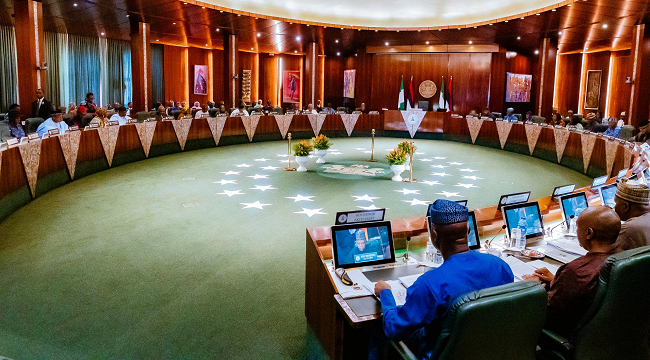
Now, my stratification of the Buhari cabinet is not based on tradition, but on functionality. I look at Nigeria’s current challenges and the huge expectations on President Buhari and his party to deliver real change, and ask a simple question: which ministers must be demonstrably successful in their roles for the Buhari government to be deemed a success? Put differently: when President Buhari and his party turn to the country in 2019 with their report card, which minister’s performance would have burnished that card, and which minister’s underperformance or failure would have tarnished it?
But first let me quickly make this point. Contrary to what President Buhari said recently, his government doesn’t, in reality, “have three more years to go”. It is conventional wisdom that the last year of any government usually distracts attentionaway from real governance. If the government is seeking re-election, it would, in its final year, be consumed by politicking, and if it is not, it could become a lame duck. In any case, if Nigerians conclude by 2018 that the Buhari government hasn’t delivered sufficient enough change to justify its original mandate, they won’t wait until 2019 to form a definitive and, potentially, fatal view about the government’s competence and the party’s re-electability. Thus, it would be a mistake for Buhari’s ministers to work on the assumption that they “have three more years to go”, when, in fact, the government has already lost one year without any concrete achievement on the economy, on infrastructural development, on job creation and on the promises its party made on social welfare etc. To be fair, Buhari has done extremely well on security and relatively well on corruption, but the government must also deliver on the economy and other bread-and-butter issues!

So, who are the ministers whose outstanding achievements would burnish the Buhari government’s end-of-term report card? And who are those whose failure or underperformance would blot the government’s copy book?
Well, the first must be Babatunde Fashola, the Minister of Power, Works and Housing, who President Buhari himself describes as “super-minister”. Shortly before last year’s general election in Britain, it was widely speculated that David Cameron, if re-elected as prime minister, would create a super-department, the Ministry for Infrastructure, for the Mayor of London, Boris Johnson, when his term expires in May this year. That super-post in the cabinet was thought to befit Johnson’s status as a giant in British politics. President Buhari did exactly that for Fashola, the former governor of Lagos State. And few, if any, would begrudge him that honour! His achievements in Lagos have earned him local and international kudos. In 2010, the London School of Economics invited Fashola to deliver the “LSECities public lecture” to tell the world about his vision to transform Lagos into “Africa’s Model Megacity”. The jury is probably still out on the extent to which he succeeded in doing that, but there can be no doubt that he left indelible marks in Lagos and set outstanding examples in leadership, governance and public service.
However, being a super-minister, with responsibility for the extremely challenging areas of power, works and housing, is a different ball game. Of course, Fashola has set out the policy direction for his ministry, and has made some incremental progress. But the challenges are huge. Nigeria has virtually non-existent infrastructural base. The country currently produces just about 3000 MW of electricity as against the estimated demand of over 12,000 MW, and official data put the housing deficit at 17 million. Yet, so far, the level of ambition doesn’t match the enormity of the challenges.
I hear a lot about the government committing N3 trillion or so to infrastructure projects, but hardly anything about private investment. Public investment is, of course, critical, but it’s near-impossible for any country to achieve significant infrastructural development without huge private investment. For instance, a significant proportion of the investment for the UK’s top 40 priority infrastructure projects, involving some £200 billion, is to be met through private financing, which the government is facilitating through a number of incentives, including its Guarantee scheme. Fashola is right to emphasise that Nigerians must be prepared to pay for better roads and regular power supply etc. But the government must do more to attract private investment in major infrastructure projects by guaranteeing long-termregulatory and financial certainties for investors, while ensuring value-for-money service delivery for those who pay for them.
Fashola must definitely succeed as “Minister for Infrastructure” not only for Nigeria’s sake but also for the reputation of the Buhari administration. He is one of the ministers who can make or mar the government!

Now, given the critical roles of industry, trade and investment in getting Nigeria out of its economic woods, I would have put the Minister of Industry, Trade and Investment, Okechukwu Enelamah, as the second most important minister after Fashola. But industry, trade and investment come under the general rubric of microeconomics, relating to the behaviour of individuals and firms, but they need a stable macroeconomic environment to thrive, including low inflation, low interest rate, stable but competitive exchange rate and, generally, sound monetary and fiscal policy frameworks. So, Enelamah doesn’t only need Fashola to succeed on infrastructure, he also needs the Minister of Finance, Kemi Adeosun, and the Central Bank governor, Godwin Emefiele, to deliver on macroeconomics.
But, sadly, the macroeconomic fundamentals are not good, and neither the finance minister nor the CBN governor seems to inspire much confidence, mainly because they appear not to be in charge! Surely, when an economy is the largest in Africa and the 26th in the world, and when that economy is in deep trouble, itneeds as finance minister a strong, authoritative and experienced technocrat, with sufficient international clout, who can inspire market confidence in times of crisis. The combination of expertise and authority is what the international financial markets look for in finance ministers, as they demonstrated recently by signallingtheir strong disapproval of the South African President Jacob Zuma’s attempt to politicise the appointment of his finance minister. Adeosun is obviously hardworking and dedicated, but few believe she has the clout to influence policy in an environment where the president has strong views, and is even didactic, on economic policy.
Emefiele is very much in the same territory. For instance, in February, the central bank issued a statement denying that it had stopped foreign exchange allocation for overseas school fees, and indicated that such fees were among government’s priorities for forex allocations. Yet, recently, President Buhari said the government would no longer provide foreign exchange for foreign school fees, effectively overruling the CBN. Some would argue that external influence also drives the CBN’s inflexible approach to a flexible exchange rate. But none of this engenders market or investor confidence. That said, both Adeosun and Emefiele need to succeed for Nigeria’s sake and for the reputation of Buhari’s government. But they need expertise, authority and reasonable autonomy to do the needful!
Now, let’s come to the micro. Certainly, if Nigeria must get out of the current economic mess, the Minister of Industry, Trade and Investment must succeed. Put simply, Nigeria must manufacture value-added products, it must aggressively promote and export value-added goods (and services), and must be open and competitive enough to attractsignificant foreign investments. All of these make Enelamah a linchpin of this government. His success would help Nigeria and boost the achievements of the Buhari administration. To trade and industry must, of course, be added agriculture and solid minerals. Significant progress in boosting agricultural productivity, adding value to minerals, and exporting value-added agricultural and mineral products would hugely benefit Nigeria. So, we also need the Minister of Agriculture, Audu Ogbeh, and the Minister of Solid Minerals, Kayode Fayemi, to succeed in their roles.
Surely, if Nigeria thinks it can develop without paying significant attention to science and technology, and the skills and quality of its graduates, it lives in a cloud cuckoo land. We cannot industrialise or enhance agricultural productivity without innovation and skills. So, the Minister of Science and Technology, Ogbonnaya Onu, and the Minister of Education, Adamu Adamu, must prove their mettle. Of course, in a digital and IT-driven world, one must add the minister of communications, Adebayo Shittu, to the list. Aha, can you think of a productive and vibrant economy without healthy people and workers? Nigeria and Buhari, therefore, need the health minister, Isaac Adewole, to turn Nigeria’s healthcare system around. I haven’t even mentioned petroleum. Of course, the beleaguered Minister of State, Ibe Kachikwu and the substantive minister, Buhari, know what Nigerians expect. And, certainly, the government must continue to win the war against Boko Haram and secure the lives and properties of Nigerians. So, Buhari’s defence minister, Mansur Ali, and internal affairs minister, Abdulrahman Dambazau, must deliver sustainably. What about the Minister of Budget, Udoma Udo Udoma? Undoubtedly clever, but he must save Nigeria another embarrassment of an omnishambles budget, assuming he is in charge, of course!
Of course, all Buhari’s ministers are important, but those mentioned here even more so. We must wish them well. But time is running out for real delivery!
Olu Fasan