Yesterday’s hosting of the Economist Nigeria Summit in Lagos, turned into a debate on how to make the country a better destination for investment.
Stakeholders emphasised the need to implement policies designed to ensure the ease of doing business, so as to attract investment into the economy.
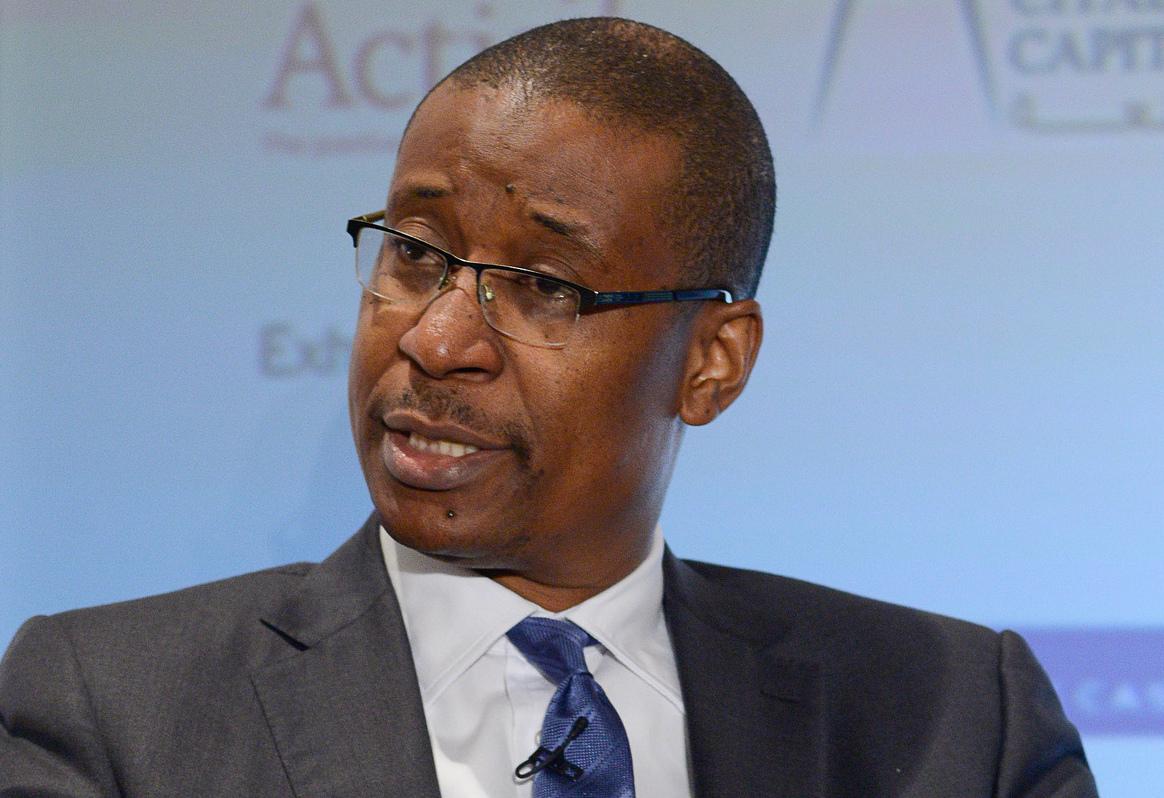
Okey Enelamah, Nigeria’s minister of Industry, Trade and Investment, said General Electric (GE) company was in talks with the Federal Government
on improving power supply in Nigeria.
“There is a correlation between power and industrialisa- tion,” Enelamah said.

“In order to attract investment, we have to be friendly to interna- tional capital,” Enelamah further observed.
Enelamah listed his priorities in the next one year to include: improving Nigeria’s investment climate and ease of doing business rating, implementing the Nigeria Industrial Revolution Plan (NIRP) and sup- porting SMEs. Phillip Walker, regional manager, The Economist Intelligence Unit, said one sure way forward for Nige- ria is gradual improvement in secu- rity, including public sector security.
Walker said the next five years will be tough but Nigeria’s growth story will become ever more diverse. Stakeholders who gathered at the event were likewise concerned that Nigeria was suffering a downturn in revenue occasioned by prolonged drop in oil prices. They were also worried about the fall in the value of the naira which has been depreciating and losing competitiveness.
Between September 2014 and September 2015, the price of crude roughly halved and has fallen a fur- ther 40 percent since then. Growth in the country slowed to 3.5 percent in 2015, according to estimates by Moody’s, compared to about 6.4 percent in 2014.
Herbert Wigwe, CEO of Access Bank, however posited that Nigeria will not be experiencing any indus- try wide banking crises, despite the slump in oil prices. Wigwe, who was speaking at the same event, said not all banks financed oil and gas deals at the peak of oil prices.

“Banks have the ability to re-structure oil loans and are more capitalised and healthier after the last crises of 2008. Although, they will not record the level of profitabil- ity they are used to in the past. Non Performing Loans for the sector will also increase,” Wigwe added.
Nigeria has run down its re- serves from US$42.8 billion to US$28.4billion, the equivalent of 6.7 months of imports, reducing its external buffers against future shocks. The Central Bank has im- posed foreign exchange restrictions on 41 items and restricted liquidity in the interbank foreign exchange (FX) market to protect its reserves, a policy manufacturers say is crimping their potential since they no longer have access to the necessary dollars to import raw materials and meet obligations.
A second tier FX market is prob- ably needed for non-CBN prior- ity sectors to improve liquidity and inflows, said Wale Tinubu, Group CEO of indigenous oil and gas firm, Oando. “Capital Expenditure (Capex) in Oando’s Joint Ventures (JVs) is down to $150 million, out of a budget of $1 billion,” Tinubu said.
Africa’s richest man, Aliko Dan- gote said Nigeria’s economy is be- ginning to accelerate and may be growing faster than official statistics are capturing, despite the slump in crude oil prices.
Dangote, who was speaking at the same event, said he was seeing an upsurge in growth in the busi- nesses controlled by Dangote In- dustries Limited, including in sugar and cement.
“We have seen a 47 percent growth in cement volume between January and February 2016, despite January being a historically slow month and the absence of the Fed- eral budget. We are also forecasting a 50 percent growth in volumes over the next three months,” Dangote said. “We have also seen a 20 percent growth in our sugar business so far this year.”
Dangote said that a further sign of growth in the country was that Coca cola which is a major user of sugar, plans to double its capacity in the next two years, as the firm has almost exhausted its existing produc- tion capacity, which it had already doubled since 2012
. Nigeria has dropped 75 places over the past decade to 169th out of 189 countries, ranked in the World Bank’s Ease of Doing business 2016 report. Nigeria is highly depend- ent on hydrocarbons to sup- port economic growth and finance government expendi- ture. Oil and gas account for over 90 percent of exports and also provide an estimated 70 percent of consolidated gov- ernment revenues.