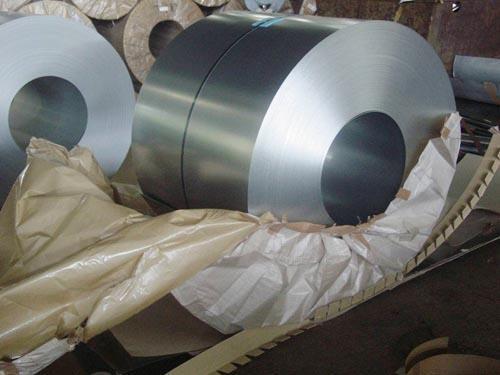
GEIF Nigeria Plc had exchange rate loss crimp growth in profitability as the company that manufactures steel and packaging materials said a fall in price of global commodities in China and tough operating environment in home market impacted on operations.
For the year ended October 31 2015, GREIF’s net income fell by 43.23 percent to N24.62 million from N43.44 million as at December 2014.
Sales increased by a mere 3 percent to N805.37 million as the steel maker struggles with slow consumer discretionary spending caused by a slow growing economy.
The drop in profit was as a result of a 2287 percent increase in exchange rate loss to M53.19 million and huge cost of sales that left the company with a low profit margin.
The steel maker said in its 2015 audited financial statement that 2015 was a horrendous year for manufacturers in African’s largest economy as economic lethargy and huge infrastructure deficits made growth a big mountain to climb.
The 1st half of 2015 witnessed lack of concentration on economic management by various governments because of the general elections, while the 2nd half of the year was marred by scarcity of forex and massive devaluation of the currency especially in the parallel market, according to the Chairman’s statement
“In addition, lack of adequate supportive infrastructure, persistence in erratic power supply even after privatization of the electricity distribution, rampant uplifting of FOB values by customs in import duty calculations and multiple taxation/charges by state and local government authorities have all contributed to high cost of doing business in the country,” said the Chairman’s statement.
The Central Bank of Nigeria has twice devalued the twice since March 2015 as it seeks to stabilize the economy from the continued drop in external reserve caused by the persistent fall in oil price by more than percent to $31 a barrel.
The apex bank also imposed foreign exchange restrictions on 41 items; a policy analyst have criticized for making it difficult for manufacturers to access the dollars for the importation of raw materials to meet daily production.
Also, the policy has caused capital flights as investors fret over loss of significant investment over a sudden devaluation of the currency.
The economy has slowed to 2.84 percent in 3rd quarter 2015 down from 5.94 percent in 4rd quarter 2014 and 6.77 percent recorded in 4th quarter 2013, according to the National Bureau of Statistics (NBS).
The Inflation rate closed in January 2016 at 9.62 percent, up from 9.55 percent in December 2015 and 8.05 percent in December 2014, according to the statistical agency.
GREIF also said that the significant drop in the global commodity price in China impacted negatively on its growth prospects. Such systematic risks cannot be avoided by way of diversification. They are market imposed risks.
Global commodity price slump in the world’s second largest economy has sent rubbles around the world especially emerging market countries like Nigeria that are commodity producers and users and because of the indirect contribution of commodities to cost of production.
“Specifically for the Company, in 2015 the worldwide global steel demand in the market place witnessed a fall as China’s economy faltered in growth, said the Chairman’s statement.
The company’s share price closed at N9.83 on the floor of the exchange while market capitalization was N419.15 million.
BALA AUGIE