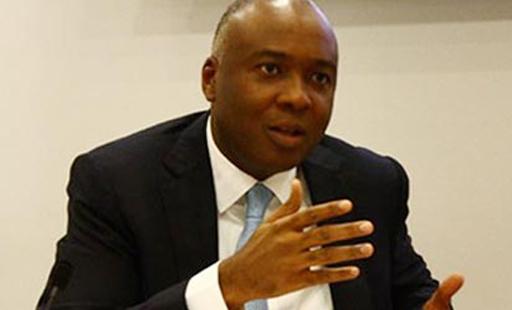
The present economic challenges facing Nigeria have provided an opportunity for the leadership to harness all available resources, particularly in the non-oil sector to grow the economy, Bukola Saraki, Senate president has said.
Saraki however, said the environment must be business friendly with obsolete laws removed, while intensifying efforts at diversifying the economy.
He spoke yesterday in Abuja at the presentation of the 168-page report titled, “Comprehensive Review of the Institutional Regulatory, Legislative and Associated Instruments Affecting Businesses in Nigeria” by a team of experts sponsored by the Department for International Development (DFID) in conjunction with the office of the Senate President.
Paul Idornigie, leader of the team, said apart from 54 laws reviewed, they also did a comprehensive analysis of 50 other bills pending before the two chambers of the National Assembly.

Commending the work, Saraki said the economic challenges presented an opportunity for government to show leadership, courage and ingenuity.
Idornigie however said the priority-rating list would help the legislature to focus on some areas that required urgent intervention, and recommended nine bills, which if passed into law in the life of the eighth National Assembly, would have been deemed to have comprehensively reformed the business environment.
The bills recommended by the experts as requiring urgent attention are the Federal Competition and Consumer Protection Bill 2015, Federal Roads Authority Bill 2015, National Inland Waterways Authority Bill 2015, National Roads Funds Bill 2015, National Transport Commission 2015, Nigerian Ports and Harbours Authority Bill 2015, Nigeria Postal Commission Bill 2015, and Nigeria Railway Authority Bill 2015.
Idornigie told his audience, including the leadership of both Senate and House of Representatives, ministers, representatives of Nigeria Economic Summit Group (NESG) and Nigeria Bar Association (NBA), among others, that 54 of the country’s existing laws had to be either amended or repealed, if the country was to make progress in her quest to attract investors and become business friendly.
The Senate president added that the collaborative efforts between the National Assembly, DFID’ ENABLE programme and GEM3, with strong participation of the organised private sector, led by the NESG represented a first of its kind, adding that the Senate had offered to the nation a detailed plan, a cohesive legislative agenda for renewed national cohesion and development.

The team also recommended the establishment of a Federal Legislative Clearing House to be scrutinising and reviewing bills before they were presented to the respective legislative chambers for first reading.
“One principle we believe the National Assembly in considering the bills before it is the need to avoid the setting up of multiple agencies with overlapping or competing mandates. Consequently, there is need to follow a cost benefit approach in deciding when and where a new agency is required,” he said.
Nigeria is ranked 169 out of 189 economies in the World Bank ‘Doing Business Report’ for 2016.
John Omachonu