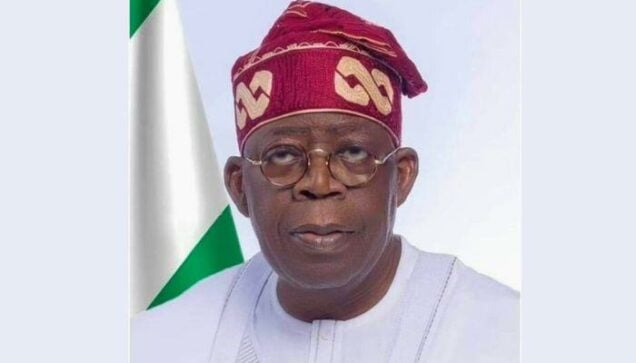
President Muhammadu Buhari and two leading Nigerian economists have endorsed the Central Bank of Nigeria (CBN) foreign exchange management policy, just as local manufacturers applaud the policy.
This is coming on the heels of strong criticism of the CBN Forex Policy of Capital Controls as against Naira devaluation.
The President said at a recent Presidential Media Chat that there was no strong conviction on the need to devalue the naira and that as a result, he would not support devaluation, a position which is in alignment with the stance of the Central Bank of Nigeria.
President Buhari point ed out that he needs to be convinced that there is a compelling case for the devaluation of the naira, stressing that Nigeria has
foreign exchange policy priorities. These, he said, included providing money to fund the projects which the CBN has highlighted and not to waste the nation’s resources on those who want hard currency to import textiles and toothpick.

In the same vein, Bismarck Rewane, managing director/ Chief Executive Officer, Financial Derivatives Company Limited, also supports the CBN’s flexible managed floating rate, which is a band within which the exchange rate will move.
Rewane however observed that the exchange rate improvement depends largely on improvements in Nigeria’s productive capacity through improved oil prices, production and exports.
These conditions are expected to create positive appreciation of the value of the naira against other currencies.
He warned that if it these parameters depreciate, the naira would also depreciate.
Rewane also expressed strong opposition to naira devaluation, stating that what Nigeria is witnessing is adjustment of the rate in response to the set parameters.

He observed that as the Nigerian economy has depreciated sharply, a downward adjustment of the naira is inevitable, “It is not what we wish to have
but that it is what we have to do. What the CBN has been doing is to manage the circumstances within the limited resources that we have. There has been rationing and other monetary control measures, all these are indications that what is available is not what is required, and therefore it is important to manage it in an orderly manner.”
He also explained the difference between exchange rate uncertainty and exchange rate risk. He said risk is the probability that something negative will happen, and uncertainty means you do not know what is going to happen.
So in 2016, Nigeria will be moving from uncertainty to an environment of low moderate risk.
Another leading economist Biodun Adedipe, has also stated that Nigeria’s economic problem is not the naira/dollar exchange rate.