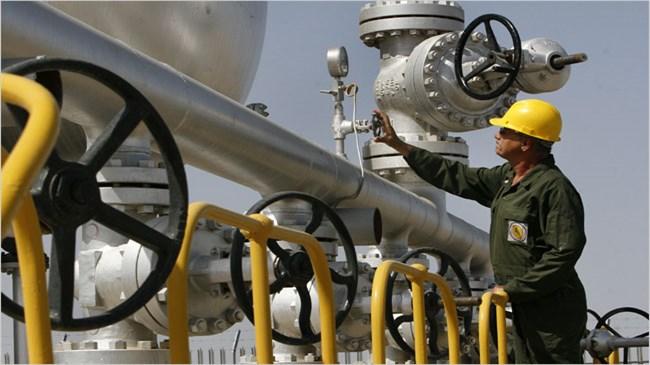
After starting out with hopes of a rebound, 2015 instead punctuated the worst two years ever suffered by oil exporters like Nigeria and even U.S. crude producers.
West Texas Intermediate futures were heading for their biggest-ever two-year drop, while the Standard & Poor’s Energy Sector Index is set to mark its first consecutive decline since 2002. Futures and equities will post December decreases, signaling more discomfort as 2016 starts.
Oil has tumbled since Saudi Arabia led the Organisation of Petroleum Exporting Countries (OPEC) in November 2014 in deciding to maintain output and defend market share against higher-cost producers, generating a record supply glut.
Record output this year from Saudi Arabia, Russia and Iraq has boosted global stockpiles to an all-time high, the International Energy Agency said on Dec. 11.
Middle East economist John Sfakianakis said yesterday that countries like Nigeria with collapsing foreign exchange reserve position are in more dire straits than Saudi Arabia with reserves in excess of $600bn.
Sfakianakis said he expected the Saudis to continue to push more oil to the market because to do otherwise will be to help their enemy, Iran, whose return to oil exports this month or next, will mean more woes for oil dependent economies like Nigeria.
“The 800-lb. gorilla in the room, and by that I mean Saudi Arabia, showed it’s power,” said John Kilduff, a partner at Again Capital LLC, a New York-based hedge fund that focuses on energy.
“They are on a mission to squeeze out the high-priced producers and aren’t done yet. Things could get very ugly in the second and third quarters for countries like Venezuela and Nigeria and for U.S. exploration companies.”
The North American shale and oil-sands plays have been bludgeoned by OPEC’s policy change. Chesapeake Energy Crop., CONSOL Energy Inc. and Southwestern Energy Co. are the three worst-performing shares of the S&P 500 this year, all losing in excess of 75 percent of value.
“Oil is probably the market with the biggest reputation for going from boom to bust,” said Tim Evans, an energy analyst at Citi Futures Perspective in New York. “It’s pretty clear that we’ve seen substantial bust. The temptation has to be that a boom is around the corner but that big idea isn’t necessarily a guide to market timing.”
The most destructive oil crash in a generation is expected to worsen this year before it ever gets better with some analysts predicting prices dropping to lows of $28 a barrel for Brent crude grade.
With the Organisation of Petroleum Exporting Countries abandoning output limits in a drive for market share, ships that carry as much as 2 million barrels a trip are in demand to haul crude from the Middle East to Asia and North America. While oil prices fell about 35 percent in 2015, average earnings for these carriers jumped to $67,366 a day, the most since at least 2009, according to Clarkson Plc, the world’s largest shipbroker.
Olusola Bello and Christopher Akor