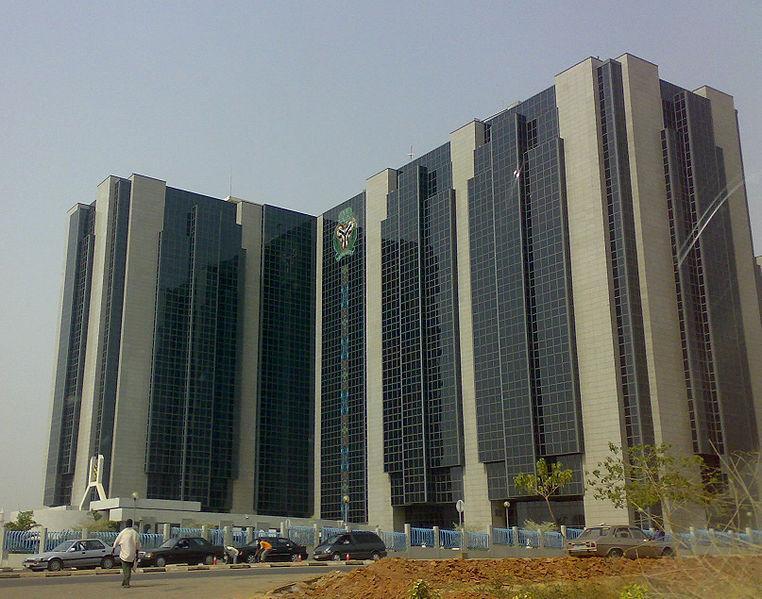
The cashless policy of the central bank of Africa largest economy has bolstered the sales of NCR Nigeria Plc, the company amid tough operating environment.
For the first nine months through September 2015, NCR’s sales increased by 4.72 percent to N5.32 billion as against N5.08 billion the same period of the corresponding year (Q3) 2014.
Analysts attribute the growth at the top lines to high demand for Automated Teller Machines (ATM) on the back of cashless policy.
Cashless policy is a policy established in the year 2012 by the Central Bank of Nigeria to curb excesses in the handling of cash in Nigeria. It prescribed a cash handling charges on daily withdrawal above Five Hundred Thousand Naira (N500, 000.00) for individuals and Three Million Naira for Corporate Bodies (N3, 000,000.00). The policy was enforced not to eliminate the use of cash but to reduce the volume of cash in circulation.
Despite NCR impressive results at the top lines, the company’s bottom lines took a hit as result of increased cost of sales ratio and spiralling production costs.

The company’s net income fell by 47.67 percent to N199.30 million in 2015 from N380.86 million in 2014. Cost of sales increased by 7.78 percent to N4.71 billion in 2015 compared with N4.37 billion last year. Gross profits were down by 14.50 percent to N608.40 million in the review period as against N711.57 million.
Analysts say NCR should embark on costs cut given its high costs of sales ratio that makes it difficult for top line impressive performance to trickle down to the bottom lines.
Cost of sales ratio, which measures the relationship between production costs and revenues moved to 88.53 percent in 2015 from 86 percent recorded last year. This means the company spent N88 on input cost to produce every N100 units of products sold. Gross profit margins reduced to 11.42 percent to 11.42 percent in 2015 as against N14 percent the previous year.
The company’s net margin, a measure of profitability and efficiency fell to 3.74 percent in the period under review as against 7.41 percent in 2014. Total assets were up by 24.46 percent to N8.03 billion as against N6.46 billion last year.
With new market penetrating products such as the ATM passport (Cheque Image Capture solution) and the Branch Passport (Cheque Capture solution for Bank branches), NCR is poised to meet the demands of lenders.

Industry expert say NCR is in a growth spurt as the large portion of unbanked population means the demand for ATM will spike in the foreseeable future.
Financial inclusion remains low in Africa largest oil producer as only about 28.6 million adults have bank accounts and this represents 32.5 percent of the adult population, according to a recent report by Enhancing Financial Innovation and Access (EFInA).
This also means for every 10 Nigerian adult, chances are that only about three have bank accounts.
NCR share price closed at N11.02 on the floor of the Nigeria stock exchange while market capitalization was N1.19 billion.