Federal Government’s anti-corruption crusade will receive appreciable boost if the necessary institutions that should give credence to the fight are empowered with the requisite acts of parliament. Key among such institutions is the Office of the Auditor-General of the Federation.
The Office of the Auditor-General of the Federation is a separate and independent entity whose existence, powers, duties and responsibilities are enshrined in Section 85 of the 1999 Constitution of the Federal Republic of Nigeria (as amended).
However, the Office is still being inhibited by obsolete laws enacted during the colonial days that could not give commensurate powers to the Auditor-General to conduct its duties accordingly.
Analysts say this could pose a major setback to government’s fight against corruption. When passed into law, the audit law will give autonomy to the Auditor-General.

According to analysts, the essence is to grant autonomy to the office of the Auditor-General in areas that were not covered in the previous Ordinance, which would in turn strengthen the government’s fight against corruption.
But there is light at the end of the tunnel, as the law that would empower the Auditor-General to curb corruption menace as well as empower the office in this commitment has been slated for Second Reading in the National Assembly.
To further address this, the Public Accounts Committee,(PAC) and the office of the Auditor-General of the Federation, held a retreat with the support of the United Kingdom Department for International Development(DFID), signalling an Executive and Legislative collaboration for a better auditing in Nigeria which is a pointer to transparency being clamoured for by the Federal Government.
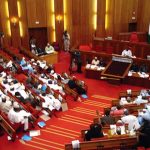
Kingsley Chinda, Chairman, House Committee on Public Accounts at the retreat said audit bill has passed through First Reading in the House of Representatives would be sent to the Senate after scaling through Third Reading at the lower legislative chamber.
According to him, “The Office of the Auditor-General in every clime enjoys absolute independence. Administrative independence and financial independence and are further empowered in their assignments.

“The one we are expecting is a stronger bill than the ones handed in by the Colonialists when Nigeria’s revenue is on groundnut, tin and columbite, palm oil, coal and the rest of them. Now we have oil and gas and other sources of revenue. We must be able to enact a law on that basis. If we have a new law, it will strengthen the office and guarantee administrative and financial independence.
“We have been told that the ordinance guiding the present Auditor-General in conduct transactions is an ordinance of 1950’s which we borrowed from the colonialists. So, we have put together the current audit bill that would guide and regulate the operations of the Auditor-General. Not only to give him, administrative autonomy but to capture areas that were not captured by the Ordinance Act.”
“The audit bill has passed First Reading and we expect that between now and the first quarter of 2016, the House would have dealt with it. We would have passed it on to the Senate and once they are done, they can send to the Presidency, if there is no need for harmonisation.
“I can assure you that since it is a priority legislation, we would ensure that it is given expeditious passage”.
Also speaking at the retreat, Samuel Ukura, the Auditor-General of the Federation, said: “The Audit Law gives the Auditor-General the independence to ensure administrative and other rights. For instance, the new audit law that we are proposing has sanctions. if you fail to respond to an audit within a period of time, either you are paying a fine or the Auditor-General recommends that you leave that office”.
He added that since the return of Parliamentary Democracy in 1999,the Office submitted 14 Annual Audit Reports to the National Assembly and is currently working on the 2014 report.
“We hope that the National Assembly with our partnership with them would expedite action on it. The Office hopes to achieve a lot from this workshop because we want a good working relationship with Public Accounts Committee so that all the reports we send to them would be processed and sent to the Executive for implementation after the final process.
Analysts believe collaboration between the Auditor-General and the Public Accounts Committee in the National Assembly would lay a solid foundation in Federal Government’s fight against corruption and institutionalize it.
The Auditor General,in accordance with Section 85(5) of the 1999 Constitution, shall, within 90 days of receipt of the Accountant General’s financial statement, submit his Report to each chamber of the National Assembly and each House shall cause the Report to be considered by a Committee of the House of the National Assembly responsible for Public Accounts.
Notably, the main function of the Public Accounts Committees is to review whether public money was not spent for the approved purpose and with due regard to efficiency and effectiveness. Much of its work is based on the Auditor-General’s report.
The Committees hold public sittings to review Audit findings. These public sittings are usually attended by the Auditor-General and his team as well as the Accounting Officer (Permanent secretary) of the audited Ministry or Office. The Ministry or Office is expected to defend itself on issue reported on and explain what they have done in respect to the Report.
It would be noted that many advanced countries bank on transparency and auditing standards to gain investor’s confidence in doing business and driving investment base. The retreat explores various opportunities in driving transparency and appreciating Nigeria’s investment drive as well as economic diversification, amidst dwindling oil resources.
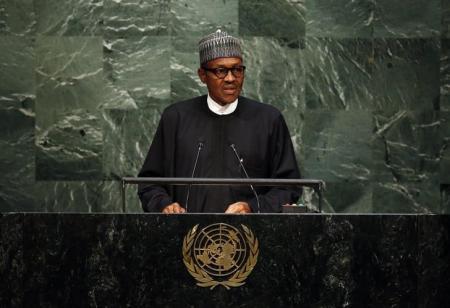
The retreat among other things explores the strategic importance for a strong and well functioning PAC in Nigeria with the Legislative and Executive collaboration in maintaining standard auditing in the country with the challenge of President Buharioil revenue dwindling and sharp fall in oil price fall.
Furthermore, the retreat as a critical evaluation strategy focuses on stronger accountability standards by taking audit issues and following them through until completion. The relationship with the Office of the Auditor General will be important to achieve this and both PAC and Auditor General need to find ways of following through with public agencies and delivering the needed change. This, analysts believe, would bring detailed critique and scrutiny for proper auditing in the country.
Nigeria would be de-marketing itself to the global community,if thorough attention is not paid to issues of auditing. For instance in the ease of doing business, transparency and accountability top lists as investors aways look at these two elements before contracting businesses with investors and driving investments in a particular country.
Nigeria is ranked the largest economy in Africa with the GDP of over $500 billion dollars, meaning the Giant of Africa is investor’s haven in Africa because of the GDP size of the economy, which also has over 300 million population of the West African sub-region constituting affiliation to Nigeria investment drive.
All these would not be feasible if constant collaboration is not sustained between the Pubilc Accounts Committee,(PAC) and the Auditor General of the Federation. Analysts believe that the two bodies are key in driving President’s Buhari’s mandate in the fight against corruption.
The experience of sharing during the retreat between PAC, Office of the Auditor General of the Federation, the Westminster Foundation would be collaborating on sharing more experiences that would ensure that Nigeria is on track in global practice of auditing.
Auditing General’s effective working relationship with NEITI is an indicative of strategic collaborations,as analysts insists NIgeria needs to ride on this transparency to attract more investment drive to itself.
No doubt, the retreat will go a long way to prepare Nigeria for transparency path which would in turn bring in more investments and diversify Nigeria’s mono-economy, amidst dwindling oil revenue.