 Senate will pass the 2016 to 2018 Medium Term Expenditure Framework (MTEF) and Fiscal Strategy Paper (FSP) next week.
This followed debate on the two instruments at Wednesday’s plenary, even as Senate president, Bukola Saraki referred them to the Senate Committees on Finance and National Planning with the mandate to report back next week Tuesday.
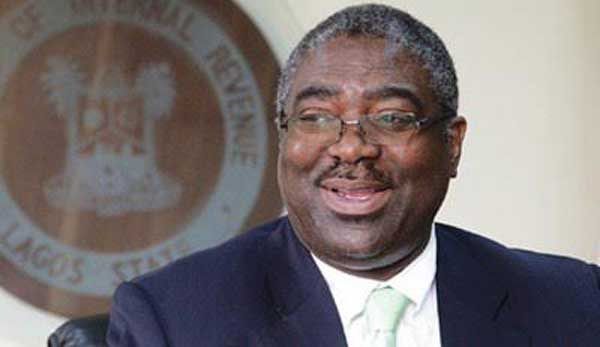
The Senate also confirmed the appointment of William Babatunde Fowler as executive chairman, Federal Inland Revenue Service (FIRS).
At the debate on the 2016 to 2018 MTEF, senators disagreed on the benchmark of $38 per barrel of crude as projected by the Federal Government in the 2016 budget estimates.

They also frowned at the late submission of the document to the National Assembly by the Executive, saying that it would delay the passage of the budget and its implementation.
Deputy Senate president, Ike Ekweremadu, expressed concern that in spite of the utmost importance of MTEF and budget, successive governments had not prioritised it.
The federal lawmaker also said that the $38 per barrel benchmark proposed by the present administration seemed to be conservative, since estimates showed that oil price would hover between $40 and $45.
He advised the Senate to review the oil benchmark to $40 per barrel, to enable the Federal Government generate more revenue, which would boost the allocation to states to enable them pay salaries and execute capital projects.
Also contributing, Bassey Akpan harped on the need for timely presentation of the 2016 Appropriation Bill, pointing out that though the Federal Government had been subsidising fuel, many parts of the country still pay exorbitant prices to buy the product.

He urged government to judiciously distribute monies allegedly realised from various sources, including looters of treasury, to the states to enable them meet their financial obligations.
On his part, Adamu Aliero argued that based on the fall in global oil prices, the earlier suggestion by his colleagues to increase the oil benchmark above $38 was unrealistic, calling for its reduction to $35 per barrel.
“From what we have been hearing, oil price may continue to fall even beyond $38 to $34. I will recommend that we take $35 per barrel. It is time for Nigeria to take a firm stance on the diversification of our economy; we can no longer rely on oil as the major source of our revenue,” he said.
He expressed regret that the controlled price of fuel was being flouted in almost all parts of Nigeria and called on the Senate to take a critical stance on subsidy.