



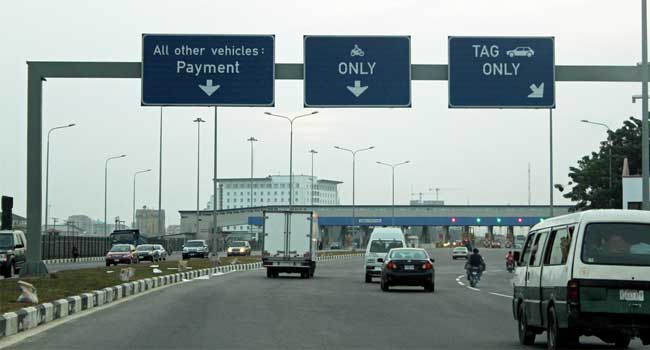
Eleven years after the removal of tollgates on Nigeria’s highways, the Senate Thursday advised the Presidency to immediately rescind the decision by ensuring that all federal roads have tollgates.
Adopting the report of the Ad-hoc Committee on Works on the total collapse of federal roads in Nigeria at Thursday’s plenary, the Senate equally directed its Committee on Works to meet with the Infrastructure Concession Regulatory Commission (ICRC) on concessioning and Public Private Partnership (PPP) of new methods of funding federal road projects.
Recall that the government of former President Olusegun Obasanjo had in January 2004 ordered the dismantling of all tollgates along federal roads, claiming it wanted to avoid double-taxation.
The former President said the N63 million, which the tollgates generated daily, constituted inconvenience to motorists and encouraged corruption.

But the Senate believed revenue collected from the scheme would be channelled into maintaining federal roads.
The Committee, chaired by Barnabas Gemade, also recommended the rebuilding and constant maintenance of existing roads infrastructure as well as introduction of weigh bridges to protect roads.
The 15-man panel recommended investment in rail, air and waterways to act as alternatives to road transport, which would decrease traffic on the roads for longer lifespan. It also advocated for concrete roads instead of laterite roads in some parts of the country, especially in areas not suitable for bituminous pavement.
The Gemade-led Committee also observed that the yearly budgetary allocation to the Ministry of Works was not enough to construct major roads to international standard.
It expressed regret that most of the federal roads were below standard and could not stand the test of time, blaming the trend on contractors who compromise standards.

“There should be proper and adequate planning of roads. The short-term approach of yearly budgeting has proved ineffective, this promotes neglect of some of the roads. At times, when new government takes over, new programmes will be initiated and the ongoing projects are abandoned. If there is a policy that promotes long-term planning, any government that comes will be bound to follow it,” the report read in part.
The Committee expressed dismay that most federal roads were poorly designed, while others were constructed without designs.
Following the resolution of the Senate, the Committee also visited communities with prevalent gully erosion sites in Abia, Adamawa, Akwa-Ibom, Anambra, Edo, Imo, Jigawa, Kano, Kogi, Ogun, Ondo and Yobe states.
To checkmate the menace, the panel therefore recommended easier access to Ecological Funds by state of the federation, review of Land Use Act as well as improved monitoring and implementation of intervention projects.












