Operators in the power sector say the new minister of power will be faced with a bag full of challenges and will do well to hold insightful engagements with industry stakeholders and then get off to a quick start.
They list the challenges facing the sector as including insufficient investment, week transmission lines, inadequate gas supply, vandalism and supply-related bottlenecks for gas-to-power infrastructure, grid-limitations and the need for reflective tariff to ensure that investors recoup their investments.
Reuben Okeke, director-general, National Power Training Institute of Nigeria (NAPTIN) says there is no way the country’s energy needs can be achieved without addressing the enumerated challenges.
Okeke further observes that for timely and lasting result, traditional power sources must be complemented with renewable energy. The new minister, he says, must ensure that energy from wind, solar and other sources must be brought into the sector to compliment already existing thermal and hydro sources.

The Transmission Company of Nigeria (TCN) which is being run by Manitoba Hydro International through a management contractor, stakeholders say, is critical to revamping the fortunes of the power sector. For this to happen however, they say TCN must be supported in such a way that it is adequately equipped technically and financially.
They observe that TCN which is charged with providing stability in electricity transmission across the country, is currently plagued by systems failure, and that resolving this would require huge capital outlays which government does not have.
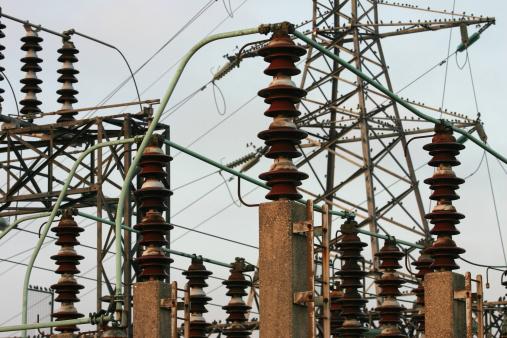
The current assets of TCN include about 5,523.8 kilometres of 330 kV lines and 6,801.49 kilometres of 132 kV lines which are obsolete and weak.
The stakeholders emphasise that the challenges facing the country’s power sector can only be overcome through proper pricing of electricity.
Kola Adesina, chairman, Egbin Power Plc, also observes that power supply would be more stable if the price of the product is right.

“The electricity sector is fundamentally flawed and it needs to be dealt with squarely.“The price has to be right for any investor to make it in the sector; it can only be profitable if the customers are satisfied with the supply.
Consumers’ satisfaction, he said could be possible if the product is readily available; and the product can also be readily available if the price is right,’’ he says.
Biodun Ajifowobaje, managing director of Ikeja Electric, says the new minister must find a creative way of resolving the issue of reflective tariff and gas supply, so that all stakeholders would be comfortable operating in the sector.
Having a cost reflective tariff, Ajifowobaje says, is the only way the electricity sector can survive: “ The truth is that whatever is realised from the tariff is used to fund the entire value chain of the power industry – generation, transmission, NERC, and others.” So the new minister, he says, would have a lot to do.
The need to protect Nigeria’s power infrastructure from attack by vandals is another undertaking the new minister must address, says Seun Olugbesan, an electrical contractor.
Godknows Igali, Permanent Secretary in the Federal Ministry of Power, says vandalism is often responsible for power outages across the nation.
Stakeholders observe that steady power supply is crucial to the development of the nation’s economy, as it would reduce the cost of manufacturing and other domestic services, as well as generate employment for teeming masses.
Olusola Bello