It is now relatively common knowledge that Nigeria’s growth rate of gross domestic product (GDP) has slowed down from 6.54 percent in the second quarter of 2014 to 2.35 percent in the second quarter of 2015. I wrote two months ago in “Economic red flags” (September 16, 2015) drawing attention to these developments. The Central Bank governor subsequently raised the alarm at the end of the last Monetary Policy Committee meeting that the economy might be headed for recession. What is less well-known, in spite of the fact that it was so stated in my article just referred to, is that three important sectors in the economy – manufacturing, oil and gas and public administration – were already in recession as at June 2015!
National Bureau of Statistics (NBS) data confirms that the manufacturing sector recorded output decline of 0.7 percent in Q1 2015, and a larger contraction of 3.82 percent in the second quarter, hence two successive quarters of manufacturing sector shrinkage! For the crude oil and gas sector, the declines were larger – 8.15 percent and 6.79 percent in Q1 and Q2 2015, respectively. Public sector employees will of course not be surprised to hear that government itself as an economic sector (not surprisingly given its dependence on the oil sector to fund its activities) declined by 12.53 percent in the first quarter of this year, and 10.64 percent in the second quarter! Given the contribution of these three sectors to employment and wages, consumption, domestic investment and production, many Nigerians are already experiencing recessionary conditions and job losses are increasing across the economy.
I have been loud in warning about the dangers of allowing the economy slide into recession and the imperatives of policy to prevent that eventuality, on social media, in my BusinessDay column and in discussions on Channels Television and CNBC Africa, but the sense I get is that many are yet in denial about the reality of our economic conditions and find such discussions uncomfortable. That would be a mistake! The patriotic and responsible course of action, and the one that is consistent with the national interest, would be to be cognizant of the reality and to respond accordingly. The duty I have imposed on myself as a public intellectual is to stimulate such patriotic conversations.
The situation is compounded by the fact that while the three critical sectors I referred to above are already in recession, all other critical economic sectors have also experienced slowdowns in their rate of growth, some very sharp – hotels and restaurants, agriculture, construction, telecommunications, finance and insurance, and real estate! Agriculture sectoral growth fell from 4.7 percent in Q1 to 3.49 percent in Q2 2015; hotels and restaurants (accommodation and food services) reduced drastically from 26.6 percent growth to negative of 8.97 percent; construction growth rate declined from 11.17 percent in Q1 to 6.42 percent and may be in negative territory by Q3 2015; information and communication (which is mainly telecommunications) growth rate fell to 6.26 percent in Q2 from 9.49 percent in the first quarter; while financial sector growth rate declined from 9.01 percent to 6.41 percent over those two quarters. Growth in real estate also slowed to 2.97 percent from 3.08 percent, while growth in trade fell to 5.07 percent from 6.47 percent. The evidence from sectoral performance is unmistakable even if the summary growth of 2.35 percent in Q2 2015 is missed – the Nigerian economy is experiencing a sharp slowdown across sectors, and while a recession is not inevitable, it is increasingly probable except strong policy responses kick in.
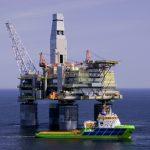
What factors are responsible for these cross-sectoral declines? There are multiple causes – the decline in oil and gas sector is of course due to the global oil price decline and the implications for projects and investments in the sector; but abysmal policy and leadership in the sector going back to 2011 are contributory factors. The failure to provide fiscal terms for the sector and to reform oil sector institutions has deterred investments in our deep offshore and gas fields. The manufacturing sector is being crippled almost deliberately by the foreign exchange policy regime adopted by the central bank, and weak consumer purchasing power; government and its employees are suffering for non-diversification of revenue sources and a flawed federalism that sub-optimises the potentials of the federating units in favour of handouts from oil; trade volumes are declining due to constraints on importation arising from FX shortages and currency devaluation; and the entire economy has suffered from a policy vacuum for the last six months which has seen an absence of strong policy responses, drying up of new investment and capital flows and increased policy and regulatory uncertainty.
It is clear that Nigeria needs a more diversified economy, with our potentials in agriculture and agro-business, solid minerals, domestic manufacturing based on local inputs, power generation, multi-modal transportation and entertainment maximized to the fullest. We also need to reform our upstream petroleum and gas sector through new fiscal terms that will attract new investments, independent regulation and alternative, private capital structures to fund the sector. In the downstream, there is no escaping the imperative of fuel subsidy removal and full downstream sector deregulation.
This is not a time for denial or politics. The elections are over and we are faced with a significant national economic challenge. A recession does not discriminate on the basis of which party you supported or who you voted for! It is time for realism about the hard decisions we have to take. Fortunately, the new cabinet takes office today, which can, along with the vice president, assist the president in averting an economic meltdown in Nigeria.
Opeyemi Agbaje