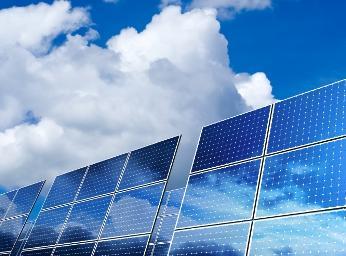
With other countries continuously adding renewable energy capacity as against coal, natural gas and petrochemical oil combined, Nigeria remains at the back of the queue in this “smart” economic option, which holds immense potential for economic growth and environmental sustainability.
The global renewable energy economy is currently worth $614.92 billion, and growing at the rate of 7.5 percent annually, says MarketsandMarkets (M&M), a global market research and consulting firm based in the United States.
The country has only two wind powered plants of 110mw and five solar powered plants of 189mw, according to data obtained by BusinessDay from the Nigerian Electricity Regulatory Commission (NERC). Yet, they are neither completed nor connected to the grid.
This is dwarfed by more ambitious efforts even from Nigerian peers, as Kenya plans to generate 3,000mw of electricity in 2030 from wind power alone, according to data from the German energy desk in Nairobi.

Renewable energy refers to energy produced from sources that are replenished by natural processes, as against fossil fuels, such as coal and petroleum which pollute the environment and cannot be recovered after consumption. They include solar, hydro, wind, geothermal and biofuel.
In the first three quarters of 2015 alone, China added 9.9gw (9,900mw) of new solar powered initiatives. This is equivalent to more than a tenth of the UK’s entire domestic power generation.
In the UK, renewable energy penetration exceeded 25% in 2015 and overtook coal generation for the first time.
On the contrary, about 80 percent of Nigeria’s estimated 7,500mw electricity capacity is produced by gas fired plants, with the remaining 20 percent shared among coal and hydro.
However, “Nigerians will be forced into renewable energy since solar prices have progressively gone down and the Discos are looking for cost effective ways to deliver energy to their customers, while avoiding prohibitive costs of running generators,” said Otu Eleri, executive director, International Centre for Energy, Environment and Development (ICCED).

Ghana’s £248 million Nzema project is the largest solar energy plant in Africa and fourth largest in the world. The 155 megawatt plant is projected to power more than 100,000 homes and increase Ghana’s electricity generation capacity by 6 percent when completed at the end of 2015.
The Ghanaian energy industry says it plans to produce 10 percent of the country’s energy mix from renewable sources (not counting large-scale hydropower) by 2015, or by 2020 at the latest.
In South Africa, a total of 64 projects worth $14 billion are on ground with a capacity to generate 3,922mw of renewable energy.
In Nigeria, NERC introduced a new law only this November, which it says will stimulate investments in the production of 2,000 megawatts by 2020 from all renewable energy sources available.
However, since 2012, South Africa has ranked among the top 10 countries globally in independent power project (IPP) investments, signing up in less than three years, more IPPs than the rest of Africa combined in the past 20 years.
This is based on reports from the Public Private Infrastructure Advisory Facility (PPIAF), a multi-donor trust fund that provides technical assistance to facilitate investments into infrastructural development in developing countries.
Apart from environmental risk reduction, renewable energy development comes with multiple economic benefits.
The low carbon economy employs around 500,000 people in France, and in the UK, where it contributes more to GDP than the automotive industry.
The UK’s Renewable Obligation (RO) policy makes it mandatory for electricity suppliers to procure a certain amount of electricity from renewable sources.
In Germany, where renewable energy producers statutorily receive payments for any unit of electricity exported to the grid, about 12.8gw (12,800mw) of solar capacity was installed only between 2012 and 2014.
The United States government also made a number of policies to support investment in the sector, with 1,133mw of solar photovoltaics (PV) installed in the second quarter of 2014 alone, said GTM Research and the Solar Energy Industries Association’s (SEIA). Between 2012 and 2014, the grid connected utility segment quadrupled from 1,784mw to 7,308mw.
Yet, these countries do not have the high intensity of solar radiation obtainable in Nigeria. The solar radiation in some of these countries is considered acutely sub-optimal.
YANGE IKYAA