Nigeria spent an estimated over N3 trillion annually on the Millennium Development Goals (MDGs), yet ranks poorly in human index and poverty ratings, according to a new report which tracked progress on the targets.
The annual spend which was contributed by the three tiers of government almost measures up with the total annual budget of the country at a little above N4 trillion for some years now.
The funding is asides financial contributions received from non-governmental organisations, individuals and international organisations.
Unfortunately, poverty, unemployment and under-employment worsened despite government’s continued huge spending to fund programmes which it was thought could help the country achieve the MDGs.

Nigeria’s unemployment rate for instance, rose from 21.1 percent in 2010 to 23.9 percent in 2013.
Going by the new recalculated figures, and using 20 working hours a week as against 40, unemployment which was recorded at 6.4 per cent in the fourth quarter of 2014 rose to 7.5 percent in the first quarter on 2015 and settled at 8.2 percent by second quarter.
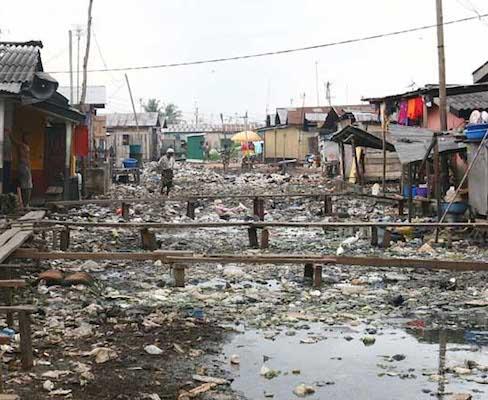
The poverty situation also worsened. The Nigeria 2015 MDGs End report noted that the Harmonised Nigeria Living Standards Survey (HNLSS) 2010, showed over 60 percent prevalence rate which translates to over 100 million people living in absolute poverty, the report said.
“Related to the high incidence of poverty is low human development. Nigeria’s Human Development Index (HDI) was 0.471 in 2012 (marginally up from 0.434 in 2005), putting the country as a low human development state with the rank of 153rd out of 186 countries.
“The various indicators call to question the country’s macroeconomic performance, especially the relative economic growth which appears not to be inclusive, poverty-reducing, and employment generating,” according to the report, seen by BusinessDay.

The eradication of extreme poverty and hunger is topmost on the list of the eight MDGs which have now transmitted to 17 Sustainable Development Goals (SDGs).
As part of achieving the reduction of poverty, countries were meant to reduce by halve, between 1990 and 2015, the proportion of people whose income is less than one dollar a day: Achieve full and productive employment and decent work for all, including women and young people, and reduce by half between 1990 and 2015, the proportion of people who suffer from hunger.
Inspite of the appreciable progress made on some fronts, Nigeria failed to meet targets in the area of poverty, reduction of infant mortality rate, enrolment of children in primary education, reduction of HIV prevalence with no progress in the reduction of incidence of Tuberculosis, from inception of the implementation of the programme.
The country however recorded some success in the fight against hunger in 2012 through interventions initiated by the former Minister of Agriculture, Akinwunmi Adesina. Hunger,according to the report reduced by 66%, meeting one part of the goal on poverty.
The National Bureau of Statistics (NBS) in its report, showed that 5,000 households for 2010/2011 and 2012/2013 indicate lower poverty rates for Nigeria and progress in poverty reduction, compared to previous estimates based on the Harmonised National Living Standards Survey (HNLSS).
This, according to the report, “implies that about 56 million Nigerians are currently poor, compared to about 113 million in previous estimates. Rural poverty incidence at 44.9 percent is much higher than urban poverty 12.6 percent and rate of poverty reduction in rural areas is slower.”
Evidence from the same set of panel data indicates that more than half of the 56 million poor Nigerians live in the North-East or North-West.
Considering that agriculture is the mainstay of rural dwellers, increasing agricultural productivity could have implications for poverty reduction, the report said, indicating that data for 2010 showed that six Southern states had poverty rates below 50 percent.
Although the MDG report recorded higher income inequality indices in urban areas, poverty appears more endemic in the rural areas than urban areas. This is because data on poverty gap reveals 22% and 13% for rural and urban areas respectively in 2004, and 13% and 11% for rural and urban areas respectively in 2010. Together, these conditions have tended to limit opportunities for upward migration to higher income levels.
The report outlined some of the challenges that hindered the attainment of the goal of eradicating extreme poverty and hunger to include: dwindling revenue, arising from declining oil prices,
insurgency/conflicts, education/awareness deficit, unemployment, inequality and rapid population growth.
Elizabeth Archibong