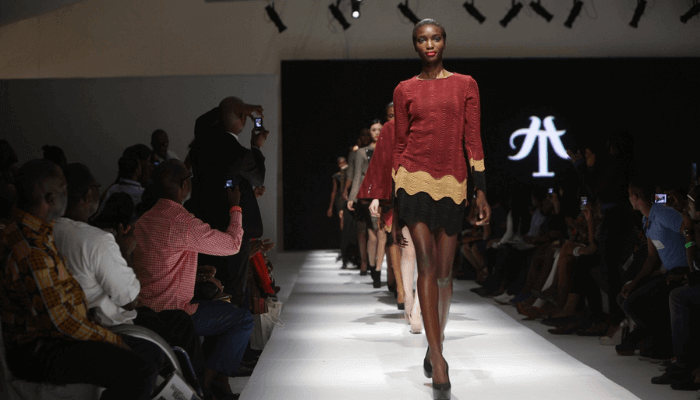
Fashion is often dismissed as surface — colour, fabric, taste. Something cultural, creative, or even indulgent. Yet this misunderstanding has cost governments, especially in emerging economies, one of the most powerful and inclusive economic engines available to them.
Fashion is not soft.
It is structural.
At its core, fashion is an industrial system: it converts raw materials into value, labour into income, identity into exports, and culture into economic power. The fact that it is worn on bodies rather than stacked in warehouses has allowed it to be chronically underestimated.
Globally, the fashion industry generates approximately $1.7 trillion annually, contributing close to 2% of global GDP. That places it ahead of sectors that routinely receive far more policy attention. It also employs over 75 million people worldwide, making it one of the largest employers on the planet — with women accounting for nearly 80% of the workforce.

This is not decoration.
This is an economy.
The industry that absorbs labour at scale
Few sectors absorb labour the way fashion does. From cotton farming and textile production to tailoring, logistics, retail, marketing, and export, fashion stretches across the entire value chain. It creates jobs at multiple skill levels, making it uniquely suited for economies grappling with youth unemployment and gender inclusion.
In developing regions, apparel and textiles are historically among the first industries to industrialise, precisely because they are labour-intensive and scalable. Countries like Bangladesh, Vietnam, and Cambodia leveraged fashion manufacturing to lift millions into formal employment. The path is proven. What differs is political recognition.
Across Africa, the fashion and apparel market is already valued at over $70 billion, with annual growth projections of around 5% over the next few years. Yet the continent captures less than 2% of the global fashion market despite abundant labour, creativity, and raw materials.

This gap is not about talent.
It is about policy neglect.
Informal by design, not by nature
Fashion in many countries exists largely in the informal economy — not because it must, but because policy has left it there. Designers, tailors, market sellers, and small manufacturers operate outside formal systems due to limited access to finance, weak infrastructure, and the absence of targeted industrial support.
Informality is often framed as a failure of entrepreneurs. In reality, it is frequently a failure of recognition.
When fashion is excluded from industrial policy, it is denied access to credit schemes, export incentives, training programmes, and trade facilitation. The result is an industry that works hard and employs many but struggles to scale.
And scale is where economies are transformed.
Exports, value addition, and missed opportunity
Fashion is one of the most efficient vehicles for value-added exports. A finished garment carries exponentially more value than raw cotton or imported fabric. Design, branding, and finishing are where margins live.
Africa’s fashion exports currently generate roughly $15 billion annually, a figure that analysts estimate could triple within a decade if supported by the right mix of infrastructure, skills development, and trade policy.
This is not speculative growth. It is latent growth.
Every unbranded export is a story not told.
Every imported garment is a surrendered value.
Fashion as economic identity
Beyond numbers, fashion carries something rare: economic storytelling.
What people wear communicates who they are, where they come from, and what they value. This makes fashion a form of soft power — one that attracts tourism, global attention, and foreign investment. Fashion weeks, design showcases, and cultural festivals generate spillover benefits across hospitality, media, and creative industries.
Countries that understand this do not treat fashion as an accessory to culture. They treat it as an extension of national branding.
Sustainability is not optional
The global fashion industry is also at the centre of sustainability debates — from water use to waste. But this challenge is also an opportunity. Emerging economies can leapfrog older industrial models by building sustainable fashion value chains from the outset.
Policy can shape incentives toward ethical production, circular design, and environmentally responsible manufacturing — positioning fashion not as a problem sector, but as a future-facing one.
Why policy attention changes everything
When fashion is treated as policy-relevant, five things happen:
- Jobs move from informal to formal
- Women’s economic participation deepens
- Export earnings diversify beyond commodities
- Creative talent scales into enterprise
- Culture converts into measurable economic value.
Fashion already does the work.
Policy decides whether the work compounds.
Conclusion
Ignoring fashion is not neutral.
It is costly.
It costs jobs that could have been formalised.
Exports that could have been earned.
Industries that could have scaled.
And narratives that could have travelled the world carrying economic value with them.
The fashion economy does not need permission to exist.
It already does.
What it needs is recognition — not as culture alone, but as strategy.
Because when policy finally catches up to fashion, the dividends will not be aesthetic.
They will be economical.
Emmanuel C. Macaulay is a development thinker and writer who examines the unseen logic behind everyday realities — where leadership, systems, and design shape collective progress.