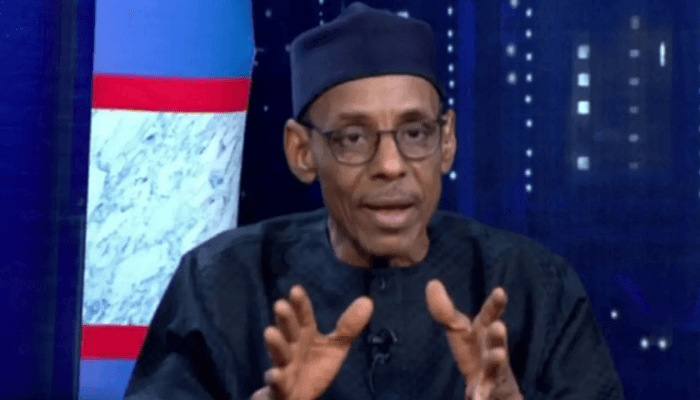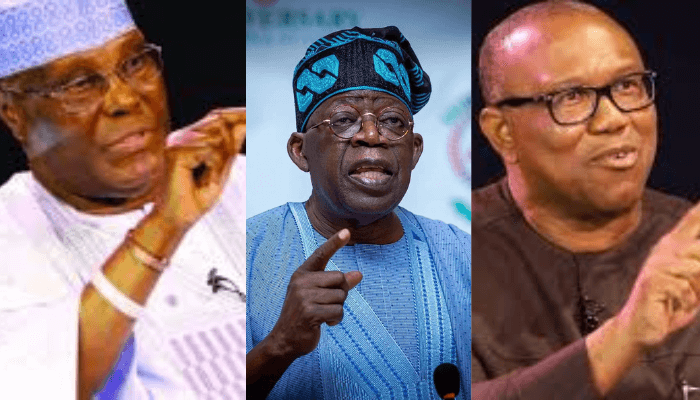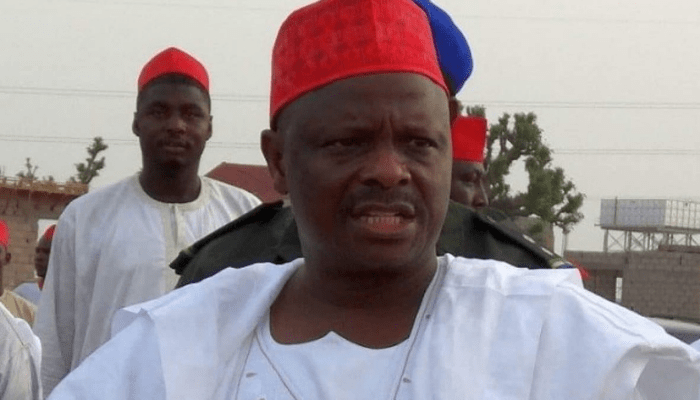
As manoeuvres ahead of the 2027 general elections intensify, former Kano State governor and presidential candidate of the New Nigeria People’s Party (NNPP) in the 2023 election, Rabiu Musa Kwankwaso, is actively weighing strategic options.
Pulled between the ruling All Progressives Congress (APC) and the opposition African Democratic Congress (ADC), pundits are of the view that Kwankwaso’s ultimate decision could shape not just party alignments but the very structure of the 2027 presidential contest.
Kwankwaso, a former minister of Defence, has been explicit about his conditions for any political alignment or realignment ahead of 2027.
Speaking last week at his Miller Road residence in Kano while receiving supporters from Rano and Dawakin Tofa Local Government Areas, he ruled out a blind return to the APC, insisting on clear terms about his role, the fate of his supporters and the political direction of Kano State.

“I will not go to the APC blindly. I must be clearly informed of my role, the direction of the journey and the fate of our plans for the common people,” Kwankwaso said in a statement by his media aide, Saifullahi Hassan.
His remarks came amid persistent speculation that Kano State Governor Abba Kabir Yusuf, his protégé, may defect to the APC.
Kwankwaso had publicly distanced himself from such a move, describing it as a painful transfer of a hard-won mandate, especially to a party associated with his long-time rival, former governor Abdullahi Umar Ganduje.
Yet, Kwankwaso has not shut the door on realignment. On several occasions, he had suggested that any move must come with tangible political benefits, including serious consideration for either the presidential or vice-presidential slot in 2027.
Away from the APC, Kwankwaso is reportedly deep in talks with the ADC leadership over the 2027 race.

Central to these discussions is a revived proposal for a joint ticket with Peter Obi, the Labour Party’s 2023 presidential candidate, this time with Obi as the flag-bearer and Kwankwaso as his running mate.
BusinessDay reports that prior to the 2023 election, Obi and Kwankwaso explored an alliance, but negotiations collapsed over disagreements on who would lead the ticket. Both men eventually ran separately, splitting opposition votes.
Obi had secured over six million votes nationwide, winning the Federal Capital Territory, Lagos, most of the South-East states and galvanising an unprecedented youth-driven “Obidient Movement” across the country.
Kwankwaso had also delivered a decisive victory in Kano State, reaffirming his grip on one of Nigeria’s largest voting blocs through the Kwankwasiyya Movement. Proponents of the joint ticket argue that an Obi–Kwankwaso ticket could correct the weaknesses of 2023.
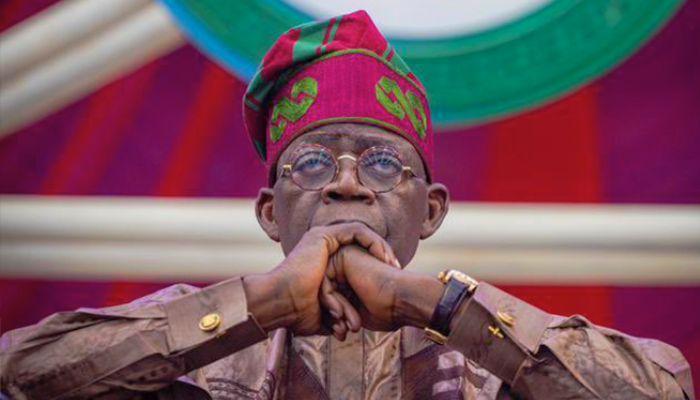
BusinessDay learnt that former President Olusegun Obasanjo is among the key figures pushing for the joint ticket convinced that a united Obi–Kwankwaso ticket could offer the opposition its clearest shot at mounting a credible challenge to President Bola Ahmed Tinubu in 2027.
Multiple sources familiar with the talks say Obasanjo has been persuading Kwankwaso to accept the vice-presidential role.
Putting the proposed ticket on the scale
Pundits say the strategic logic of an Obi–Kwankwaso ticket is compelling on paper, adding that it promises a rare North–South balance anchored on two politicians with devoted grassroots followings.
It is argued that Obi brings youthful energy, urban voters and a reformist narrative; while Kwankwaso brings political structure, street-level mobilisation and deep influence in Kano. However, translating this logic into electoral victory, analysts say will be a herculean task, raising the question of elite buy-in.
While Obi commands immense popularity and is loved by the youths, analysts say it shouldn’t be forgotten that Nigeria’s presidential elections are still heavily influenced by party machinery, governors, traditional power brokers and regional opinion moulders.
Observers said Kwankwaso’s presence could open doors in the North, but sceptics argue that his influence remains largely confined to Kano and may not automatically translate into broad northern consensus.
A former Kaduna State governor, Nasir El-Rufai, who has ruled out contesting, is often cited as a potential kingmaker. Political analysts argue that if figures like El-Rufai were to rally northern opinion leaders behind Obi, especially with Kwankwaso on the ticket, it could dramatically alter the 2027 landscape.
A political analyst, Majeed Dahiru, had said the Tinubu administration could face serious trouble if northern opinion moulders coalesce around a credible southern candidate with real northern backing.
Observers say whether he returns to the APC under strict conditions, joins the ADC to back an Obi-led ticket, or charts an entirely different course, Kwankwaso’s choice will reverberate far beyond Kano.
But some analysts have pointed to the challenge of harmonising two very different political cultures, Obi’s issue-driven, technocratic appeal and Kwankwaso’s populist, movement-based politics, arguing that managing messaging, campaign structure and internal power-sharing would require unusual discipline and trust.
The Atiku factor
However, former Vice President Atiku Abubakar is seen as a challenging factor in the entire arrangement. If achieved, Obi and Kwankwaso would have to contend with Atiku, who is also warming up to secure the ADC ticket.
BusinessDay reports that opposition leaders, frustrated by years of fragmentation adopted the ADC in 2025 as a common platform to challenge the APC.
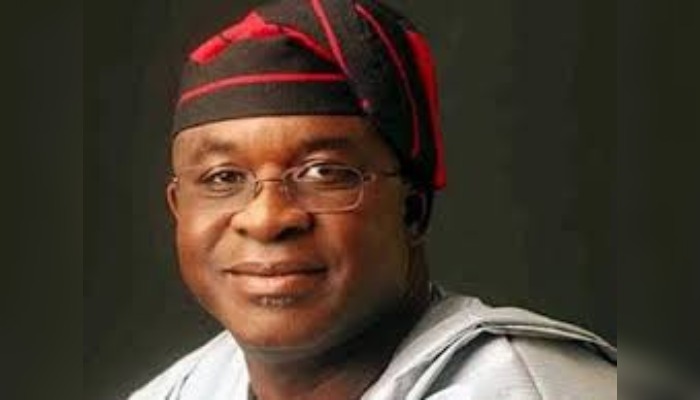
At a high-profile meeting at the Yar’Adua Centre in Abuja, former Senate President David Mark emerged as interim national chairman, with former interior minister, Rauf Aregbesola, as interim national secretary.
The coalition gained momentum when Atiku Abubakar officially joined the ADC in November 2025, framing his move as part of a mission to “rescue Nigeria.” In December, Peter Obi followed suit, urging his supporters to rally under the ADC banner.
The entry of Atiku and Obi instantly transformed the ADC into a heavyweight opposition platform, but also complicated the battle for its presidential ticket.
Atiku, a serial presidential contender, remains one of the most formidable figures in Nigerian politics. His strengths are well known; deep political networks, vast resources, experience in nationwide campaigns and a proven ability to win party primaries.
For Obi and his supporters, Atiku represents both an obstacle and a symbol of old-style politics they believe Nigerians are eager to move beyond. For Kwankwaso, Atiku’s presence raises hard questions about where his own ambition is best served.
Zoning
The ADC leadership insists it has not adopted zoning as a criterion for its 2027 ticket. Yet, zoning remains unavoidable in Nigeria’s political calculus.
Obi and former governor of Rivers State, Rotimi Amaechi, another prominent ADC figure, are both southerners who have publicly signalled willingness to serve a single term if elected, a gesture meant to reassure northern stakeholders. However, Atiku, a northerner, has remained silent on any one-term pledge.
This silence has fuelled suspicion among southern actors who argue that following Muhammadu Buhari’s eight years and Tinubu’s current first term, the South is entitled to complete another four years before power returns to the north in 2031.
Observers say an Obi–Kwankwaso ticket could soften zoning tensions by blending southern presidency with northern vice-presidency.
Where Amaechi stands
Hovering in the background is former Rivers State governor and ex-minister of transportation, Rotimi Amaechi.
Though he has withdrawn from the APC, Amaechi is yet to formally register with the ADC, even as he continues to attend its meetings. Widely seen as ambitious and politically savvy, Amaechi is believed to be weighing his options carefully.
Like Obi, Amaechi has hinted at a one-term presidency if elected, positioning himself as a bridge between southern aspirations and national stability.
Analysts are of the view that his eventual decision, whether to contest, align with Obi, or play a kingmaker role could further shape the race.
However, it is left to be seen how the bigwigs in the ADC will slug it out during the presidential primary.