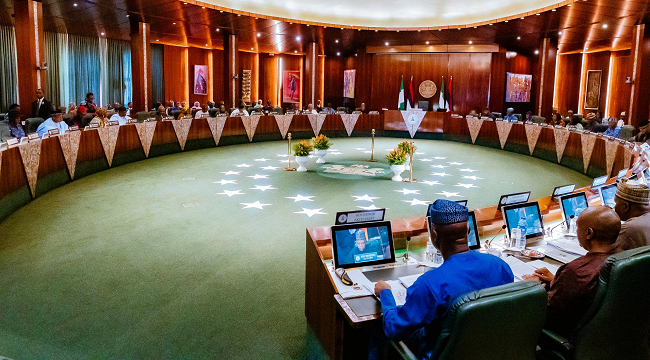
Nigeria’s National Economic Council (NEC) attracts suspicion because it looks like a serious body designed to do unserious work. Yet that framing misses what NEC is for. Its value is not that it substitutes for executive authority but that it supplies something Nigeria’s economic architecture chronically lacks: a credible mechanism for intergovernmental coordination in a federation where policy routinely fails at the seams between federal ambition and state implementation.
The NEC’s statutory design is plain, established by the 1999 Constitution, and composed of the Vice President as chair, all state governors, and the Governor of the Central Bank. Its mandate is coordinative: advising the President on the economic affairs of the federation, particularly on measures required to harmonise economic planning and programmes across the tiers of government. In effect, NEC is Nigeria’s economic federalism made visible: a room built for bargaining, not command.
“Comparative analysis sharpens the point. Nigeria’s NEC is unusual not because it is an economic council, but because it is a governors’ economic council. Its closest analogues are intergovernmental forums, not executive-office economic teams.”
This is why the chairmanship matters and why it is often misunderstood. Nigeria’s president chairs the Council of State and the National Security Council, bodies that symbolise sovereign authority and coercive capacity. NEC, by contrast, is a forum of political peers. Governors are not subordinates but elected executives with their own mandates and political calculations. A president chairing NEC risks turning it into a federal performance where states listen politely and then return home to do what they were already going to do. A vice president chairing it is a deliberate compromise: close enough to the presidency to signal seriousness but positioned to mediate rather than dominate.
That negotiated alignment is exactly what Nigeria needs, because many of its hardest economic problems are not purely macroeconomic but implementation problems disguised as policy problems. Employment is a federal talking point, but skills pipelines and enterprise ecosystems are built locally. Revenue shortfalls are national emergencies, yet spending pressures are often state-driven. In that terrain, the decisive question is not whether Abuja can announce reforms. It is whether reforms can be executed across thirty-six states without mutating into a patchwork of partial compliance.

NEC’s meeting frequency, often cited as evidence of irrelevance, actually reveals its true character. Formally, NEC is described as meeting monthly. In practice, it meets when political and economic pressure makes coordination unavoidable. The public record shows a pattern of strategically periodic sessions rather than clockwork regularity. The pattern is not accidental. NEC is not designed to be a daily engine of policy but the federation’s pressure valve: convened when misalignment becomes costly enough that everyone must negotiate in the open.
NEC’s outputs fall into three categories, each more consequential than its critics admit. First, NEC produces political authorisation for joint action. Endorsement in NEC does not implement policy, but it creates a permission structure. NEC’s endorsement is therefore not ceremonial, but the political signal that states are expected to participate and align.
Read also: National Economic Council postpones state police discussion for third time
Second, NEC builds ad hoc machinery for cross-cutting problems that do not sit neatly inside one ministry. Nigeria’s economic dysfunction is rarely confined to a single bureaucratic lane. Floods, for instance, are humanitarian crises, infrastructure crises, agricultural crises, and fiscal crises simultaneously. Oil theft is a security problem and a revenue problem, with macroeconomic implications. These are not minor resolutions. They are interventions into state capacity, which is ultimately an economic variable. Third, NEC operates as a transparency stage for the federation’s fiscal realities. In a system where mistrust is structural, disclosure, as could happen in NEC, is a form of power.
The NEC’s influence becomes clearer when placed against Nigeria’s macroeconomic moment. By late 2025, Nigeria’s reported headline inflation had eased to 15.15%, according to widely reported NBS figures, while GDP growth was reported at 3.98% year-on-year, driven largely by non-oil sectors. These are not sterile metrics. They describe a country attempting adjustment under pressure, with fragile legitimacy and intense distributional conflict. In such conditions, the central risk is not simply choosing the “right” reforms but ensuring that reforms remain politically governable across the federation. NEC cannot set the monetary policy rate, unify the exchange rate, or write the national budget. What it can do is reduce the probability that federal policy collapses into subnational noncompliance.

Comparative analysis sharpens the point. Nigeria’s NEC is unusual not because it is an economic council, but because it is a governors’ economic council. Its closest analogues are intergovernmental forums, not executive-office economic teams.
The United States National Economic Council is an internal White House coordinating body. It synthesises advice for the President and monitors implementation of the President’s economic agenda. It is powerful because it sits at the centre of the federal executive machinery, operating daily with direct access to presidential decisions. It is not designed to bargain with states, and it does not need to.
Germany provides a more relevant functional comparison through its Stability Council, a joint federal–Länder body aimed at preventing budgetary emergencies. Composed of federal and state finance ministers, the difference with NEC is not merely administrative. It is normative and legal. Germany’s fiscal coordination operates inside a rules-based framework with stronger enforcement expectations and institutional continuity. When a German intergovernmental fiscal body monitors, it does so in a culture where monitoring can translate into constraints. Nigeria’s NEC monitors a system where political bargaining often overrides formal discipline. That does not make NEC worthless; it makes its influence more contingent, more episodic, and more dependent on the balance of power between governors and the federal centre.
India’s NITI Aayog Governing Council illustrates an alternative philosophy, chaired by the Prime Minister. This model leverages the gravitational pull of the head of government to impose agenda coherence and extract commitments. Nigeria, by placing the vice president in the chair, implicitly trades force for mediation. In a high-trust federation, prime-minister chairing can accelerate coordination. In a low-trust federation, it can provoke resistance. Nigeria’s political economy often punishes central overreach and rewards subnational defiance. The Vice President chairing NEC is, at minimum, a recognition of that reality.
Australia demonstrates a different sophistication: functional differentiation. Its Council on Federal Financial Relations brings together the Commonwealth Treasurer and state and territory treasurers to manage intergovernmental financial arrangements, while the National Cabinet serves as the peak intergovernmental forum chaired by the Prime Minister. In other words, Australia separates fiscal plumbing from political steering. Nigeria’s NEC attempts to do both in one room, which guarantees dissatisfaction. If NEC focuses on macro coordination, it is accused of ignoring local realities. If it dives into granular crises, it is accused of lacking strategic depth.
This comparative lens yields the most rigorous verdict on NEC: its problem is not that it is chaired by the Vice President, nor that it “only advises”. Its problem is that its resolutions are not consistently coupled to an enforcement and delivery architecture strong enough to convert agreement into execution. The Council’s greatest strength is that it can manufacture political alignment. Its greatest weakness is that it often stops at alignment, leaving follow-through to a fragmented bureaucracy and to governors whose incentives are shaped by local politics rather than national plans.
That is why NEC is simultaneously influential and disappointing. It is influential when it becomes a veto point, as seen when it endorses large-scale programmes and national plans, providing the political umbrella for multi-tier participation. It is influential when it forces fiscal realism into the open, as with the disclosure of the Excess Crude Account’s minimal balance. Yet it is disappointing when communiqués substitute for delivery, when ad hoc committees proliferate without measurable outputs, and when meeting frequency signals that coordination is reactive rather than institutionalised.
A serious reform agenda would therefore treat NEC not as a stage for declarations, but as a governance instrument to be upgraded. The upgrade is conceptually straightforward: fewer omnibus meetings and more structured policy sprints; clear action registers with deadlines and named responsibilities; routine publication of implementation scorecards; and fiscal incentives that reward compliance rather than merely requesting it. Without those features, NEC becomes a talk shop. With them, it becomes the machinery that prevents national policy from dissolving into thirty-six variations of half-implementation.
Nigeria will not escape its economic constraints through rhetoric or central fiat, but through governable reform, which is necessarily intergovernmental. That is the NEC’s true justification. It is not a rival to the Presidency. It is the federation’s negotiating chamber, the place where the country’s economic arguments are forced into a single room and, occasionally, into a shared decision. In a political economy where fragmentation is the default and coordination is the scarce resource, that function is not merely decorative. It is structural.
Dr Hani Okoroafor is a global informatics expert advising corporate boards across Europe, Africa, North America, and the Middle East. He serves on the Editorial Advisory Board of BusinessDay. Reactions are welcome at doctorhaniel@gmail.com.