As Nigeria’s main opposition intensifies efforts to reclaim power from the ruling All Progressives Congress (APC) and President Bola Ahmed Tinubu in the 2027 general election, rising personal ambitions among key political figures are threatening to derail plans for a united front.
Just as in the build-up to the 2023 election, when ego and rivalry fractured opposition ranks, there are growing indications that mistrust and competition among opposition leaders could once again weaken their chances of dislodging the APC from Aso Rock.
The situation has been worsened by a wave of defections to the ruling party over the past year, particularly by sitting governors. These defections have strengthened the APC’s grip on power and brightened its prospects ahead of 2027.
In Southern Nigeria, the APC now controls 15 of the 17 states, with several governors defecting from the People’s Democratic Party (PDP) in recent months. With this momentum, analysts say the opposition’s only realistic path to victory lies in building a broad, disciplined coalition.

Calls for a united opposition
Many Nigerians and political observers have repeatedly called for opposition parties to put aside differences and present a single, formidable challenge to President Tinubu.
However, while there is public consensus on the need for unity, behind-the-scenes negotiations have reportedly been stalled by disagreements over zoning, power-sharing arrangements and, crucially, who should emerge as the presidential flagbearer.
Rather than consolidating around shared policy goals, critics argue that conversations within the opposition are increasingly dominated by personal ambition and regional calculations.

Birth of the ADC coalition
After months of negotiations last year, opposition leaders agreed to rally around a single platform ahead of 2027 to avoid splitting votes.
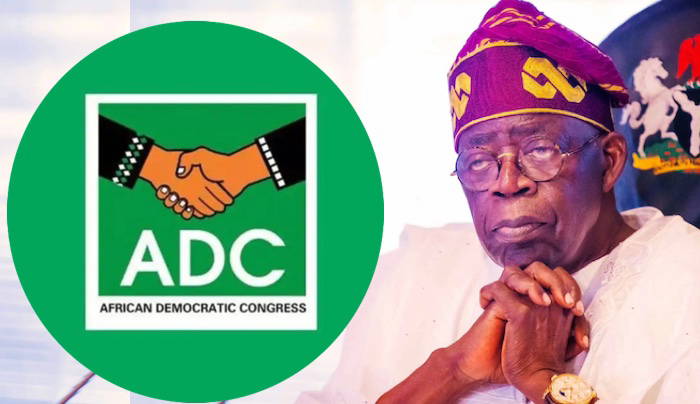
That decision led to the adoption of the African Democratic Congress (ADC) as the coalition vehicle to challenge President Tinubu and the APC.
Former presidential candidates Atiku Abubakar and Peter Obi both joined the ADC after leaving the PDP and Labour Party respectively. At the unveiling of the coalition, ADC National Chairman David Mark said the alliance was aimed at saving Nigeria’s democracy and preventing the emergence of a one-party state.
Since its formation, the ADC has expanded its reach across several states, attracting political heavyweights, including some former APC figures linked to the Muhammadu Buhari administration.
Obi formally registered with the party weeks ago, bringing along the influential Obidient movement and other political actors from the South-East.
Analysts have described the development as one of the biggest political realignments since Nigeria’s return to democracy in 1999.
Ambition and trust deficit
Despite its growth, political observers warn that unresolved leadership questions and competing presidential ambitions are slowing the coalition’s momentum.
Several opposition figures are already positioning themselves for the 2027 race, a move analysts describe as premature and divisive.
Atedo Peterside, president of the ANAP Foundation and founder of Stanbic IBTC Bank, warned that ambition without structure could doom the coalition.
“If they change their tactics, it is possible to win,” Peterside said. “Give people assignments. Everybody goes out and signs up team members. It makes no sense for everyone to sit at home doing nothing and insisting they must be the presidential candidate.”
According to him, performance and mobilisation should determine leadership, not entitlement.
A senior ADC chieftain, who spoke on condition of anonymity to BusinessDay, said trust remains a major obstacle.
“Everyone agrees unity is necessary, but no one wants to step aside. The fear is that ego and ambition may once again cost the opposition a realistic chance,” the source said.
Atiku, Obi and Amaechi: The front runners
Three political heavyweights Atiku Abubakar, Peter Obi and Rotimi Amaechi have emerged as leading contenders for the ADC presidential ticket, with no indication that any is willing to step down.
Atiku, a former vice president from 1999 to 2007, is widely seen as a frontrunner. Despite calls for him to quit the race to a younger candidate, the 79-year-old Adamawa-born politician has insisted on contesting again.
Rejecting calls to step aside, Atiku described them as dangerous to Nigeria’s democracy.
“Any call, overt or covert, for Atiku to ‘step aside’ is a gift to authoritarian ambition and a betrayal of the Nigerian people,” he said in a recent statement.
He also accused individuals linked to the presidency of attempting to destabilise the ADC by interfering in its internal processes.
Peter Obi has equally dismissed speculation that he could accept a vice-presidential slot, insisting he remains fully in the race.
“I am not travelling around the world to learn governance to be Vice President,” Obi said. “Peter Obi will be on the ballot in 2027.”
Another politician eyeing the ticket is Amaechi, a former Rivers State governor and ex-minister of works, but he has taken a more conciliatory stance, saying he is willing to support another candidate if he fails to secure the ticket.
Lessons from the 2023 election
Analysts warn that failure to unite could repeat the mistakes of 2023, when opposition divisions handed Tinubu victory.
Tinubu won the election with 37 percent of the vote, while Atiku secured 29 percent and Obi 25 percent. Rabiu Kwankwaso of the NNPP also polled nearly one million votes, largely from Kano State.
Many analysts believe a joint ticket could have defeated the APC candidate.
Tola Ola, a political analyst, said repeating such mistakes would be unforgivable.
“It would be political immaturity to put personal ambition above rescuing the nation,” he said. “If they work together, Tinubu will have a tough time in 2027.”
Zoning debate and the road ahead
Although the ADC has insisted it will not zone its presidential ticket, the decision has reignited regional debates, particularly in the South, where many argue it is their turn to retain the presidency after Buhari’s eight years.
With less than two years to the next general election, analysts warn that unless the opposition resolves its internal contradictions early, it risks entering 2027 divided and unprepared, once again easing President Tinubu’s path to re-election.
Public policy expert, Temitope Musowo, noted that without unity, they have no chance against Tinubu.
“After building this coalition, destroying it would be the greatest political mistake they could make.” he said.