In many communities across Epe, a suburb of Lagos State, children who are eager to learn are seen wandering about the streets, some are in the rivers hunting for fishes, for lack of support needed to thrive in their educational drive.
In Nigeria, while education is often described as the great equaliser, unequal access has left many young learners behind. However, Slum2School is changing this narrative by bringing targeted educational support directly to students who need it most in Epe.
According to Otto Orondaam, “Twelve years ago, I first visited Saga, a small fishing village on the island off the coast of Epe- Lagos.

We heard about this community without education and when we arrived, we saw hundreds of children playing in the lagoon, no school in sight.
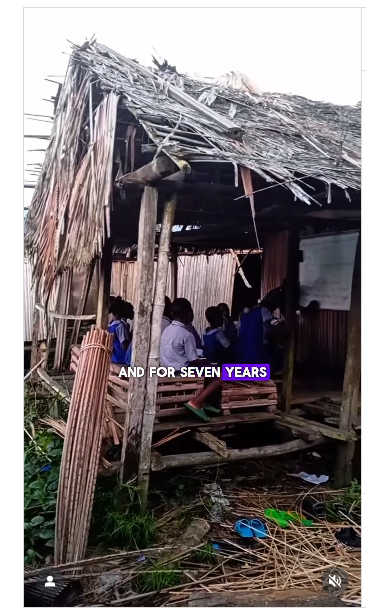
“We fell in love with them and promised we would bring education to them. A few years later, we started teaching the children in small huts with local teachers and for seven years they learned there, but we knew they deserved more.”
Orondaam further said that the team promised the children that they were going to provide a real school to the community, but was surprised to discover the cost of executing such a project was so expensive.
“We had designed an innovative eco-friendly school model with bamboo architecture and for years we kept searching for partners.
“Finally, in 2024, we won the Biomere Endowment Award which covered about 40 percent of our budget, so we took a leap of faith and began while seeking more partners and the children were very excited,” he noted.

With the endowment award, the team began the real school construction work, importing thousands of construction materials across the river and also sand-filling the entire perimeter to create a safe play area for the children, which stretched every bit of them.
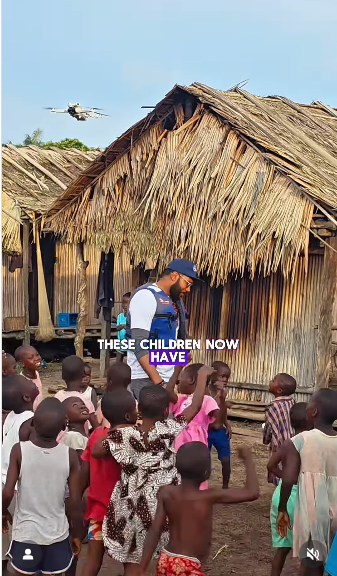
Besides, he revealed that the community was faced with the problem of good drinking water, which became an added challenge to the team.
“The community had never had fresh drinking water and so we had to construct a solar-powered borehole,” he explained.
In the face of these challenges to bridge learning inequalities in Epe, the team got a call from United Airlines to provide school supplies.
Meanwhile, the Norwegian Embassy and Universal Music Group supported the project with computer systems for the early childhood programme.
“A digital lab with HP computers equipped the students with technology as they explore the immersive world of virtual reality,” he stressed.
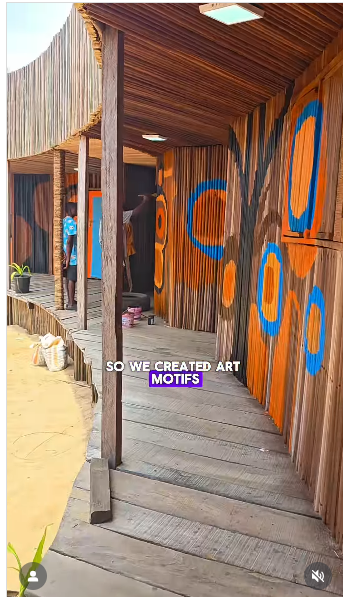
Orondaam also disclosed that they wanted the school to be child-friendly so they created art motifs inspired by the Ubuntu philosophy with 54 shapes and colours.
“Paints were donated by treats and play swings by Preserve Our Roots and hundreds of volunteers donated to our fundraiser. And finally, the impossible became reality as hundreds of partners and volunteers travelled down to commission the school,” he said.
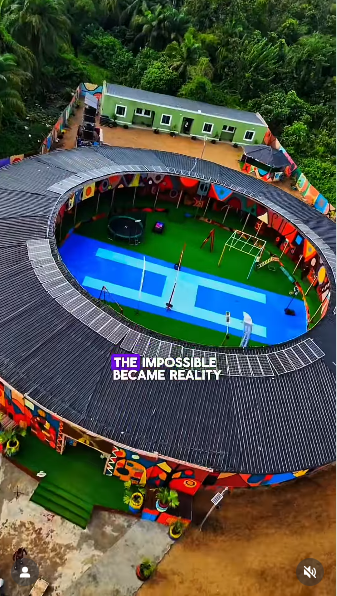
By September, the team was able to gather 250 children from seven riverine communities, some as young as three, others as old as 14 arrived for their very first day of school.
“For many, it was the first time they had stepped into a classroom and were watching the joy on their faces and the hope in their eyes brought many of us to tears.
“Beyond the celebration, the Slum to School Green Academy is truly innovative. It runs on 90 solar panels that provide uninterrupted power day and night,” Orondaam said.
Buttressing on how the team has been able to make port-table water available to the communities, he said, “Rainwater is harvested and purified for drinking. Waste is converted to biogas for cooking. Four furnished apartments house teachers from the city so they can now live and teach within the community.”
By providing the communities and children with outdoor classrooms, gardens, biodiversity areas, the children are able to learn about nature while several sporting activities and mental health spaces help them learn, play and heal.
However, beyond the Epe communities, millions of Nigerian children remain unseen and out of school. Education serves as a critical provider of human capital, equipping individuals with the requisite skills and enhancing their intellectual acumen to make meaningful contributions to their communities and the country at large.
Good education works to develop not only the learner’s understanding of established knowledge but also sharpens the learner’s mind and enhances their capacity for thinking, creativity, and innovation so they can become active creators of new knowledge.
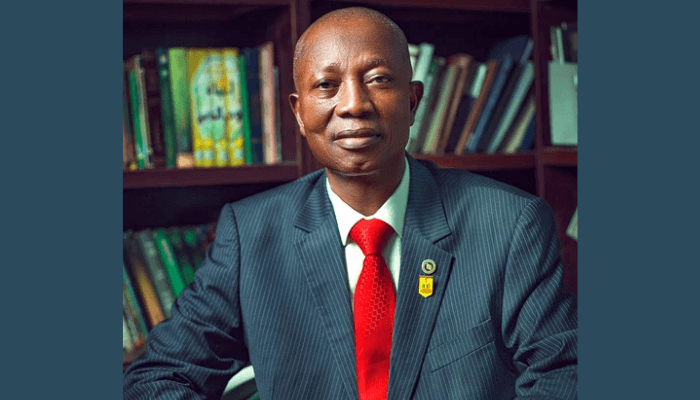
According to Kingsley Moghalu, president at the Institute for Governance and Economic Transformation, “Well-educated individuals are not only confident to lead fulfilling personal lives but also actively engage in problem-solving within their societal contexts, thereby elevating overall societal welfare and fostering social cohesion.
“They are not equipped only with intellectual capacity for thinking and knowing, but also with a deepening sense of character, community and citizenry.”
Education plays an active role in the socioeconomic development of a nation by actively contributing to educating her people about necessary character, roles, and obligations of citizenship.