Nigerian film producers and actors are increasingly opting to release full-length films and series directly on YouTube, drawn by higher revenue potential, quicker monetisation, wider global reach, and greater creative control compared to traditional cinemas or subscription platforms like Netflix.
This shift is backed by strong performance data from top creator channels. According to industry reports and analytics, YouTube has become a major income driver for prominent Nollywood figures, especially those with substantial followings in Nigeria and the diaspora.
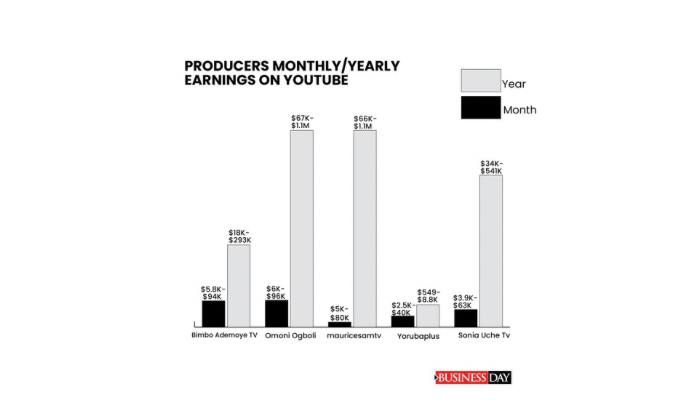
Bimbo Ademoye’s channel, Bimbo Ademoye TV, with roughly 1.4 million subscribers, illustrates the model. Her full films and series attract millions of views, translating into steady ad revenue. Comparable high-performing Nollywood titles on YouTube are estimated to earn anywhere from a few thousand to tens of thousands of dollars per release, depending on view count and audience mix. Titles such as ‘Where Love Lives’ have crossed millions of views, demonstrating how long-tail advertising can outperform one-off licensing fees.
Read also: Why filmmakers ditch cinema for YouTube gold rush

Omoni Oboli’s YouTube presence is even more pronounced. With more than 1.75 million subscribers and recognition as ‘YouTube’s Top Creator Channel’ in Nigeria for 2025, her catalogue, which features viral hits like ‘Love in Every Word,’ which surpassed 30 million views, shows the platform’s scale.
Individual films can generate substantial income from ads alone, particularly when viewership comes from higher-paying markets such as the US, UK, and Canada.
These earnings are estimates drawn from public analytics tools and industry benchmarks, and they vary by ad rates, engagement, watch time, and geography. YouTube typically pays creators about 55 percent of advertising revenue, with higher cost per impressions (CPMs) often linked to diaspora audiences
By contrast, cinema economics remains narrow. FilmOne data shows the entire West African box office generated about N15.6 billion in 2025, with only a handful of releases reaching blockbuster status. Funke Akindele’s titles, including ‘Behind The Scenes,’ which crossed N2 billion, remain exceptions in a market constrained by limited screens, ticket-sharing arrangements that favour exhibitors, and heavy marketing costs.
Production costs

According to various reports and industry insights in 2025, the cost of producing Nollywood films varies significantly depending on the intended distribution model. High-end projects aimed at cinema releases often carry substantial budgets, frequently exceeding N100 million (and sometimes reaching N250 million to N300 million due to inflation, fuel price hikes, equipment, and crew expenses), reflecting the need for superior production values, marketing, and theatrical appeal.
In contrast, films produced primarily for YouTube are typically made on much smaller budgets, often planned specifically with YouTube economics in mind, allowing for lower costs while still achieving viability through direct digital distribution.
While there are exceptions such as Falling Notes, which pushed YouTube production costs close to N50 million, most creators adopt a more cost-efficient approach tailored to online monetisation
Producers say YouTube offers a revenue model that differs from cinema releases and streaming platform licensing. While cinemas depend on ticket sales and physical attendance, and streaming platforms typically pay fixed licensing fees, YouTube provides ongoing revenue through advertising as long as content continues to attract viewers. Creators also earn through channel memberships, sponsored content, and brand partnerships.
Producers also cite ownership and control as a factor. On YouTube, creators retain rights to their content and determine release schedules, marketing strategy, and monetisation formats. Streaming platforms often require exclusivity and impose content, format, and release conditions.
Read also: Why N50M YouTube film ‘Falling Notes’ skipped cinemas, Netflix
Speed of monetisation is another factor. A film uploaded on YouTube can begin generating revenue immediately once a channel is approved for the YouTube Partner Program, while licensing negotiations and cinema distribution arrangements can take months. Distribution on YouTube also eliminates cinema marketing costs and physical distribution expenses, reducing upfront financial risk.
YouTube audience reach is also broader, allowing Nigerian films to reach both local viewers and the diaspora audiences without geographic restrictions. Cinemas are limited by physical location and capacity, and some streaming platforms are not fully available across African markets.
To monetise content, creators must meet YouTube Partner Program requirements, including at least 1,000 subscribers and 4,000 public watch hours in the previous 12 months, compliance with copyright and content rules, and linkage to a Google AdSense account. Revenue is generated primarily through advertising displayed on videos, as well as memberships and sponsorships.
This has empowered independent producers who previously struggled for cinema slots or streaming deals to go straight to viewers.
Omoni Oboli, Bimbo Ademoye, Uche Montana, and Ruth Kadiri , who released dozens of films on her channel in 2025 and built a massive subscriber base, have publicly championed the approach, using YouTube earnings to self-finance future projects instead of depending on investors.
The trend is reshaping the industry. Producers are investing in digital teams for editing, uploading, and engagement. It challenges cinemas, which compete with home viewing, and global streamers, who losing content to direct models.
At the 2025 African Film Festival (AFRIFF), Ruth Kadiri, actress and filmmaker, emphasised the growing dominance of YouTube, predicting it would only expand, though she also noted challenges like artificial view inflation in the space.
Risks remain, including algorithm changes, fluctuating ad rates, seasonality, piracy diverting views, and pressure for frequent uploads potentially impacting quality.
Overall, Nollywood’s YouTube surge reflects a global move toward direct-to-audience models. With Nigeria’s large local and diaspora market, the platform offers viable, sustainable economics, turning filmmakers into independent digital powerhouses. While big studios may mix channels, YouTube is solidifying as a primary distribution and revenue engine for many in the industry.