The manifold images from Caracas could hardly be more confusing, their shades casting long divergent shadows of interpretation. News from Venezuela has become both dangerous and urgent. The nation has long symbolised the tripodal collision between ideological polarisation, resource wealth and US power. The latest events deepen that symbolism in a world still organised around the US dollar, where strategic resources and financial exposure inevitably become intertwined instruments of leverage.
Nevertheless, more oil barrels will be priced and financed in dollars, even as competing currencies jostle for position. But pay close attention: the dollar is not collapsing tomorrow or next month. Be wary of YouTube doomsayers urging quick exits. Dollar dominance will end through gradual structural erosion, not overnight implosion.
However, political messaging from Venezuela differs sharply. For governments from Abuja to Brasília, Caracas is a reminder that a US-centric financial and security architecture carries both regime stability and regime-risk. Sanctions, legal pressure and military force have rewritten Venezuela’s future decisively. Questionable regimes now quietly calculate what tools may reduce their vulnerability to similar interventions.
The quest leads directly to the dollar, and the impending need for strategic hedging alternatives. Claims circulating in parts of the commentariat are dramatic: the petrodollar is dead; BRICS has built a ready-made alternative; the yuan is beginning to reign; the US, already overstretched, is now overplaying its hand.

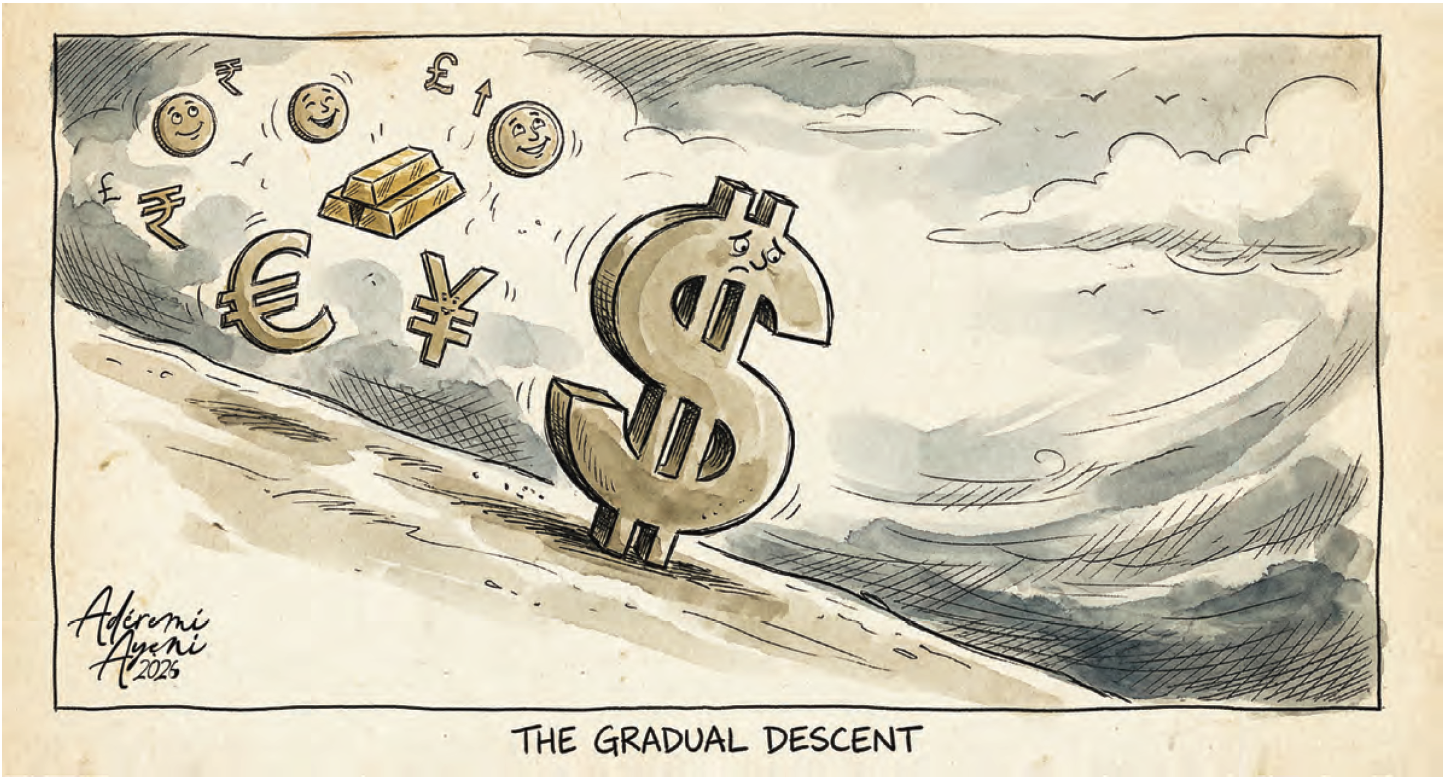
There may be some truth in the direction of travel. De dollarisation is a real phenomenon. A rising segment of international trade is now being settled in local currencies or competing currencies; central banks in the Global South are slowly diversifying their reserves into euros and gold.
However, scale and tempo matter. The dollar still accounts for well over half of disclosed global foreign exchange reserves, and dominates international payments and trade invoicing. The euro is a distant second; the yen, sterling and the yuan trail behind. The infrastructure around the dollar such as deep capital markets, legal predictability, as well as everywhere accepted payment systems – cannot be replicated overnight.
Even sympathetic analysts of de dollarisation concede that what we are seeing is best described as a long glide path: a steady decline in the dollar’s share, faster in some niches like energy and sanctioned trade, but far from a sudden exit. Underneath the noise, central banks know that diversifying is different from dumping.
Caracas will almost certainly steepen that glide path. It has already made the “weaponisation” of the dollar and of Western finance systems painfully visible. It may further strengthen the case inside BRICS capitals for alternative payment rails. However, these are multi-year projects. The banks, legal frameworks and market depth that make a currency genuinely global are built over decades.
So why does the mood online feel apocalyptic? A new media ecosystem has emerged, particularly in Anglophone countries, where “left of centre” or quasi socialist podcasters and YouTubers open every episode with some version of “America is finished”. The Caracas narrative is slotted neatly into that storyline: proof that the empire is desperate, that the dollar is on its last legs, and that viewers must “vote with their money” by fleeing US banks and assets.

The problem is that these concerned voices may be focussing on the wrong approach by leaping suddenly from critique to prophecy. Bank runs and currency crises are not triggered by rhetoric alone. They emerge from a specific mix of balance sheet fragility, policy errors and shifts in confidence among the significant financial actors.
The Silicon Valley Bank episode in 2023 was instructive. Doubts about the bank’s solvency were already present, before social media dramatically accelerated the speed of the run. Podcasters can frighten their own audience, move some retail flows into gold, crypto or foreign accounts, and contribute to volatility around weak institutions. The plumbing of the currency financial system runs deep through central banks, multinational firms and sovereign wealth funds.
For Nigeria and other Global South economies, the right response is neither complacency nor panic. Energy exporters know that anchoring their fiscal and financial future in the dollar will expose them to normal market cycles, but they may also face sanctions, asset freezes and, in extreme cases, kinetic interventions.
Equally, a hasty bet on an imminent US collapse would be dangerous. Oil, trade and financial sectors are still deeply entangled with the dollar system. Attempting a dramatic, rapid pivot away from the dollar would risk liquidity shocks, higher borrowing costs and complicated fallout in domestic markets.
The better course is strategic hedging. Nigeria must gradually diversify reserves, pursue local-currency and other currencies linked to trade deals. Long term success depends on building regional payment infrastructure while maintaining existing ties. Strengthening local financial markets gives Nigerian businesses credible naira and regional-currency funding alongside dollars. Private sector actors and banks should similarly diversify, sharpen geopolitical risk management and avoid over-concentration in any currency.
Caracas matters; it has forced into the open the suspicion that the “rules-based order” bends when hegemonic interests clash with principles. But this should not spark bets on imminent dollar collapse. The real task is to build resilience, diversify quietly, and increase bargaining power; not gamble on American implosion. Who knows? America may yet self-correct its current course.