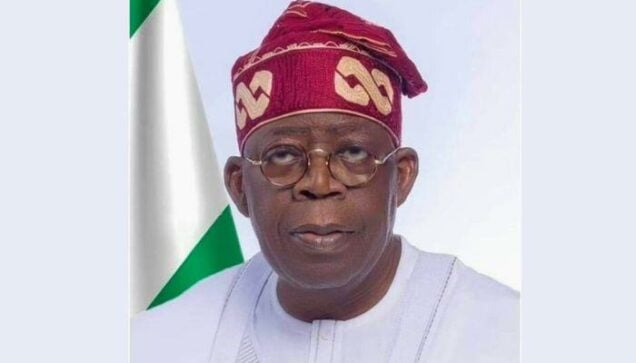
Bola Tinubu, Nigeria’s President, is set to hold talks with Sheikh Mohammed bin Zayed Al Nahyan, President of the United Arab Emirates, on the sidelines of the Abu Dhabi Sustainability Week, in a move to unlock fresh investments, expand trade and deepen energy and climate cooperation between both countries.
Yusuf Tuggar, Nigeria’s Minister of Foreign Affairs, disclosed this in Abu Dhabi, confirming that the two leaders are expected to finalise a Comprehensive Economic Partnership Agreement (CEPA) during the meeting.
The pact is designed to provide stronger legal and commercial protection for investments and to significantly boost trade flows between Nigeria and the UAE.
Read also: Tinubu targets renewable energy partnerships at UAE sustainability summit

According to Tuggar, the agreement has been strongly pushed by investors on both sides, particularly UAE firms with growing exposure in Nigeria’s energy, manufacturing and logistics sectors, as well as Nigerian companies operating in Dubai.
“UAE investors have been asking for this framework to secure their investments in Nigeria, while Nigerian businesses in Dubai, including factories, trading companies and service firms will also benefit from the certainty that CEPA provides,” he said.
Energy cooperation is expected to feature prominently in the talks, with Nigeria pressing for investment in its gas-to-power drive.
Tuggar said Nigeria is moving aggressively to convert its vast natural gas reserves into electricity to tackle chronic power shortages that continue to constrain economic growth.
He disclosed that several gas pipelines are currently under construction, alongside a new licensing round for exploration acreage aimed at attracting both local and foreign investors.

“We need to ensure that we develop that gas to power electricity,” Tuggar said, linking Nigeria’s persistent outages to decades of underinvestment in gas infrastructure, processing and transmission.
Nigeria, which holds one of the largest gas reserves in Africa, has been promoting gas as a transition fuel that can support industrialisation while reducing reliance on more carbon-intensive energy sources.
According to the Minister, the bilateral talks will also focus on expanding trade and manufacturing cooperation.
“Nigeria and the UAE already exchange a range of agricultural commodities and industrial goods, but both governments see significant room for growth, particularly in agro-processing, light manufacturing and logistics”, he added.
Tuggar also revealed that longstanding disputes over airline operators’ trapped funds, which had strained aviation and business ties in recent years have been resolved under Tinubu’s administration.
“The clearance of these funds has helped restore confidence in Nigeria’s aviation market and eased travel and financial transactions for Nigerians and foreign investors operating between both countries.
“At the Abu Dhabi Sustainability Week, President Tinubu is set to present Nigeria’s climate and sustainability agenda to global investors, policymakers and development partners”, he said.
Tuggar also said the president will highlight Nigeria’s nationally determined contributions (NDCs) under the Paris Climate Agreement, while stressing that climate projects must be structured as commercially viable and “bankable” to attract international funding.
“President Tinubu will outline Nigeria’s position in the global sustainability discourse, focusing on solutions that are climate-conscious but also economically viable,” the minister said.