The extraction of Nicolás Maduro from the presidential palace in Caracas on January 3, 2026, by United States forces sent shockwaves far beyond Latin America. The operation, confirmed by US officials, saw Maduro and his wife taken into US custody and later brought to face federal charges in New York — an unprecedented removal of a sitting head of state by foreign military power. For Africa, this should not be regarded merely as a Venezuelan problem or an episode of American unilateralism. It is a warning about how modern states can collapse when legitimacy is eroded, intelligence fails, and institutions exist more in form than in function.
In Caracas, public celebrations following Maduro’s capture were not simply reactions to a foreign-led operation. They revealed the deeper reality of a government that had long lost popular approval after years of economic collapse, hyperinflation, repression, and disputed elections. The Venezuelan state still controlled territory, but it could not command loyalty. A foreign power did not need to win hearts; it needed only to exploit silence or relief among a population disillusioned with governance failures.
The key lesson for Africa is structural: sovereignty alone does not guarantee survival. A state that fails to govern effectively, maintain public trust, and anticipate threats becomes strategically exposed. In Venezuela, Maduro’s capture was enabled not by domestic uprising but by institutional neglect and intelligence failure. Vast numbers of personnel, uniforms, and rhetoric could not compensate for the inability to see threats forming within and beyond the state apparatus.
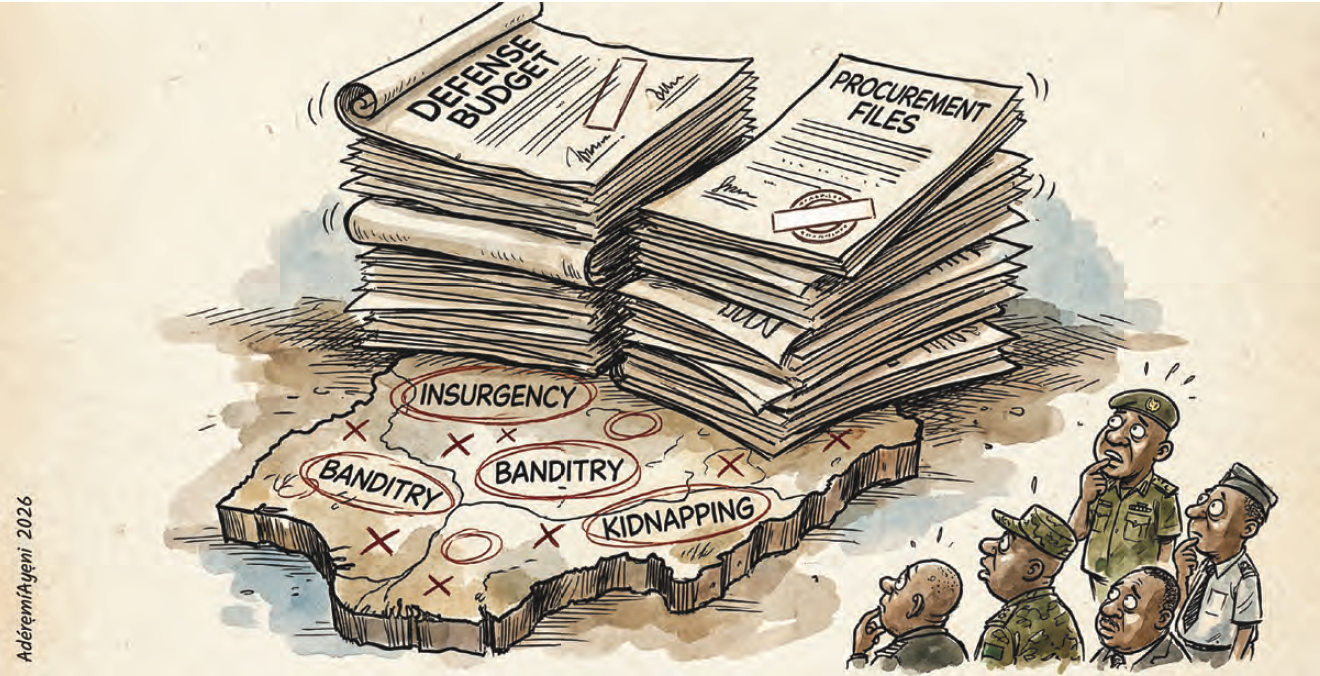
Nigeria illustrates this danger clearly. Despite allocating roughly $3.2 billion to defence in 2023 and a broader security and defence budget of about N6.57 trillion in 2025, insecurity persists across the country, from insurgency in the northeast to banditry and kidnapping in other regions. Spending has increased, but strategic capability has not kept pace. Sub-Saharan African governments together spent about $39.7 billion on the military in 2021, yet weak human development outcomes and persistent poverty remain. Large militaries risk appearing formidable on paper while remaining blind to systemic threats that undermine state legitimacy and citizen trust.

Venezuela demonstrates the consequences of this disconnect. A state can be territorially sovereign yet functionally penetrable. Africa cannot wait for foreign powers to expose vulnerabilities. Legitimacy and intelligence must take precedence over sheer military size. Public confidence, rule of law, and reliable intelligence networks are strategic necessities, not luxuries.
Maduro’s capture also highlights the dangers of relying on external norms or unilateral deterrents. International law, including Article 2 of the United Nations Charter affirming sovereign equality and non-interference, exists on paper but is not self-enforcing when superpowers choose to deploy force without Security Council authorisation. In practice, the US operation involved a large-scale strike and direct intervention in Caracas, actions that multiple international legal experts and member states have condemned as violations of the UN Charter. African states cannot assume immunity based on geography, history, or resource wealth; geopolitical competition over oil, minerals, food systems, and maritime routes is intensifying globally.
Nigeria should take special note. Increased Venezuelan oil output under US supervision could depress global prices, directly affecting Nigeria’s revenue and fiscal stability, given its continued dependence on hydrocarbons. Strategic resources attract power; they do not deter it. Appeals to morality or legal norms without capacity are strategically naïve in a world where great powers act unilaterally when interests align.
The danger for Africa lies not only in intervention but in fragmentation. A world where unilateralism is normalised pressures states to choose sides, weakening collective sovereignty. Nigeria’s leadership role in regional organisations such as the Economic Community of West African States (ECOWAS) demands more than diplomacy. It requires concrete intelligence cooperation, shared threat assessments, and credible deterrence mechanisms that go beyond ceremonial communiqués.
There is also a moral dimension that cannot be ignored. International norms should not be manipulated to shelter tyranny, electoral fraud, or systematic denial of choice. While sovereignty does not excuse abuse, external force is not a substitute for democratic renewal. Legitimate governance arises from accountability, not coercion.

The path forward for Africa is clear but demanding. States must rebuild legitimacy through accountable governance, transparent elections, and social responsiveness. Citizens’ trust is the first line of defence against internal decay and external exploitation. Intelligence must be prioritised over mere hardware. Defence budgets should fund surveillance, cyber capability, analysis, and coordination rather than merely salaries and conventional arms. Security services must serve the state and its people, not individual rulers. Regional intelligence platforms must move from paper commitments to operational reality, with information sharing, joint threat assessments, and interoperable early warning systems.
Foreign policy must shift from reactive posturing to strategic autonomy. This includes diversifying partnerships while guarding political and economic independence. African states should also invest in diplomacy that strengthens regional legal frameworks, articulates collective security interests, and defends the principle of non-interference through practice rather than rhetoric.
Venezuela did not fall in a day. It fell through accumulated neglect of legitimacy, institutions, and intelligence. The Maduro case is more than a regional incident; it is a signal flare for the continent. States that fail to govern well, see clearly, and anticipate threats will discover that the world no longer asks permission before acting. For Nigeria and Africa, the imperative is urgent and national: build the strength to choose freely, or risk having choices made by others.