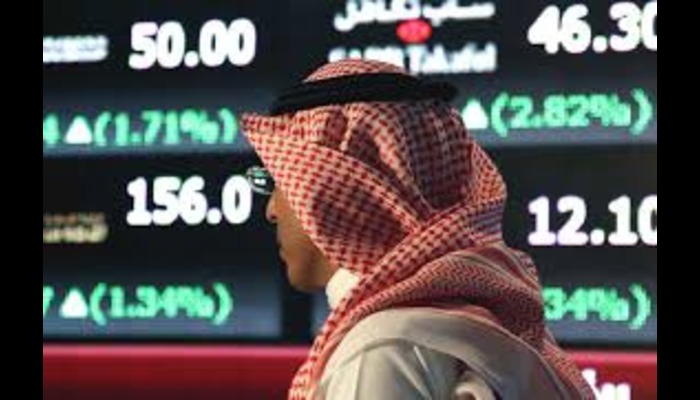
Saudi Arabia has announced plans to open its financial markets to all foreign investors from February 1, in an effort to attract overseas capital and deepen market liquidity as part of its broader economic diversification drive.
As part of its Vision 2030 reforms, the move is expected to boost liquidity, attract global capital, and reshape investment flows across emerging markets. As investors reassess their options, questions are rising about what this means for Africa, particularly Nigeria, which now faces stiffer competition for global funds.
Read also: Foreign Direct Investment rises sharply as hot money flow eases
Diversification away from oil, what Nigeria needs to learn

Speaking on the kingdom’s market readiness and infrastructure, Collins Nweke, Global Affairs Analyst explains in a TV interview saying, “It supports diversification away from oil, something Nigeria should be learning from. It integrates Saudi Arabia into global capital flows and positions the kingdom as a financial hub linking Asia, Europe and Africa. Opening the market is not symbolic; it is a structural reform aimed at embedding Saudi Arabia permanently into global portfolio allocation models”.
“Saudi Arabia is relatively well prepared. Over the past decade, it has upgraded its trading systems, clearing and settlement processes, disclosure standards and regulatory oversight”, he noted.
According to him, Saudi Arabia’s decision to fully open its financial markets to foreign investors is expected to deliver immediate gains by reducing barriers to entry and improving liquidity. The most significant short-term impact will be the removal of restrictive qualification requirements, which had previously raised costs and slowed participation.
“The most immediate change is friction reduction,” Nweke said, noting that the reforms will shorten decision timelines by eliminating “cumbersome bureaucracy”. This, he added, would translate into “faster onboarding, broader participation and improved liquidity”, while giving investors more direct exposure to Saudi equities, debt instruments and exchange-traded funds, supported by clearer price discovery and deeper market depth.
Read also: We’ve attracted significant domestic, foreign investments to better economy – APC Govs

Higher stakes for African markets as Saudi reforms reshape investor calculus
The move is also expected to have knock-on effects for African markets, including Nigeria. Observers say it “raises the bar”, as global investors are likely to assess African exchanges more critically on accessibility, foreign exchange frameworks, transparency, governance and liquidity. However, they argue the shift could still be beneficial if reforms accelerate. “Capital is not a zero-sum game if markets differentiate clearly,” Nweke said, adding that Africa could ride renewed interest in emerging markets if it keeps pace.
Some capital reallocation towards Saudi Arabia is anticipated, driven by its scale and ease of entry. Yet he cautions that long-term investors will continue to seek diversification. “Africa offers growth narratives that Saudi Arabia does not, such as demographics, consumer expansion and greenfield opportunities,” he said, stressing that the real issue is “not competition, but relative readiness”.
For Nigeria, the immediate concern lies in foreign exchange pressures and portfolio flows. Comparative friction, including capital controls, FX uncertainty, shallow liquidity and inconsistent regulation remains a major deterrent. Investors, Nweke warned, are increasingly asking: “Why struggle here if another emerging market offers similar returns with fewer obstacles?” As a result, African exchanges must compete on “clarity, credibility and, most importantly, consistency. You cannot vacillate and expect to win capital flows”.
Read also: Foreign investment in Nigeria jumps to 2yr-high on juicy returns
Nigeria is seen as highly exposed to shifts in global capital allocation, both positively and negatively. While the country benefits from scale, strong corporates and domestic participation, foreign portfolio investors remain sensitive to FX repatriation risks and policy signalling. Any global reallocation prompted by Saudi Arabia’s reforms could therefore “magnify Nigeria’s strengths or punish unresolved weaknesses”.
For Nweke, he believes Nigeria can draw clear lessons from Saudi Arabia’s approach. Chief among them is policy coherence, particularly the alignment of fiscal, monetary and capital market reforms. Investor certainty, especially around FX assets and repatriation under an “easy-in, easy-out” regime, must also be credible. Equally important is sequencing reforms properly and communicating them consistently. “Investors value predictability more than perfection. The market does not have to be perfect, but it must be predictable”, he said.
Against this backdrop, the urgency for Nigeria and other African markets is growing. Nweke warned that this is a wake-up call, as global capital is becoming more selective, not more patient. Markets that delay reforms, he added, risk being bypassed, making capital market deepening, FX reform and regulatory credibility is no longer optional, but existential.