Death toll from U.S. military operation in Venezuela rises to 80
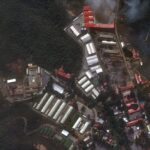
The death toll from Saturday’s United States military operation in Venezuela has reached 80, according to a New York Times report citing a senior Venezuelan official. The casualties include civilians and members of security forces, with the figure expected to rise further as rescue and recovery efforts continue. U.S. President Donald Trump announced that American forces successfully captured Venezuelan President Nicolás Maduro and his wife Cilia Flores during the pre-dawn operation codenamed Absolute Resolve.
More than 150 U.S. military aircraft conducted airstrikes across northern Venezuela whilst helicopters landed in Caracas to apprehend Maduro, who faces federal charges tied to drug trafficking and alleged cooperation with gangs designated as terrorist organisations. The pair were flown to New York and are being held at the Metropolitan Detention Centre in Brooklyn. Trump stated the U.S. would run Venezuela until a political transition is achieved, though these claims were later walked back by Secretary of State Marco Rubio. Acting President Delcy Rodríguez denounced the operation as a kidnapping. The assault drew condemnation from most South American countries, including Brazil, Colombia, and Chile, whilst many European nations raised questions about the legality of the intervention despite welcoming Maduro’s removal.
Presidential aide shares AI-generated image of Tinubu-Kagame meeting
A presidential aide has drawn criticism after sharing an AI-generated image depicting President Bola Tinubu’s meeting with Rwandan President Paul Kagame in Paris. The image, posted on social media by Dada Olusegun, special assistant on new media to the president, carries a visible Grok watermark indicating it was created using Elon Musk’s artificial intelligence chatbot rather than captured during the actual meeting.
The presidency confirmed that Tinubu held a private lunch with Kagame in Paris on Sunday, where both leaders discussed world affairs and strategies for advancing Africa’s interests. The meeting occurred one week after Tinubu departed Lagos for Europe on 28 December to continue his end-of-year break before attending the Abu Dhabi Sustainability Week Summit. Several Nigerians on social media questioned why an AI-generated image was used to depict an event that actually occurred, with one user asking whether it reflected incompetence or an attempt to communicate something else. The presidency has not explained the decision to share AI-generated imagery rather than authentic photographs of the meeting.

Nigeria hasn’t published unemployment figures in 14 months
Nigeria’s National Bureau of Statistics has not released unemployment figures for the third and fourth quarters of 2025, extending a pattern of delayed labour market data that has raised concerns about transparency and investor confidence. The latest unemployment data, covering the second quarter of 2025, was released in November, showing a jobless rate of 4.3 per cent, down from 5.3 per cent in the first quarter.
The agency has provided no explanation for the delay or guidance on when the outstanding data will be published. Before rebasing labour statistics in 2023, the NBS delayed employment data for two years, reporting a 33.3 per cent unemployment rate for the fourth quarter of 2020 only in March 2021.
Capital importation figures have also lagged, with the most recent data covering the third quarter of 2025 only released in December.
NNPC subsidiaries’ debt surges 70% to N30 trillion
The Nigerian National Petroleum Company Limited recorded N30.3 trillion in outstanding debts owed by its subsidiaries and related entities as of December 2025, representing a 70.4 per cent increase from N17.78 trillion in 2023. The surge in inter-company receivables has raised concerns about liquidity management and long-term financial sustainability despite the oil company reporting N5.4 trillion in profit after tax for 2025.
Port Harcourt Refining Company topped the list of debtor subsidiaries with N4.22 trillion, up from N2 trillion the previous year, followed by Kaduna Refining at N2.39 trillion and Warri Refining at N2.06 trillion. NNPC Trading SA owed N19.15 trillion, more than double the N8.57 trillion recorded in 2024. Only eight of NNPC’s 32 subsidiaries are debt-free, leaving the majority burdened with inter-company obligations. Petroleum economist Wumi Iledare described the situation as reflecting deep structural and governance weaknesses rather than outright insolvency, warning that a 70 per cent increase in a single year constitutes a clear warning sign. Iledare stressed that NNPC must enforce strict commercial discipline, including settlement timelines between subsidiaries and accountability for subsidiary CEOs on cash flow and profitability. The company has begun moves to divest non-core assets as part of efforts to improve liquidity and attract external capital.

South Africa’s petrol price drops to a four-year low
South African motorists will see petrol prices fall to their lowest level in nearly four years following declines in global crude oil prices and a stronger rand. The retail price of 95-octane petrol will decrease by 3 per cent to R20.75 per litre in Gauteng province from 7 January, whilst wholesale diesel prices will fall by at least 7 per cent, according to the Department of Mineral and Petroleum Resources.
The reductions follow the rand’s 13 per cent gain against the dollar in 2025, underpinned by domestic reforms, improved fiscal discipline, and positive credit rating moves. South Africa’s removal from the Financial Action Task Force grey list, stable government of national unity, and interest rate cuts have all supported currency strength. Brent crude ended 2025 near $61 per barrel despite geopolitical tensions in Venezuela, Ukraine, and Iran, with the International Energy Agency forecasting a global supply surplus of nearly 3.8 million barrels per day for 2026. The price cuts provide relief after December’s increases of up to 82 cents per litre. Fuel directly accounts for nearly 4 per cent of South Africa’s inflation basket and indirectly affects most consumer goods, potentially dampening expectations for future rate hikes. Analysts believe the rand’s strength could extend into early 2026 as reforms continue gaining traction.