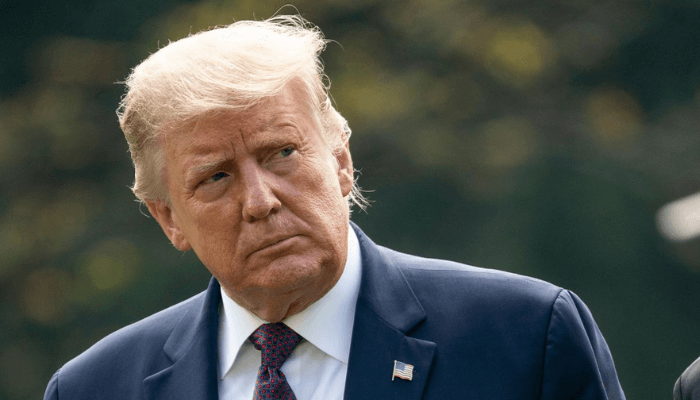
The year 2025 ended with the humbling of the Nigerian state by a foreign power. That humiliation began in November last year when Donald Trump, the US president, described Nigeria as “that now-disgraced country” and designated it as a “Country of Particular Concern” after alleging it harboured “Christian genocide”. Having tagged Nigeria with those derogatory labels, like giving a dog a bad name to hang it, Trump threatened to deploy US soldiers to the country “guns-a-blazing” to stop “Islamic Terrorists killing our CHERISHED Christians.”
Precisely on Christmas Day, President Trump ordered the US military to bomb alleged terrorist camps in Jabo, Sokoto state. He tweeted after the strike: “I have previously warned these terrorists that if they did not stop the slaughtering of Christians, there would be hell to pay, and tonight there was.” But the strike was more symbolic than decisive. While President Trump claimed that “multiple” ISIS members were killed in the “powerful and deadly strike”, some residents of Jabo reportedly said the bombs landed in empty fields with no casualties. However, whether or not the attack was “fast, vicious, and sweet”, as Trump threatened in November, the symbolism was pungent. By choosing Christmas Day to launch the attack and by targeting Sokoto, the spiritual home of Islam in Nigeria, Trump wanted to send a powerful message that he was defending Christianity against Islamic jihadism, having argued that “Christianity is facing existential threat in Nigeria.”
Last week, in a Christmas-themed piece, I argued that the narrative of Christian genocide in Nigeria gained traction worldwide because the Nigerian government had failed to fulfil the “responsibility to protect” under a UN Resolution passed in 2005 and had ignored the “duty to prevent and punish genocide” under the Genocide Convention of 1948. Where a state fails to prevent large-scale human rights violations within its territory, humanitarian intervention, involving the use of armed forces by another state or a group of states, is a recognised, if controversial, response. Thus, President Trump framed his military threats against the Islamic terrorists in Nigeria on humanitarian grounds, namely, to protect Christians in Nigeria because “the Nigerian Government continues to allow” radical Islamists to kill them.
But, in a recent article, I argued against unilateral foreign intervention. I said the Nigerian government should take the lead in attacking the terrorist enclaves while seeking foreign assistance on intelligence and weaponry. This wasn’t an argument in defence of absolute sovereignty. There’s no such thing; in an inter-connected world, nations share sovereignty through international cooperation in a multitude of areas. But when it comes to military intervention in another country, it should either be authorised by the United Nations or a regional body or be at the invitation or explicit consent of the country at the receiving end of the coercive intrusion. Short of that, sovereignty becomes merely nominal.

However, while Nigeria engaged diplomatically with the US after President Trump’s sabre-rattling in early November, leading to the establishment of the so-called US-Nigeria Joint Working Group, the truth is that the US military strike in Sokoto state on Christmas Day was a unilateral, single-minded action by President Trump. Before the strike, Trump tweeted, all in capital letters, “WARNING: THE NIGERIAN GOVERNMENT BETTER MOVE FAST.” After the attack, he gloated in a tweet: “The Department of War executed numerous strikes, as only the United States is capable of doing.” Surely, that was the attitude of someone who was determined to have his way, willy-nilly, and had it!
“Truth is, the timing and location of the US military strike were entirely of President Trump’s choosing. However, in a face-saving attempt to assert sovereignty, the Nigerian government said the strike was predicated upon President Tinubu’s “explicit approval”. It was not!”
But recognising the implication of a unilateral military intervention by a foreign power, the Nigerian government was grasping at straws, suggesting there was mutual respect for sovereignty. It went into overdrive to dissemble and indulge in sophistries that stretched credulity. The Foreign Minister, Yusuf Tuggar, tweeted that he spoke to the US Secretary of State, Marco Rubio, for 19 minutes before the strike, and that they both agreed he (Tuggar) should talk to President Tinubu “for his go-ahead”. He said the strike was only launched after Tinubu gave “the approval”! The Minister of Information, Muhammed Idris, also tweeted, saying the strike followed “explicit approval of the President of the Federal Republic of Nigeria.” Yet, according to the UK Guardian newspaper: “An earlier statement posted by the US military’s African Command on X said the strike had been conducted at the request of Nigerian authorities, but that statement was later removed.” Why was it removed? Because the US rejected Nigeria’s narrative that President Trump sought President Tinubu’s approval to act.
Why does this matter? In a true democracy, where transparency and accountability are integral to governance, the citizens should know who authorised the timing and location of the strike. For instance, if President Tinubu gave “his go-ahead” before the attacks, did he do so oblivious to the religious sensitivity of attacking Sokoto, the historical seat of Islamic Caliphate in Nigeria, on Christmas Day? Surely, the significance of striking a predominantly Muslim state on Christmas Day could not have been lost on him.
Well, the Minister of Information put a spin on that. He said the strike was executed “between 00:12 and 01:30 hours on Friday, 26 December 2025”. In his New Year Message, President Tinubu said it was “on December 24”. Which is right: December 26 or December 24? The president and the minister were trying to avoid admitting the strike took place on Christmas Day. Yet, most reports said it was “around 10 pm on Christmas Day”, and President Trump himself said he delayed the strike until Christmas Day to “deliver a message” to Islamic militants targeting Christians in Nigeria. Truth is, the timing and location of the US military strike were entirely of President Trump’s choosing. However, in a face-saving attempt to assert sovereignty, the Nigerian government said the strike was predicated upon President Tinubu’s “explicit approval”. It was not!

Of course, Nigerians were not deceived. Most were resigned to their country losing sovereignty. The popular mantra after the US military attacks was “there’s no sovereignty without security.” Some would welcome unilateral foreign intervention if it would guarantee their security and safety. But why can’t Nigeria guarantee the security and safety of its own people? The government said it provided the intelligence and operational support that helped the US launch the Christmas Day strikes. But if the Nigerian state has intelligence on the terrorists, if it has operational prowess, what else prevents it from tackling insecurity head-on? Lack of military capability? But how can the third most powerful military in Africa, according to the Global Firepower Index, lack the capability, including the satellite-enabled technology, to tackle insecurity? Well, blame the acute lack of state capacity and political will, coupled with widespread corruption that has crippled state institutions in Nigeria.
Sadly, all of this makes Nigeria a quasi-state, a state in name only. For although Nigeria possesses all the trappings of sovereign independent statehood, it lacks “empirical” statehood because it cannot guarantee the security and safety of its people, let alone engender their prosperity. But if Nigeria remains a quasi-state, unable to govern itself well, it risks becoming a failed state; then, the foreign powers, hovering like vultures, could, perhaps guns-a-blazing, have a field day! God save Nigeria!
Happy New Year everyone!