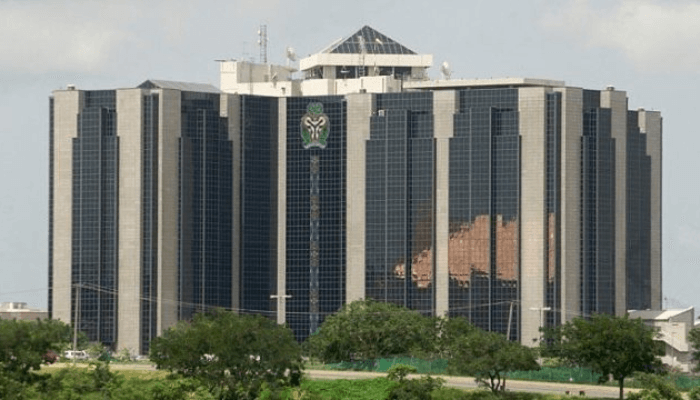
Nigeria’s benchmark interest rate is likely to remain above 22 percent through 2026 as the Central Bank of Nigeria (CBN) prioritises inflation control and currency stability over growth acceleration, according to economists and analysts polled by BusinessDay.
The CBN has kept monetary policy tight after a series of aggressive hikes aimed at curbing inflation and restoring confidence in the naira. While recent data suggest tentative macroeconomic improvement, policymakers have shown little inclination toward rapid easing, opting instead for a measured stance that preserves Nigeria’s yield advantage.
“The CBN is unlikely to engage in aggressive rate cuts; a measured approach should keep the Monetary Policy Rate above 22 percent in 2026,” analysts at data and research consultancy firm SBM Intelligence said in a recent outlook.
Read also: CBN projects economy to grow by 4.49% in 2026 on reform gains

Samuel Oyekanmi, research and insight lead at research and advisory firm Norrenberger, said the CBN will remain ‘cautious’ in its policy-making next year, citing the need to balance inflation, exchange rate stability, and premiums for portfolio investors that accounted for 80 percent of foreign investment into the country in the first quarter of 2025.
“They will have to cut at some point. But then we don’t expect so much cut from 27 percent. We expect that authorities will cut rates by 400 basis points to 500 basis points,” Oyekanmi said.
Currency stability versus growth
The question is whether the Abuja-based lender can resist political pressure to cut rates to stimulate growth expected at seven percent in the next two years, particularly as the next election cycle approaches, while maintaining the yield premium that attracts foreign portfolio inflows critical to currency stability.
High interest rates have helped draw offshore investors back into Nigerian assets after years of capital flight, with FPI now projected to exceed $20 billion by year’s end, providing support for the naira and easing pressure on foreign-exchange reserves that is now at its highest level since 2019 at $45 billion. Analysts warn that a rapid pivot could reverse those gains.

“It is worth noting that the currency’s recent stability has been built mainly on tight monetary conditions that keep foreign portfolio flows engaged and suppress the import demand that would otherwise put pressure on the FX market,” Arnold A. Dublin-Green, CEO/managing director of RC Asset Management Ltd, wrote in a guest piece.
“Cut rates too aggressively, and you erode the yield premium that attracts those inflows; ease too quickly, and you reopen the import channel with predictable consequences for the naira.”
Read also: CBN renews global investor push as confidence in financial markets builds
Caution shaped by expected election spending
The CBN’s Monetary Policy Committee (MPC) held key interest rates throughout 2024 and only slashed it by 50 basis points in September 2025 from 27.5 percent, after inflation continued its downward trajectory, marking the first rate cut under the Olayemi Cardoso-led MPC.
The decision to hold rates steady at 27 percent at its last policy meeting in November, while adjusting the asymmetric corridor to +50/-450 basis points, highlights the CBN reluctance to declare victory over inflation even though prices are cooling now for the eighth consecutive month to 14.45 percent.
Dublin-Green said the move reflects a central bank that remains wary of Nigeria’s political economy despite waning inflationary pressures.
“It speaks of a central bank that sees progress, but does not yet trust it,” he wrote. “The coming election cycle is the dominant variable. Political spending has a predictable tendency to loosen fiscal discipline, thereby pumping liquidity into a system still sensitive to shocks.”
Election-related fiscal expansion has historically complicated Nigeria’s monetary policy, often forcing the central bank to offset government spending with tighter financial conditions.
Growth accelerated despite tight monetary policy
Nigeria experienced a robust growth rate this year despite CBN’s tight policy regime, according to Ayo Teriba, chief executive officer of Economics Associate, who thinks “the current MPR is disconnected from market realities.”
Teriba further noted, “With a tight monetary regime, growth accelerates because it doesn’t affect the market unless the MPR affects the rediscount rate.”
Africa’s most populous nation witnessed its fastest economic growth in five years in the second quarter (Q2) of 2025 at 4.23 percent before it dropped to 3.98 percent in the three months ended September.
Analysts see the growth trajectory continuing in the coming year, buoyed by government spending, including pre-election expenditure, improved oil sector performance, a strong services sector, rebounding household consumption, and fixed investment.