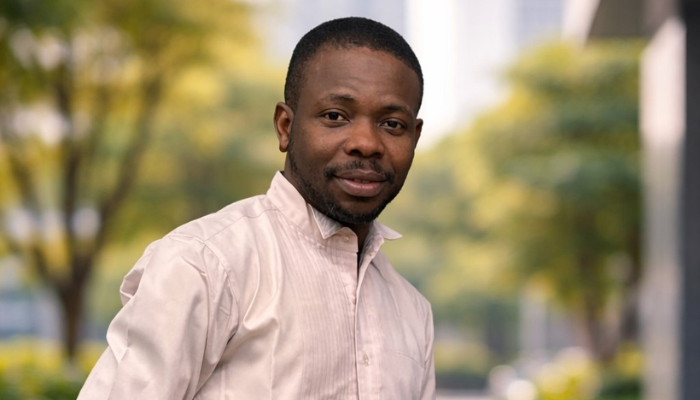
A Nigerian graduate student at Oklahoma State University, Ademola Busayo Ajayi, has called for culturally responsive approaches to the measurement of teacher effectiveness in Nigeria, stressing that meaningful education reform must be grounded in valid, context-sensitive assessment tools.
Ajayi, a master’s student in the School of Educational Foundations, Leadership, and Aviation at Oklahoma State University, is currently undertaking a significant educational research project focused on the cultural adaptation and psychometric validation of the Teachers’ Sense of Efficacy Scale for Nigerian public-school teachers.
Speaking on the project, Ajayi explained that the study addresses a long-standing gap in how teacher effectiveness, particularly teachers’ sense of efficacy, is measured within the Nigerian education system.
“One of the major challenges in Nigerian education is our reliance on assessment instruments developed in very different cultural contexts,” he said. “My research seeks to ensure that teacher efficacy is measured in ways that reflect the realities of Nigerian classrooms.”

According to Ajayi, the study adopts a mixed-methods research design, beginning with a qualitative cultural adaptation process to ensure the scale captures context-specific teaching conditions in Nigeria. This is followed by quantitative validation using exploratory factor analysis to establish the instrument’s reliability and construct validity.
Ajayi noted that teacher efficacy, teachers’ beliefs in their capacity to influence student learning is a critical but often inadequately measured factor in educational improvement.
“Teacher efficacy is strongly linked to instructional quality, classroom management, and student outcomes,” he explained. “However, when it is measured using tools that overlook factors such as large class sizes, limited instructional resources, or culturally specific expectations, the results can be misleading.”
He emphasized that the implications of the research extend beyond measurement to education policy and professional development in Nigeria. From a policy perspective, Ajayi explained that a validated, context-appropriate efficacy scale would provide ministries of education and relevant agencies with a reliable diagnostic tool to inform teacher development efforts.
“Rather than making assumptions about teacher performance, policymakers can use valid data to identify real areas of need and design evidence-based professional development programmes,” he said.

On the practical level, Ajayi added that the study could help schools move away from generic interventions that often fail to address specific challenges faced by teachers.
“When teacher efficacy is measured accurately, support can be targeted,” he noted. “Mentoring, training, and instructional resources can then be aligned with actual classroom realities instead of being applied uniformly.”
Ajayi’s academic background spans Educational Evaluation, Accounting Education, and Educational Psychology, with prior degrees from the University of Ibadan and Olabisi Onabanjo University. He also brings nearly a decade of professional experience from University Press PLC, where he worked closely with schools and curriculum stakeholders across Nigeria, analyzing instructional effectiveness and learning outcomes.
He said these combined academic and professional experiences shaped his commitment to data-driven educational reform.
“Educational change is most sustainable when it is supported by rigorous measurement and sound evaluation,” Ajayi said. “My goal is to contribute assessment tools that support teachers, strengthen accountability, and ultimately improve student learning.”
Ajayi expressed optimism that his research could contribute to the development of fairer and more supportive teacher assessment and professional development systems in Nigeria.
“Assessment should not punish teachers,” he added. “It should promote growth, professionalism, and better learning conditions for students.”
Ajayi is currently completing his Master’s degree in Educational Psychology with a specialization in Research, Evaluation, Measurement, and Statistics (REMS) and plans to continue work in psychometrics and educational measurement, with a focus on African educational contexts.
He explained that his long-term vision is to collaborate with education ministries, research institutions, and international organizations to build valid, equitable, and culturally responsive assessment systems that inform policy and practice in Nigeria and beyond.