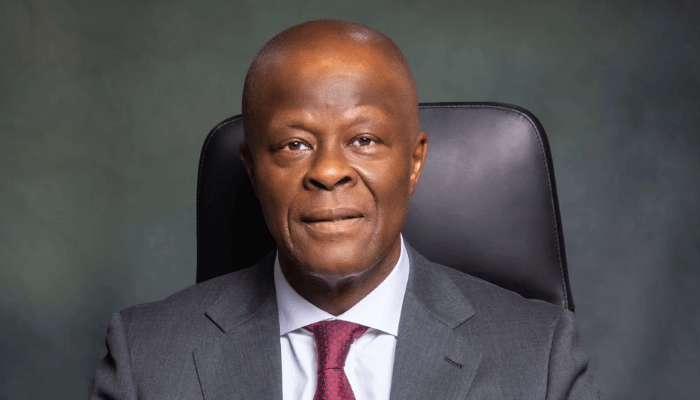
Wale Edun, Nigeria’s minister of Finance and coordinating minister of the Economy, has been named a Commander of the Royal Victorian Order (CVO) by King Charles III, placing him among a select group of Nigerians whose service has earned rare recognition from the British monarch.
The Royal Victorian Order is one of the United Kingdom’s most prestigious honours, personally awarded by the Sovereign to individuals who have rendered distinguished service to the Crown or the Royal Household. Edun’s recognition, linked to his long-standing contributions to the Duke of Edinburgh’s International Award, makes him the first Nigerian to receive the honour in decades, highlighting the exceptional nature of the appointment.
Read also: Wale Edun loses ground in Tinubu’s Finance Ministry reset
His investiture has once again drawn attention to the long but limited list of Nigerians who have been recipients of British honours across public service, diplomacy, the military, business, arts and philanthropy. Among the most prominent figures on that list is Emeka Anyaoku, Nigeria’s former minister of Foreign Affairs and long-serving secretary-general of the Commonwealth, who previously received the Royal Victorian Order in recognition of his diplomatic service and close engagement with the British monarchy. Anyaoku remains one of the most internationally celebrated Nigerian diplomats of the post-independence era. Prominent in the list is Ernest Shonekan, former head of state, who also received British honours while alive.

Historically, British honours were conferred on Nigerians whose leadership shaped the country during the colonial and early post-independence periods. J.K. Randle, a renowned businessman and philanthropist, received the MBE and MVO in the 1950s for his contributions to commerce and his role as Nigeria’s Chef de Mission to the 1956 Olympic Games. In 1955, Yahaya Madawaki was awarded the OBE for his political influence and traditional leadership.
Nigeria’s judiciary and medical professions were also represented. Adetokunbo Ademola, the country’s first chief justice, was honoured with a KBE in 1957, while Francis Akanu Ibiam, a medical doctor and public servant, received the OBE and later the KBE between 1949 and 1951. Ibiam later renounced his knighthood in protest during the Nigerian civil war, a decision that cemented his nationalist credentials.
Read also: Udoma to Chair 2025 PEARL Awards; Sanwo-Olu, Wale Edun lead guest list
Military and security ties between Nigeria and the United Kingdom also produced notable honourees. Oladipo Diya, a former chief of general staff, was among senior Nigerian military officers who received British recognition during an era when Nigeria’s armed forces maintained strong institutional links with the UK, particularly in training and defence cooperation.
In recent years, the focus of British honours has shifted toward creative industries, entrepreneurship and social impact. Femi Elufowoju Jr., theatre director, was awarded an OBE in 2023 for his contributions to the arts, while Lanre Olagoke received an MBE in 2024 for his work in charity and community development. Business leader Nneka Abulokwe was also honoured with an OBE for excellence in entrepreneurship.

Edun’s appointment places him in the company of these distinguished Nigerians and underscores the enduring, though selective, recognition of Nigerian excellence by the British Crown, spanning diplomacy, governance, culture and public service.