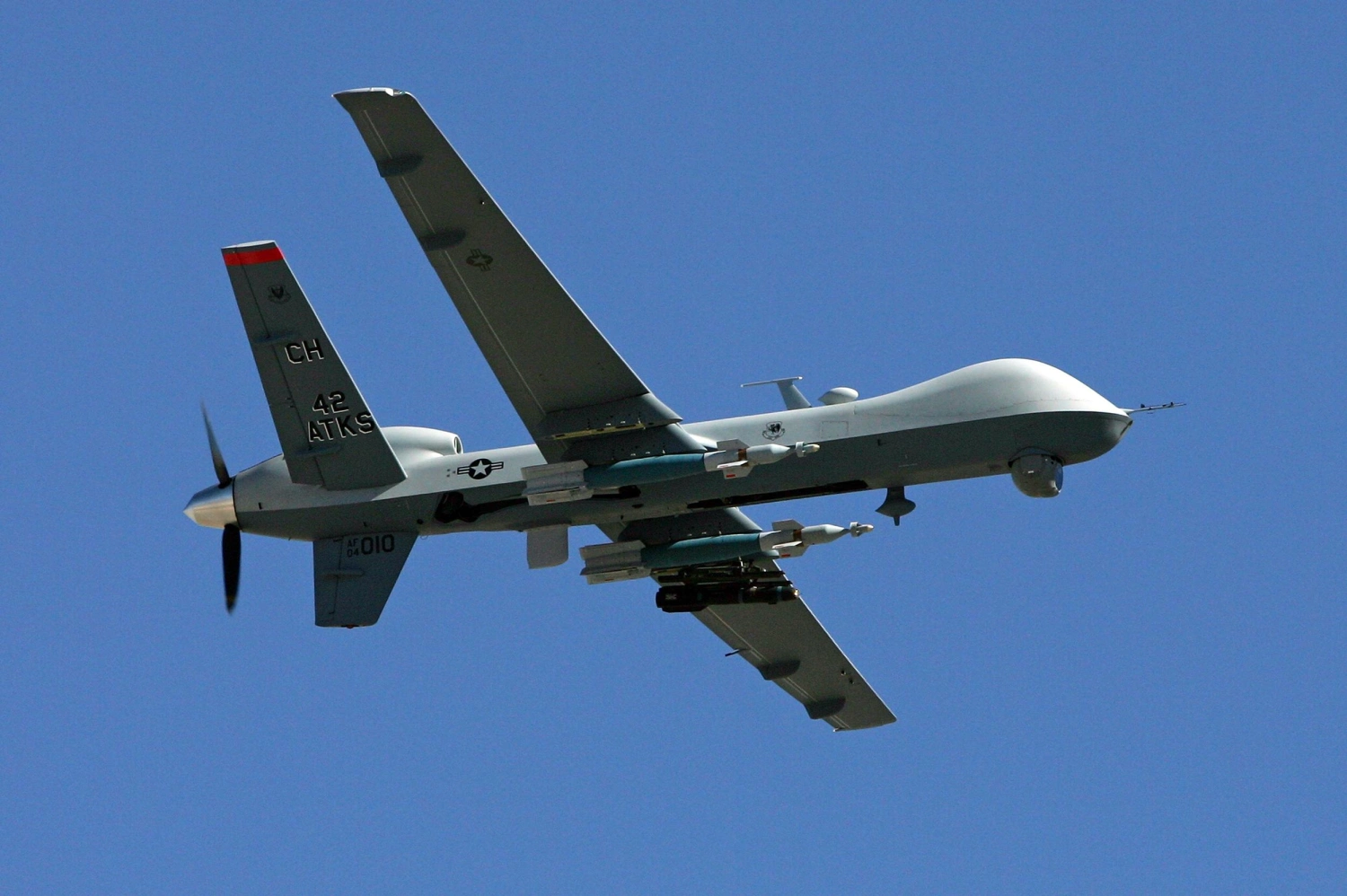
When Nigerian drone startup, Terra Industries, outbid an Israeli consortium to secure a $1.2 million contract to protect hydropower facilities in June 2025, it appeared to signal a turning point for indigenous defence technology.
But in his recent analysis, Fatai Babatunde, who is an emerging technologies and innovation strategist in Africa, said the deal exposes a deeper paradox shaping Nigeria’s security future, one where technical capability exists, but capital and policy quietly determine how far it can go.
“This is not a story about whether Nigerians can build advanced defence technology. It is about who decides what that technology is allowed to become,” Babatunde said.
Terra’s drones, designed and manufactured in Abuja, were selected because they were cheaper, faster to deploy and better suited to Nigeria’s terrain. Yet despite delivering real-time intelligence, persistent aerial surveillance and threat monitoring, the project is officially categorised as infrastructure security.

“That label is doing a lot of work. Functionally, this is defence. Structurally, it cannot be called defence because of how capital flows into African technology companies,” Babatunde noted.
Defence capability by another name
Nathan Nwachuku, Terra’s chief executive, said the hydropower plants being secured had been used as hideouts by bandits and even some terrorists, underscoring the project’s national security implications.
Yet just months earlier, Terra shut down its defence division, citing ethical concerns. The decision followed the company’s $800,000 pre-seed raise from mostly US-based venture capital firms.
According to Babatunde, the sequence is not coincidental. “Investors don’t need to issue explicit instructions. The structure of venture capital, ESG exclusions, LP mandates, compliance regimes, already defines what is investable and what is not,” he said.

Terra insists investor pressure played no role. Nwachuku has said there were no restrictions, pointing to US firms like Anduril and Palantir as proof that defence startups can thrive globally.
But Babatunde argues that comparison overlooks a critical asymmetry. “Anduril sells to the Pentagon. Palantir sells to its own government. A Nigerian startup building for the Nigerian military is operating under an entirely different political and compliance regime,” he said.
Capital, policy and invisible ceilings
Babatunde said Nigeria’s defence ambitions are constrained by overlapping systems like foreign capital rules and foreign policy restrictions, that reinforce each other.
“The same US system that limits what Nigeria can buy through the Leahy Law also supplies the venture capital that makes overt defence work commercially radioactive. That is not conspiracy. That is structure,” he said.
The Leahy Law has blocked or delayed major arms acquisitions for Nigeria over the past decade, including attack helicopters and gunships. According to Babatunde, its influence extends beyond weapons imports. “It shapes behaviour upstream. If you know your end customer is constrained, you redesign your product and your language to survive,” he added.
The result, he said, is a growing ecosystem of “dual-use companies delivering defence capability under civilian labels.”
Why startups avoid military contracts
Even without foreign constraints, Babatunde said Nigeria’s defence procurement system remains deeply unattractive to venture-backed startups.
“Military procurement in Nigeria is slow, opaque and politically risky. A startup cannot survive three years waiting for payment or being dragged into investigations,” he said.
Transparency International ranks Nigeria among the highest-risk countries globally for defence corruption. Recent arrests of security personnel for arms diversion and revelations of stolen defence funds have reinforced those concerns.
“From a growth perspective, the maths simply doesn’t work. Commercial infrastructure security allows startups to generate revenue, scale, and stay alive,” Babatunde added.
Terra reportedly generated close to $1 million in revenue in its first year, a pace Fatai said would be almost impossible through direct military contracting.
Infrastructure is the battlefield
Babatunde also stressed that the distinction between infrastructure security and national defence is increasingly meaningless in Nigeria’s threat environment.
“When attackers take out power, telecoms or pipelines, they are not just causing economic damage. They are degrading military logistics, communications and state authority,” he said.
Recent attacks across northern Nigeria, including reported use of commercial drones by armed groups, illustrate how civilian infrastructure has become a frontline target. “This is why companies like Terra matter. They are providing intelligence, surveillance and early warning, just not through the Ministry of Defence,” Babatunde said.
An ungoverned workaround
While the current model delivers capability, Babatunde warned that it is dangerously ungoverned. “Who owns the data? Who integrates it? Who has override authority in a crisis? Right now, those questions don’t have institutional answers,” he asked.
He cautioned that reliance on private firms without formal frameworks creates vulnerabilities, particularly if companies are acquired, sanctioned or compromised. “We are outsourcing national security functions to market logic. That works, until it doesn’t,” he said.
The missed industrial opportunity
Monsuru Anifowoshe, defence technology expert said Nigeria’s failure to back local innovators means defence spending continues to benefit foreign manufacturers rather than domestic industry.
“Without a demand-driven strategy, Nigeria will keep importing what it can build,” Anifowoshe said, calling for a Turkey-style model anchored by presidential directives and long-term planning.
Babatunde agrees, arguing that Nigeria’s challenge is not technological but institutional.
“There was a time Nigeria didn’t have the tech. Now we have the tech, but we don’t have the system,” he said.
Until capital, procurement and policy are aligned, he warned, Nigeria’s defence capability will continue to exist, but only indirectly.
“What we have today is defence by workaround. And a country of Nigeria’s size cannot afford to treat national security as an accident of commercial contracts,” Babatunde said.