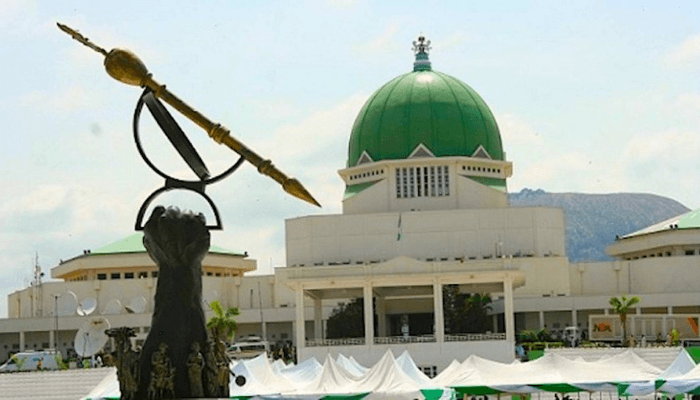
The National Assembly has announced an internal review of the legislative process that led to the passage, presidential assent and gazetting of four major tax reform laws, following weeks of public controversy and claims by some lawmakers that the versions assented to by President Bola Tinubu differ from what was passed by parliament.
The affected laws are the Nigeria Tax Act, 2025; the Nigeria Tax Administration Act, 2025; the Joint Revenue Board of Nigeria (Establishment) Act, 2025; and the Nigeria Revenue Service (Establishment) Act, 2025.
In a statement signed on Friday by Bullah Audu Bi-Allah, Director of Information, for the Clerk to the National Assembly, the management said its attention had been drawn to “public commentary concerning the legislative process relating to the passage, presidential assent, and publication in the Official Gazette” of the Acts.
“The commentary has referenced matters relating to the harmonisation of the aforementioned Bills passed by the Senate and the House of Representatives, the assent by the president and the versions of the Acts published in the Official Gazette,” the statement said.

According to the National Assembly, the leadership has mandated the relevant committees, working with its management, to conduct an internal review “strictly within its constitutional and statutory mandate.”
“This review is being undertaken in accordance with the Constitution of the Federal Republic of Nigeria, the Acts Authentication Act, Cap. A4, LFN 2004, the Standing Orders of both Chambers, and established parliamentary practice,” the statement noted.
As part of the process, the leadership has directed the Clerk to the National Assembly to work with relevant agencies to facilitate the publication of the Acts in the Official Gazette and to issue certified true copies of the assented laws to stakeholders and members of the public on request.
“This administrative action is intended solely to authenticate and formally reflect the legislative decisions of the National Assembly,” the management said.
However, it stressed that the exercise “does not constitute, imply, or concede any defect in the exercise of legislative authority by either Chamber,” adding that the review is “confined to institutional processes and procedures” and is being carried out “without prejudice to the powers, functions, or actions of any other arm or agency of government.”

The statement, urged Nigerians to “allow the National Assembly’s institutional processes to proceed without conjecture,” assuring that both chambers remain committed to “transparency, accountability, and the faithful discharge of its constitutional responsibility.”
The clarification comes amid growing tension over the sweeping tax reform package, which was passed earlier in the year as part of the Tinubu administration’s broader fiscal overhaul aimed at expanding the tax base, improving revenue collection and streamlining tax administration.
Shortly after presidential assent, a member of the House of Representatives, Abdussamad Dasuki, raised alarm, alleging that the final versions of the Acts differed from what lawmakers debated and approved.
The claims triggered public debate, protests by some political groups and calls for the suspension of implementation.
Senator Ali Ndume (APC, Borno South), also joined the controversy warning that the controversy could undermine public confidence in the reforms.
Read also: Tax laws passed by N’Assembly different from gazetted version, Rep alleges
He had urged the president to halt implementation pending clarification, arguing that “any law that carries such weight on citizens and businesses must enjoy absolute legislative integrity and transparency.”
“There are serious allegations that what was signed is not exactly what we passed,” Ndume said in an earlier statement. “If there is even a perception of alteration, it is better to pause, review and clear all doubts.”
The presidency has also previously dismissed allegations of wrongdoing, maintaining that the president assented only to bills duly transmitted by the National Assembly in line with constitutional provisions.