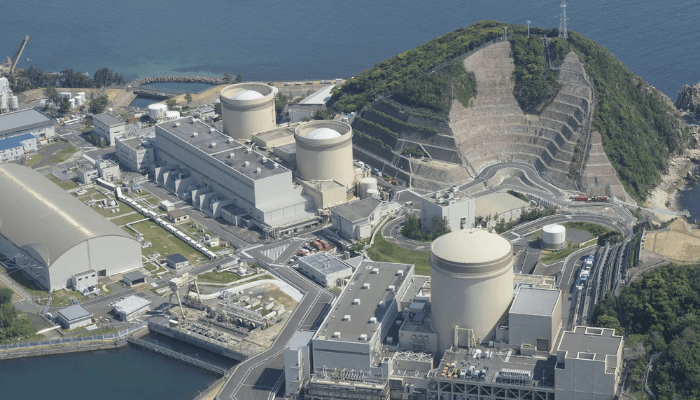
The Niigata Prefecture parliament, the legislative body of Japan, has voted to restart the country’s largest nuclear power plant, Kashiwazaki-Kariwa, fourteen years after the Fukushima nuclear disaster that led the country to shut down 54 reactors.
The regional vote is the latest step in a long process to revive nuclear energy in resource-poor Japan to reduce its dependence on energy imports, despite public opposition in the Niigata prefecture. The plant will be operated by Tokyo Electric Power Co., which was also the operator of the Fukushima nuclear power plant.
Before the Fukushima meltdown in 2011, nuclear energy accounted for about 30% of Japan’s electricity mix. The disaster prompted the closure of all reactors for safety checks. Since 2015, Japan has restarted 14 reactors out of 33 that are still operational, while 11 others are currently in the process of restart approval.
Niigata prefecture’s assembly passed a vote of confidence on Governor Hideyo Hanazumi, who backed the restart last month, effectively allowing the plant to begin operations again.

The 2011 triple meltdown at Fukushima, following an earthquake and tsunami, destroyed Japan’s trust in its nuclear energy infrastructure.
However, the environmental and economic costs of relying on imported fossil fuels have led Japan’s new Prime Minister Sanae Takaichi to back reopening some of the shuttered plants.
Read also: Stakeholders link Geo-AI, drone mapping to Nigeria’s development, security needs
Fourteen of the 33 nuclear plants that remain operable in the country have been resurrected. However, Kashiwazaki-Kariwa is the first to be operated by Tokyo Electric Power Co (TEPCO), which ran the Fukushima plant.
TEPCO is considering reactivating the first of seven reactors at the plant on January 20, Japanese public broadcaster NHK reported.

The first reactor alone could boost electricity supply to the Tokyo area by 2 percent, Japan’s Ministry of Economy, Trade and Industry has estimated.
While lawmakers voted in support of Hanazumi, the assembly session showed that the community remains divided over the restart, despite the promise of new jobs and potentially lower electricity bills.
About 300 protesters rallied to oppose the vote, holding banners reading “No Nukes”, “We oppose the restart of Kashiwazaki-Kariwa” and “Support Fukushima”.
Ayako Oga, farmer and antinuclear activist, joined the protests on Monday in her new home of Niigata, where she settled after fleeing the area around the Fukushima plant in 2011 with 160,000 other evacuees. Her old home was within the 20km (12-mile) radius of the irradiated exclusion zone.
“We know firsthand the risk of a nuclear accident and cannot dismiss it,” said Oga, adding that she still struggles with post-traumatic stress disorder-like symptoms.
Takaichi, who took office two months ago, has backed nuclear restarts to strengthen energy security and reduce reliance on imported fossil fuels, which also contribute to climate change.
Japan spent $68bn last year on imported liquefied natural gas and coal, one-10th of its total import costs.