|
Getting your Trinity Audio player ready...
|
Nigerian travellers this festive period are facing challenges on all fronts. From bad roads to high transport fares, to fear of insecurity, those hoping to travel from one part of the country are feeling apprehensive.
This is partly based on the current state of insecurity across the country, coupled with the bad roads in many states of the Federation.
For instance, commuting within the Lagos metropolis has been hectic in the last week with commuters spending a lot of time in traffic compared to the week before.
While the traffic situation is not directly connected to the festive season, some motorists are cashing in on the situation to charge commuters more, as the longer period spent in traffic has a direct impact on their fuel consumption.

Read also: Fuel scarcity at Yuletide jinx broken two years on
For example, the journey between Ikorodu and Imota that usually takes less than an hour kept many commuters along that axis in traffic for about three hours. To beat the traffic, many motorists along the Ikorodu-Imota axis decided to ply the Ikorodu-Gberigbe axis, which makes the journey longer.
To make up for the time and fuel wasted in the traffic, some motorists charged N1500 to take commuters from Imota-Ikorodu, which used to be between N600 and N800. While this looks exploitative on face value, it is, however, an economic reality of demand outweighing supplies.
This is also the situation with many motorists plying the interstate routes across the country. Over the years, motorists complained about the high volume of passenger traffic outward Lagos towards the eastern part of the country. However, they do not get similar traffic inward Lagos from the same destinations.
Hence, the need to make up for the buses that might return empty to Lagos based on the flow of traffic during the yuletide. “Sometimes we spend hours fixing the vehicle on the road. Passengers get angry, but the road is not helping anybody,” said Sunday Adewale, a bus driver plying the Lagos–Akure route.

For many commercial drivers, the yuletide season is a mix of opportunity and hardship. But, Adewale disclosed that the bad road conditions across the country further compound their ordeal, and that the frequent breakdowns and road damage increase operational costs for many motorists.
According to him, many highways are riddled with potholes, failed sections and long diversions, turning what should be six-hour journeys into 10- or 12-hour marathons. Broken-down vehicles litter the roads, while travellers endure hours of traffic, dust and fatigue.
For many Nigerians, the joy of travelling home for Christmas and the New Year celebration is being overshadowed by fear, frustration and rising costs, occasioned by bad roads, soaring transport fares and lingering insecurity in many parts of the country.
Across motor parks and highways, travellers are weighing the emotional pull of family reunions against the physical and financial risks of the road on the back of the ‘ember’ month and the rush/accidents that usually characterise travelling during this period.
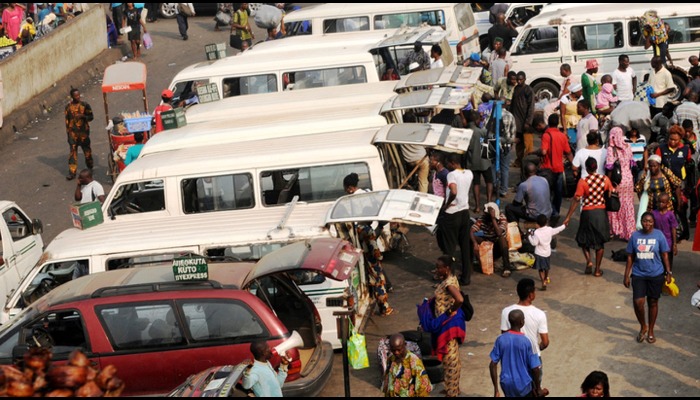
At major motor parks in Lagos, Abuja, Onitsha and Ibadan, transport fares have doubled and in some cases tripled compared to last year. A trip from Lagos to Owerri that cost about ₦18,000 in 2024 now goes for between ₦60,000 and ₦75,000.
As of Friday, BusinessDaySunday findings indicated that commuters will be spending slightly above the national minimum wage of N70,000 on travelling from Lagos to places like Owerri, Port Harcourt, and Abuja.
Read also: Yuletide: Reps decry high airfares, ask FG to cut aviation taxes by 50%
For those who would be travelling from the Ajah axis of Lagos to the east and Abuja, the average cost is about N74,000. GUO Transport charges N72,000 for a trip to Owerri, N75,000 for Port Harcourt and N80,000 for Abuja.
GIGM, on the other hand, charges N79,500 for Owerri, N74,650 for Port Harcourt and N74,000 for Abuja. But a traveller who booked online along the Ajah axis on December 20, paid N71,250 with a N1,425 cashback for booking online ahead of his trip.
However, those travelling from the mainland might pay a slightly lower price depending on the location and availability and classes of buses. For instance, Young Shall Grow Motors from the Maza-Maza pack charges N45,000 for a trip to Owerri, Port Harcourt, and Abuja.
The story is also the same in Ibadan as travellers moving to the eastern part of the country pay more compared to those travelling down to the west. A traveller who recently sent her teenage son to Ibadan for the Christmas holiday told BusinessDay that she paid N30,000 from Owerri to Ibadan.
A Seina charges N35,000 while buses is N40,000 as of Friday evening, with the transporters indicating prices might change any moment. According to the transporter who spoke with BusinessDay, transport fares are usually not stable at this time of the year and that it’s usually based on passenger traffic and available buses.
“However, I was told that moving from Ibadan to Owerri at this time of the year is costlier. My son will have to pay N40,000 if he wants to come to Owerri now, something I paid N30,000 less than a week ago,” Onyinyechi Godspower said.
While transport operators blame the increase on high fuel prices, spare parts’ costs and extortion at checkpoints, passengers say the hikes are pushing festive travel beyond their reach. “I have not seen my parents in two years,” said 32-year-old tailor, Blessing Okorie, at the Jibowu motor park in Lagos.
She complained that the fare was too high and might cost her more, with nothing left in her pockets to enjoy the yuletide. “I saved a small amount of money to go home for Christmas, but when they told me the fare, I almost cried. If I pay for this transport, what will I give my parents when I get there?”
Beyond cost, there is also the fear of insecurity that is weighing heavily on travellers’ minds with the frequent reports of kidnappings, armed robberies and attacks on highways, particularly along routes such as Abuja–Kaduna, Abuja-Kogi, Benin–Ore and parts of the South-East.
The incessant kidnapping and attacks on the roads have made many Nigerians hesitant to travel by road, while some families are opting to stay back in cities, even if it means spending their Christmas holidays alone, far away from loved ones.
Read also: Yuletide: Cleric urges govt to tackle insecurity, make road travel safer
“I told my children we are not going anywhere this year,” said Ibrahim Musa, a civil servant in Abuja. “The road to my village is bad, and there are stories of kidnappers. The Christmas celebration is not worth risking our lives.”
Despite the challenges, some Nigerians are still determined to travel, driven by cultural expectations and the emotional significance of the season. Christmas, for many, is incomplete without travelling home to spend some quality time with parents, extended family and other community celebrations usually fixed for this period of the year, especially for the Igbos.
As the festive rush peaks, the yuletide travel remains a test of endurance for many travellers, where the hope of homecoming struggles against the harsh realities of Nigeria’s transport ecosystem and the bad states of highways across the country.