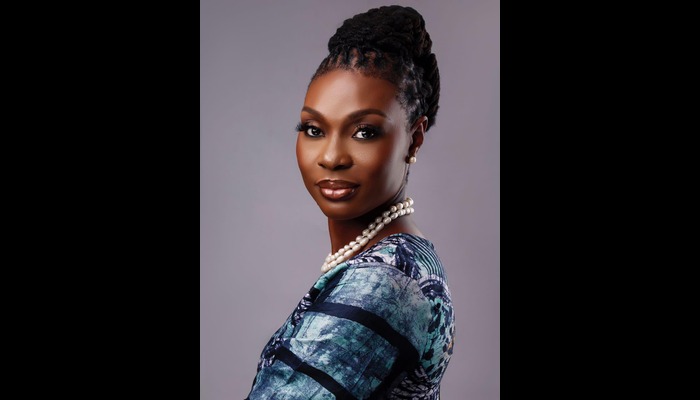
As the world marks World Cancer Day, BusinessDay Nigeria speaks with Lola James, a public health professional, Mandela Washington Fellow in Civic Leadership, and one of the most respected authorities in cancer and tobacco prevention advocacy in Nigeria. Widely regarded as a pace-setter in the field, her work has helped establish the roadmap for large-scale cancer screening, tobacco cessation, and health education initiatives across the country.
In this exclusive interview, she reflects on Nigeria’s cancer burden, her nationally impactful leadership at Breast Without Spot, and the urgent need to shift the country’s health response from late-stage treatment to prevention and population-level education.
Interviewer: World Cancer Day focuses global attention on cancer prevention and control. From your perspective, how serious is Nigeria’s cancer crisis?
Lola James: Nigeria is facing a very serious and growing cancer crisis. As of 2020, Nigeria recorded 124,815 new cancer cases and 78,899 cancer deaths, making it the country with the highest cancer mortality rate in Africa. What is particularly concerning is that these numbers are projected to increase by about 85 per cent over the next 15 years if urgent preventive action is not taken.

Breast cancer alone accounts for one in four cancers diagnosed among Nigerian women, and more than 70 per cent of patients present at hospitals with advanced or metastatic disease. At that stage, treatment options are limited, more expensive, and survival outcomes are significantly poorer. The tragedy is that many of these deaths are preventable with early detection, awareness, and access to basic screening.
Interviewer: You served as National Project Manager at Breast Without Spot for several years. What was the scope of your work there?
Lola James: I served as National Project Manager at Breast Without Spot from October 2010 to June 2016, during which time I was responsible for designing and implementing cancer prevention and screening projects across 18 states in Nigeria. This was a highly complex, multi-state operation that required extensive coordination with state ministries of health, youth corpers, local government authorities, traditional rulers, hospitals, diagnostic centres, community health workers, and volunteer mobilizers.
I oversaw state coordinators responsible for implementing screening activities in each location, ensuring that logistics, community mobilisation, data collection, ethical standards, and reporting were consistently applied. Under my supervision, Breast Without Spot established formal partnerships with hospitals and diagnostic centres, finalised memoranda of understanding with state governments for venues and local support, recruited and trained community health advocates, and helped develop standard operating procedures for safe and culturally sensitive cancer screening across Northern, Western, and Eastern Nigeria.
At the time, this level of national reach was unprecedented for a cancer-focused nonprofit in Nigeria. While many organisations were limited to one state or region, our programs extended beyond the Western parts of Nigeria to the North, East and West, ensuring that cancer awareness and screening were not limited to urban centres alone.

Interviewer: What were the main drivers of late-stage cancer presentation that you observed during this period?
Lola James: Cancer is unlike other diseases, like malaria, for example, for which you can say one thing causes it. There are over a hundred types of cancer because every part of the human body, except the skin and hair, can develop cancer. Cancer causes are so complex and multifaceted that in public health and in the scientific research space, we never use the word ‘causes’, but ‘risk factors’ of cancer. This is because we do not want to give people the false sense that if they do not engage in any of these risk factors, they will not have cancer. We categorise these cancer risk factors into two broad groups: modifiable and non-modifiable risk factors. Non-modifiable risk factors are those things that one cannot change, such as age and genetics, while modifiable risk factors are those things that we can change, such as diet, tobacco use, lack of exercise, and alcohol consumption. It is usually a combination of these things that leads to cancer over long periods of time. The long period of time it takes to develop cancer is also the reason BWS focuses on raising awareness of cancer among youths. The cancer cases we see today started forming in people’s bodies years ago, and the cancers of tomorrow are probably already forming in people’s bodies today. There is such a huge lack of awareness about cancer screening and early warning signs. Many people do not understand that cancer can be detected early or that early detection saves lives. Other factors that lead to late detection include illiteracy and cultural beliefs, including the perception that cancer is automatically a death sentence, which discourages people from seeking help early.
There is also the absence of comprehensive national screening guidelines, particularly for breast cancer, limited access to diagnostic services in rural areas, and the catastrophic out-of-pocket costs associated with cancer treatment. These financial barriers push many families into poverty and further delay care-seeking. Addressing cancer in Nigeria, therefore, requires not just medical interventions, but education, policy reform, and health system strengthening.
Interviewer: In addition to cancer screening, you were involved in tobacco control research. Can you tell us about that work?
Lola James: Yes. Between May 2015 and April 2016, I participated in the P-Tobacco Project at the Community Health Department, College of Medicine, University of Lagos. This was a $100,000 multisite, quasi-experimental tobacco cessation research initiative, funded by Pfizer USA and administered through the National Institutes of Health (NIH).
The project assessed the effectiveness of training Nigerian physicians in the 5As framework. Ask, Advise, Assess, Assist, Arrange, for smoking cessation counselling. We evaluated how this training influenced physician practices and patient outcomes across multiple healthcare facilities in East, North, West, and Southern Nigeria. Tobacco use is a major risk factor for cancer, and integrating cessation counselling into routine medical practice is one of the most cost-effective cancer prevention strategies we can adopt as health care professionals.
Interviewer: You have also published scholarly work on tobacco and cancer prevention. How important is research to public health advocacy?
Lola James: Research is essential. Advocacy must be evidence-based if it is to influence public policy and practice. My scholarly work includes publications such as “Tobacco Cessation Interventions in Tertiary Hospitals in Nigeria: An Audit of Patient Records,” published in Nicotine & Tobacco Research, as well as research on text messaging to promote physician-led brief tobacco cessation interventions, published in the Substance Abuse journal.
These studies help document what is happening in real clinical settings and identify gaps that can be addressed through policy and training. Without data, it is difficult to persuade decision-makers to invest in prevention and early intervention.
Interviewer: Over time, you transitioned from direct cancer prevention programs to education and consulting. Why that shift?
Lola James: The short answer to your question is that I transitioned because education is one of the social factors that determines people’s quality of health. As I alluded to earlier, illiteracy is one of the causes of late cancer cases. The last project I worked on was a school-based cervical cancer vaccination awareness campaign funded by the American Cancer Society and GlaxoSmithKline. In the years of working with schools and parents to get them to pay for their children’s cervical cancer vaccination, I noticed how much illiteracy and low-income levels were strong determinants of who got their kids vaccinated or otherwise.
I realised in those moments that if I wanted to contribute to breaking the cycle of cancer and poor health in families, I needed to contribute to breaking the cycle of poverty and illiteracy. In other words, I needed to be less insular by looking beyond the health sector, to a contributing sector- the formal education sector. The more educated today’s children are, the better health choices they will make in the future. Was it not a one-time US president, Herbert Hoover, who said, ‘if we could have but one generation of properly born, trained, educated, and healthy children, a thousand other problems of government would vanish’? Quotes like President Hoover’s connect education with health and show us that if we want to solve long-term health problems, we should focus on properly educating today’s children. Just look at countries like Finland and Japan, which have invested in very high-quality education, and notice how high their life expectancy is.
Over time, I also began to get calls from companies that wanted to invest in health or education as part of their social impact strategy, but they did not know the most impactful way to spend those social impact budgets. This opportunity led to the founding of TL James Impact Consulting, where I now serve as Chief Executive Officer and co-founder. Through the firm, we focus on cancer education, tobacco control, health communication, and public health capacity building. Education empowers individuals to make informed decisions, supports healthcare workers in delivering better care, and strengthens institutions to design more effective prevention programs. Prevention and education are not treatment alternatives; they are essential complements.
Interviewer: You are also a Mandela Washington Fellow. How did that experience shape your work?
Lola James: The Fellowship exposed me to global best practices in leadership, policy engagement, and social impact work. I was selected as a Mandela Washington Fellow in Civic Leadership in 2015, and it was a transformative experience. It reinforced the importance of civic responsibility, collaboration, and evidence-driven solutions in addressing public health challenges.
That experience strengthened my resolve to continue working at the intersection of health, policy, and community engagement, particularly in contexts like Nigeria, where the burden of preventable disease remains high.
Interviewer: As Nigeria marks World Cancer Day, what message would you like to leave with policymakers and the public?
Lola James: Cancer is not just a medical issue; it is a development, equity, and human rights issue. Early detection saves lives, education reduces fear, and prevention lowers costs for families and the health system. Nigeria must invest more intentionally in cancer awareness, screening infrastructure, tobacco control, affordable access to care and formal education.
For the public, my message is simple: know your risk, seek screening early, and do not ignore symptoms. For policymakers, the call is to prioritise prevention and education alongside treatment. If we act decisively now, we can change the trajectory of cancer outcomes in Nigeria.
This interview was conducted in commemoration of World Cancer Day 2022.