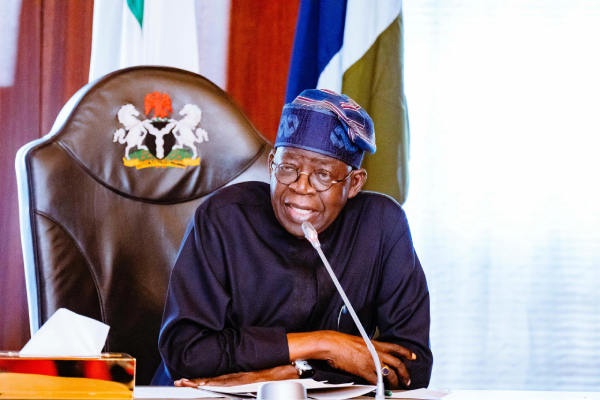
Barring any last-minute changes, indications are that President Bola Tinubu may present the 2026 budget to the National Assembly on Friday.
This comes amid uncertainties trailing the passage of the 2026–2028 Medium-Term Expenditure Framework and Fiscal Strategy Paper (MTEF/FSP), which sets the parameters for annual appropriations in Nigeria. The framework has yet to secure approval in the House of Representatives following disagreements over revenue projections and spending plans for 2026.
At the centre of the dispute is the joint committee’s proposal to revise the crude oil benchmark prices used in the framework. While the executive projected benchmark prices of $64.85, $64.30 and $65.50 per barrel for 2026, 2027 and 2028 respectively, the committee recommended lowering the 2026 benchmark to $60 per barrel, while setting prices at $65 for 2027 and $70 for 2028.
BusinessDay gathered that lawmakers could not reach a consensus on changes to the proposed crude oil price assumptions underpinning the Federal Government’s revenue projections and expenditure plans.

Read also: Fresh oil glut threatens Nigeria’s 2026 budget plans
Consideration of the framework, presented during plenary on Wednesday by James Faleke, chairman of the joint committees on finance and on national planning and economic development, stalled as lawmakers raised concerns over inconsistencies in the figures and the broader implications of altering key macroeconomic parameters.
Recall that the MTEF/FSP was transmitted to the National Assembly by President Tinubu on December 11, 2025, following approval by the Federal Executive Council.
Under the executive proposal, the assumptions included a crude oil benchmark of $64.85 per barrel, an exchange rate of N1,512/$, oil production of 2.06 million barrels per day (mbpd) with a conservative benchmark of 1.8 mbpd, and total expenditure of N54.46 trillion.
However, unlike the House of Representatives, the Senate passed the document on Wednesday, cutting the oil benchmark to $60 per barrel while retaining the crude oil production estimate at 1.84 mbpd and the exchange rate assumption of N1,512/$. The Senate also retained the 2026 revenue estimate of N54.46 trillion.

Atiku Bagudu, Minister of Budget and Economic Planning, while presenting the MTEF/FSP at the Presidential Villa, Abuja, disclosed that the framework was jointly presented by the Director-General of the Budget Office of the Federation and senior officials of his ministry.
Bagudu said the Council approved a crude oil production target of 2.06 million barrels per day for 2026, alongside a more cautious benchmark of 1.8 million barrels per day to guide budget planning.
“For the first time, a target oil production of 2.06 million barrels per day has been set for the industry to achieve. However, to avoid revenue shortfalls, we are using a benchmark production figure of 1.8 million barrels per day for budget purposes,” he said.
“For prudence, we are also using a benchmark oil price of $64.85 per barrel and an exchange rate of N1,512 to the dollar for 2026, given that it is a pre-election year.”
Bagudu added that projected Federal Government revenue for 2026 stands at N34.33 trillion, reflecting efforts to boost non-oil revenues, strengthen tax administration and broaden the economic base.
To achieve the 2026 targets, the budget envisages increased vigilance across all sectors to eliminate revenue leakages from illegal activities in the oil, gas and solid minerals sectors. The government also expects sustained economic growth as macroeconomic stability takes root.
The President is also seeking strong backing from the National Economic Council for what he described as “minimum transformational investments” critical to infrastructure development.
According to Bagudu, total revenue from all sources is projected at N34.33 trillion, inclusive of N4.98 trillion in independent revenue. This represents a 16 per cent decline from the 2025 budget estimate.
On expenditure, statutory transfers are projected at about N3 trillion, debt service at N15.91 trillion, and personnel costs at approximately N15.27 trillion. The fiscal deficit is estimated at N20.13 trillion, representing about 3.61 per cent of projected GDP.
He explained that the exchange rate assumption reflects the fact that 2026 precedes a national election year and was derived from extensive fiscal and macroeconomic analysis by the Budget Office and other relevant agencies.
“In addition, the Federal Executive Council reviewed comments and approved the Medium-Term Expenditure Framework and Fiscal Strategy Paper for presentation to the National Assembly,” Bagudu said.
Meanwhile, the Senate formally approved the 2026–2028 MTEF/FSP, cutting the crude oil benchmark to $60 per barrel for 2026, a move lawmakers said was aimed at insulating the economy from global volatility.
The approval followed the presentation of a report by Sani Musa (APC, Niger East), chairman of the Senate Committee on Finance, who said the committee reviewed the Federal Government’s oil price assumptions against prevailing global risks.
Under the revised framework, oil price benchmarks were adjusted to $60 for 2026, $65 for 2027 and $70 for 2028.
“Given uncertainties in the global oil market and geopolitical risks, the committee resolved to review the crude oil benchmark downward to reflect current realities,” Musa said.
The Senate, however, retained crude oil production projections of 1.84 mbpd for 2026, 1.88 mbpd for 2027 and 1.92 mbpd for 2028, citing confidence in ongoing sector reforms.
Key macroeconomic assumptions were also sustained, including exchange rate projections of N1,512/$ for 2026, N1,432.15/$ for 2027 and N1,383.18/$ for 2028, in line with the Central Bank of Nigeria’s policy direction.
Inflation is projected to moderate to 16.5 per cent in 2026, 13 per cent in 2027 and 9 per cent in 2028, while real GDP growth is expected at 4.68 per cent, 5.96 per cent and 7.9 per cent over the same period.
Total Federal Government expenditure for 2026 was pegged at N54.46 trillion, with retained revenue of N34.33 trillion and a fiscal deficit of about N20.13 trillion.
The Senate approved new borrowing of N17.88 trillion, while debt service obligations were put at N15.52 trillion. Capital expenditure (exclusive of transfers) was retained at N20.13 trillion, alongside statutory transfers of N3.15 trillion and a sinking fund provision of N388.54 billion.
Total recurrent (non-debt) expenditure was estimated at N15.27 trillion, with special intervention funds of N200 billion for recurrent spending and N14 billion for capital projects.
Beyond the fiscal numbers, the Senate urged the Federal Government to ensure effective implementation of the new tax laws as instruments for economic reform, growth and development.