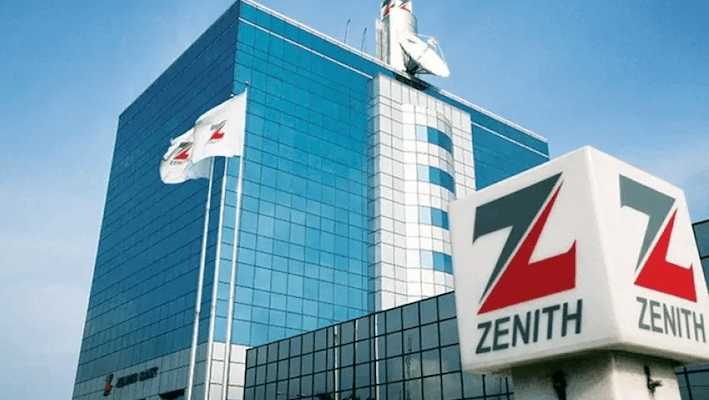
Zenith Bank, Nigeria’s second-largest lender by market capitalisation, is eyeing expansion into Ethiopia as the country opens its banking and financial services sector to foreign lenders, Ethiopia Business Review reported on Thursday.
The move places Zenith among a growing group of African banking heavyweights positioning for entry into one of the continent’s last major closed financial markets.
Over the past 10 months, Kenya’s KCB Group and Equity Group, Djibouti’s Banque pour le Commerce et l’Industrie Mer Rouge (BCIMR), and South Africa’s Standard Bank Group have all indicated interest in Ethiopia.
If completed, Zenith’s entry would rank among the most significant moves by a pan-African lender since Ethiopia formally opened its banking sector to foreign participation in June 2025 after five decades of state control.

Zenith is not the only Nigerian lender eyeing the market. In January, FirstBank, the Nigeria’s oldest financial institution, also expressed interest in expanding into Ethiopia, Africa’s second-most populous nation.
According to the English-language business magazine, Zenith’s interest followed high-level discussions between the Ethiopian Investment Commission (EIC) and senior executives of the Lagos-headquartered lender on opportunities created by the country’s financial sector reforms.
Zinabu Yirga, deputy commissioner of the EIC, said the government is actively courting global financial institutions to deepen capital markets, boost competition and modernise financial services.
Read also: Stanbic, Wema top NGX banking stocks in 2025
He noted that Ethiopia’s position as the third-largest economy in sub-Saharan Africa, alongside expanding trade links, large-scale infrastructure investments and industrial growth, offers strong fundamentals for long-term financial sector investment.

Olukayode Akinbinu, Zenith Bank’s group head of foreign branches and international market expansion, said the lender is assessing entry pathways into Ethiopia, citing reform momentum, unmet demand for sophisticated financial products and rapid digital adoption.
He added that Zenith is particularly focused on digital banking platforms, technology-driven financial services and financing large government-led and infrastructure projects.
Founded in 1990 and headquartered in Lagos, Zenith operates more than 500 branches and business offices across Nigeria.
Internationally, it has subsidiaries in Ghana, Sierra Leone and The Gambia, as well as a representative office in China. Its UK arm, Zenith Bank (UK) Limited, was licensed in 2007 and listed $850 million worth of shares on the London Stock Exchange in 2013.
In July, reports emerged that the bank was in advanced talks to acquire a tier-two Kenyan lender as part of its broader expansion across African, European and Asian markets.
Zenith last year became the first Nigerian bank to post a trillion-naira profit, reporting N1.03 trillion ($673.6 million), narrowly ahead of GTCO’s N1.02 trillion ($667.1 million).
However, the lender posted its first half-year profit decline in a decade in the first half of this year, as rising interest costs and impairment charges weighed on earnings.
Profit after tax fell by 7.9 percent to N532.2 billion ($372.4 million) in the six months to June, from N577.9 billion ($384.4 million) a year earlier.
Read also: From 114% to Zero: How Aso Savings and Loans crumbled
Ethiopia’s banking sector transformation
Ethiopia currently has 32 banks, most of them relatively small, with the state-owned Commercial Bank of Ethiopia accounting for about 22 percent of total sector assets.
With a population exceeding 130 million, Ethiopia is Africa’s second-most populous country and one of its fastest-growing economies. The International Monetary Fund projects average annual growth of 7.4 percent between 2025 and 2030, underlining the market’s long-term appeal.
The liberalisation of the financial sector is already reshaping domestic banking. Bank of Abyssinia recently registered with the Ethiopian Capital Market Authority, signalling plans to move into investment banking.
It joins Awash Bank, making them the only two private lenders currently preparing for investment banking operations under the new framework.
Reflecting these reforms, Ethiopian lenders dominated the list of Africa’s top 10 biggest climbers in the African Business Top 100 African Banks 2025 ranking. Awash International Bank, Bank of Abyssinia and Dashen Bank rose 18, 17 and 16 places, respectively, to ranks of 50th, 72nd and 71st.
“East Africa is the next best-represented region with 21 entries, led by Kenya with ten,” the report said. “The number of Ethiopian banks stands at six, up from five last year and just two in 2022, reflecting deregulation and intensifying competition.”
Foreign banks line up as reforms accelerate
Foreign interest follows Ethiopia’s sweeping economic reforms aimed at modernising an economy long dominated by state control.
Key measures include the floating of the birr, the launch of a securities exchange and the introduction of a central bank policy rate to anchor price stability.
A pivotal shift came in June 2025, when Ethiopia opened its banking sector to foreign lenders for the first time in 50 years, triggering strong interest from regional and continental banking groups.
For decades, foreign banks were limited to representative offices barred from offering banking services — a protectionist policy that constrained financial deepening despite Ethiopia’s status as Africa’s fifth-largest economy.
Reform momentum has gathered pace under Prime Minister Abiy Ahmed, who took office in 2018 and has pushed to attract foreign investment and integrate Ethiopia into the global economy.
A major milestone was the passage of the Banking Business Proclamation No. 1360/2024 in December, laying the legal foundation for financial sector openness.