…Eyesan, Mohammed await Senate nod
President Bola Tinubu has moved quickly to reshape Nigeria’s energy regulatory landscape following the departure of the chief executives of two key petroleum agencies, marking the most significant leadership change in the regulatory sector since the passage of the Petroleum Industry Act (PIA) four years ago.
Farouk Ahmed resigned as chief executive of the Nigerian Midstream and Downstream Petroleum Regulatory Authority (NMDPRA), while Gbenga Komolafe stepped down as head of the Nigerian Upstream Petroleum Regulatory Commission (NUPRC).
Bayo Onanuga, presidential spokesman, announced the changes Wednesday evening, hours after Ahmed was summoned to the Presidential Villa for a closed-door meeting with Tinubu. The statement made no mention of the corruption allegations against Ahmed, describing both departures as resignations.

The dual exits came days after billionaire industrialist Aliko Dangote submitted a corruption petition against Ahmed to anti-graft authorities.
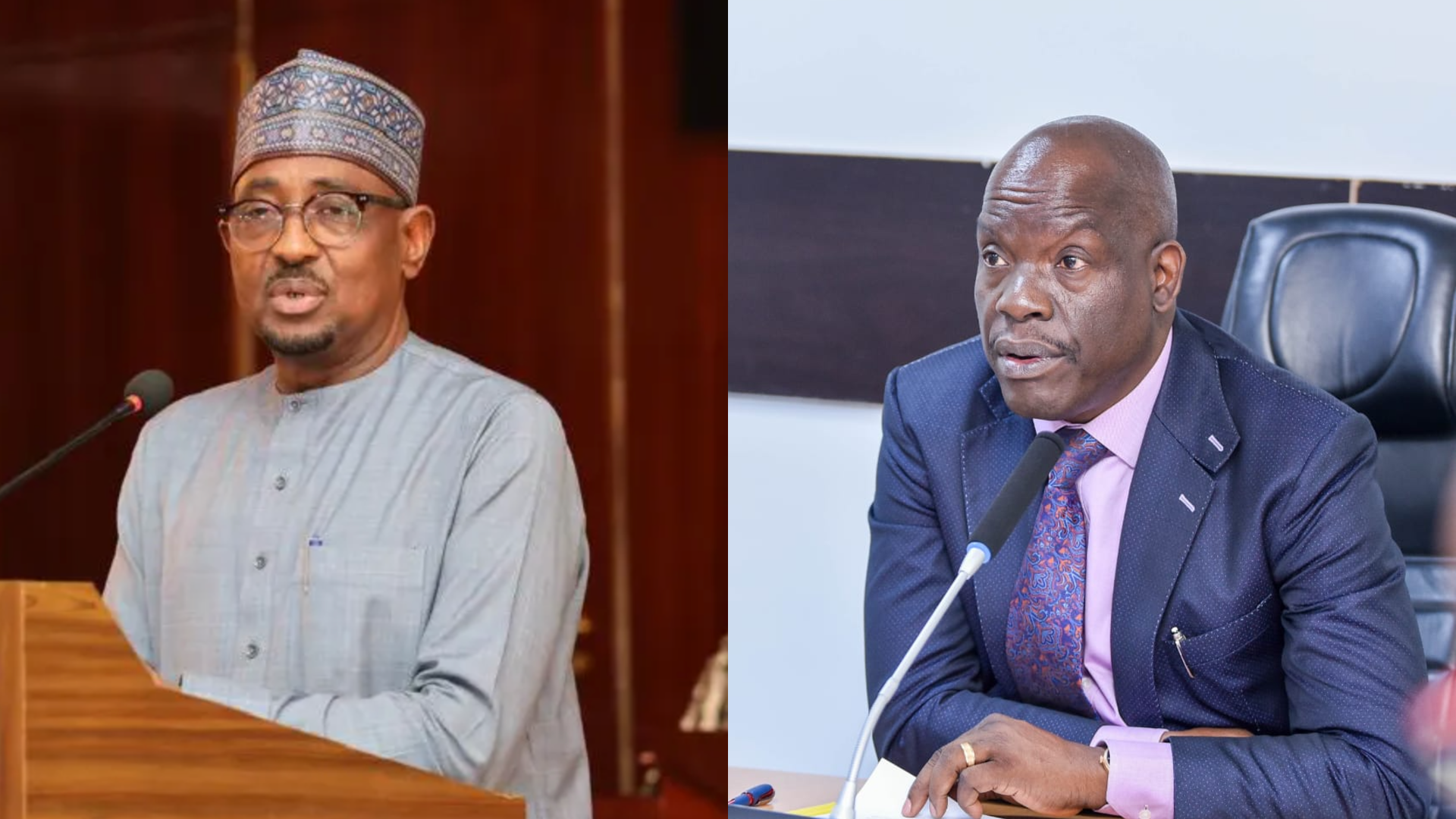
The president has written to the Senate requesting the confirmations of Oritsemeyiwa Eyesan as the new chief of NUPRC and Saidu Mohammed as CEO of NMDPRA. Both nominees bring extensive oil and gas experience to roles that will prove critical as Nigeria seeks to revive investor confidence and boost petroleum production.
The shake-up follows an escalating public dispute between Dangote and the downstream regulator over import licenses for refined petroleum products. On Sunday, Dangote alleged that Ahmed engaged in economic sabotage by undermining domestic refining through the continued approval of import permits.
Read also: Tinubu nominates successors, as NMDPRA’s Ahmed, NUPRC’s Komolafe resign
Industry observers note that the dispute reflects deeper tensions between domestic refiners seeking protection and established petroleum product importers who have profited from Nigeria’s refining deficit for decades.
Eyesan’s track record

The nomination of Eyesan to lead NUPRC has generated particular enthusiasm within industry circles. Eyesan spent 33 years with the Nigerian National Petroleum Corporation (NNPC) and its subsidiaries, most recently serving as executive vice president for upstream from 2023 to 2024.
Before that role, she managed corporate planning and strategy at NNPC from 2019 to 2023, giving her intimate knowledge of the challenges facing Nigeria’s upstream sector.
“Madam Eyesan’s return is extremely good news for Nigeria’s energy sector,” said Clementine Wallop, director for Sub-Saharan Africa at Horizon Engage. “She is a high-calibre executive whose skills will be instrumental in the success of the bid round and the wider changes planned for 2026. She is well-liked across the industry, both local and internationally. The NUPRC should flourish under her leadership.”
Nigeria plans to launch a major licensing round in 2025, offering blocks in the prolific Niger Delta and frontier basins. The process, originally scheduled to begin with a pre-bid conference on Tuesday, has been postponed to January 14, according to the NUPRC portal.
Eyesan’s expertise in upstream operations and strategic planning positions her well to shepherd this crucial process, which could attract billions in new investment.
Read also: Meet Eyesan, the amazon tapped to lead Nigeria’s upstream oil regulator
Her appointment also marks a significant milestone for gender representation in Nigeria’s male-dominated petroleum sector, where women rarely occupy top regulatory positions.
Mohammed’s credentials
Mohammed, born in 1957 in Gombe State, graduated from Ahmadu Bello University in 1981 with a Bachelor’s degree in Chemical Engineering.
His career spans several leadership roles in Nigeria’s midstream and downstream sectors, including stints as managing director of Kaduna Refining and Petrochemical Company and Nigerian Gas Company.
He played a pivotal role in delivering critical infrastructure projects including the Escravos-Lagos Pipeline Expansion, the Ajaokuta-Kaduna-Kano gas pipeline, and Nigeria LNG Train projects. Most recently, Mohammed was announced as an independent non-executive director at Seplat Energy, one of Nigeria’s leading indigenous oil producers.
Mohammed’s infrastructure expertise arrives as Nigeria grapples with chronic pipeline vandalism and inadequate storage facilities that have hampered petroleum distribution. His mandate will likely include accelerating repairs to the country’s neglected network of refineries and product pipelines while regulating the influx of private sector players, particularly Dangote’s 650,000 barrel-per-day facility.
Read also: Saidu Mohammed, the oil executive named NMDPRA chief amid sector turmoil
The NMDPRA oversees Nigeria’s midstream and downstream petroleum operations, including refineries, depots, retail stations, and product pricing.
Mohammed inherits an agency that has faced intense scrutiny over its licensing policies and alleged favoritism toward importers.
Both departing officials were appointed in 2021 by former President Muhammadu Buhari following passage of the Petroleum Industry Act (PIA), a landmark legislation that restructured Nigeria’s oil and gas sector after years of delays.
Their simultaneous exit less than four years into their tenure suggests Tinubu’s determination to put his own stamp on energy policy.
The Senate now faces pressure to expedite confirmation hearings for both nominees.
Energy sector sources expect smooth approval given the strategic importance of the agencies and the credentials of both candidates.
Nigeria’s oil sector has underperformed for years, with production hovering around 1.4 million barrels daily compared to a 2.5-million-barrel capacity. Theft, aging infrastructure, and an unfavorable investment climate have discouraged major international oil companies from increasing Nigerian exposure.
The PIA promised to reverse this decline through fiscal reforms and clearer regulations. However, implementation has proceeded slowly, frustrating investors who had hoped for quick improvements.