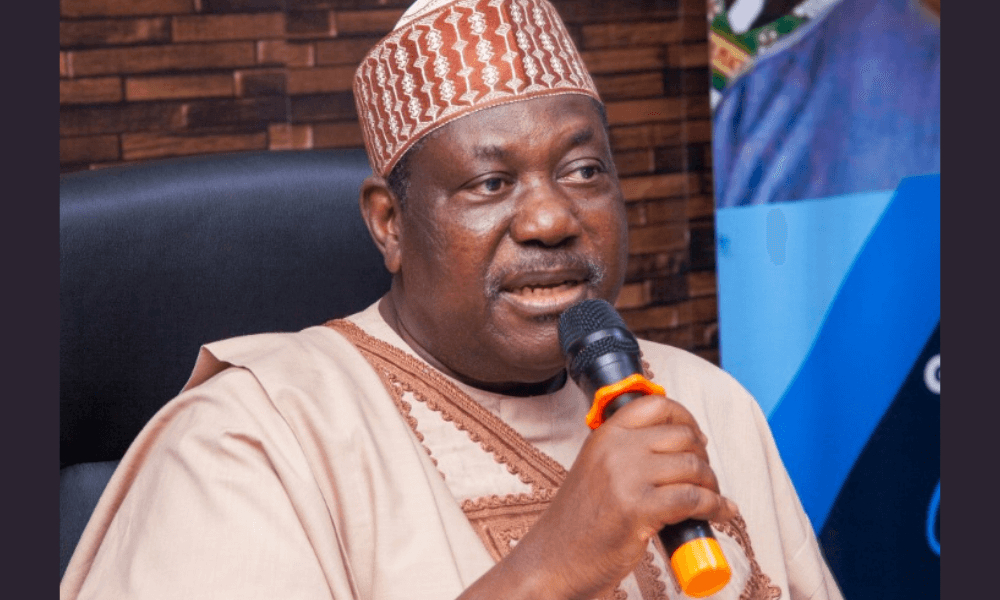
George Akume, Secretary to the Government of the Federation (SGF) and chair of the Nigeria Extractive Industries Transparency Initiative (NEITI) National Stakeholders Working Group (NSWG), has called for deeper transparency, accountability and multi-stakeholder collaboration as Nigeria intensifies preparations for its 2026 Extractive Industries Transparency Initiative (EITI) Validation.
Akume spoke on Tuesday in Abuja at the advocacy dialogue for stakeholders on Nigeria’s 2026 EITI Validation.
He said the dialogue was timely as Nigeria navigates economic reforms, fiscal pressures, and rising public expectations for accountability in the management of natural resources.
He congratulated Musa Sarkin Adar, executive secretary, NEITI, on his appointment and expressed confidence in his leadership.

Read also: FG fostering partnership with private sector for economic growth – Akume
He also commended the NEITI Secretariat for convening the dialogue and acknowledged the support of development partners, including the European Union, International Institute for Democracy and Electoral Assistance Programme, and the EITI International Secretariat.
Akume said the extractive sector remains central to Nigeria’s revenue mobilisation, economic stability, and long term development, but noted that governance gaps and weak transparency have historically limited its full potential. He said NEITI’s reports and recommendations have increasingly become tools driving reforms in the oil, gas, and mining sectors.
He described the 2023 EITI Standard as critical, stressing that it requires countries to move beyond disclosure to using transparency as a driver of reform, stronger institutions, and tangible benefits for citizens.
He said Nigeria must deploy EITI as a reform tool to support domestic revenue mobilisation, prudent fiscal management, and inclusive governance.

The chair of NEITI NSWG said the dialogue’s focus on Nigeria’s recent EITI Assessment, the Validation process, and the unveiling of a policy brief titled “Beyond Assent Pathways for Implementing Nigeria’s New Tax and Revenue Framework” was central to closing revenue leakages, improving sector oversight, and aligning extractive governance with broader economic reforms.
In his welcome remarks, Musa Sarkin Adar, executive secretary, NEITI, said Nigeria is determined to improve on its 72 out of 100 score from the 2023 Validation.
He said the EITI has evolved from a compliance checklist into an outcome driven credibility test that demands demonstrable reform and meaningful stakeholder engagement.
Sarkin Adar said Nigeria’s 2023 Validation identified gaps requiring urgent action, including stronger multi stakeholder engagement, safer and more structured participation for civil society, improved access to extractive sector data, and clearer links between EITI implementation and real policy reforms.
He said NEITI has initiated corrective actions but stressed that the EITI process depends on a tripartite partnership of government, companies, and civil society. He said Nigeria’s readiness for the next Validation is a shared national responsibility.
According to him, the dialogue will review progress on corrective actions, identify remaining gaps, and jointly develop an implementable framework ahead of the 2026 Validation. He said it would also generate inputs into Nigeria’s 2026 EITI Workplan.
Sarkin Adar said a major outcome of the dialogue is the unveiling of NEITI’s new policy brief on implementing Nigeria’s tax and revenue reforms. He said while key tax laws have been passed, effective implementation is required to address revenue leakages and improve transparency in revenue management.
He commended the partners for supporting the programme and urged stakeholders to engage actively, ask difficult questions, and demand accountability.
The advocacy dialogue runs from December 17 to 18, 2025, in Abuja and brings together government officials, civil society, the private sector, sub national actors, the media, and development partners to strengthen Nigeria’s extractive sector governance.